A Week's Worth of Sugar express
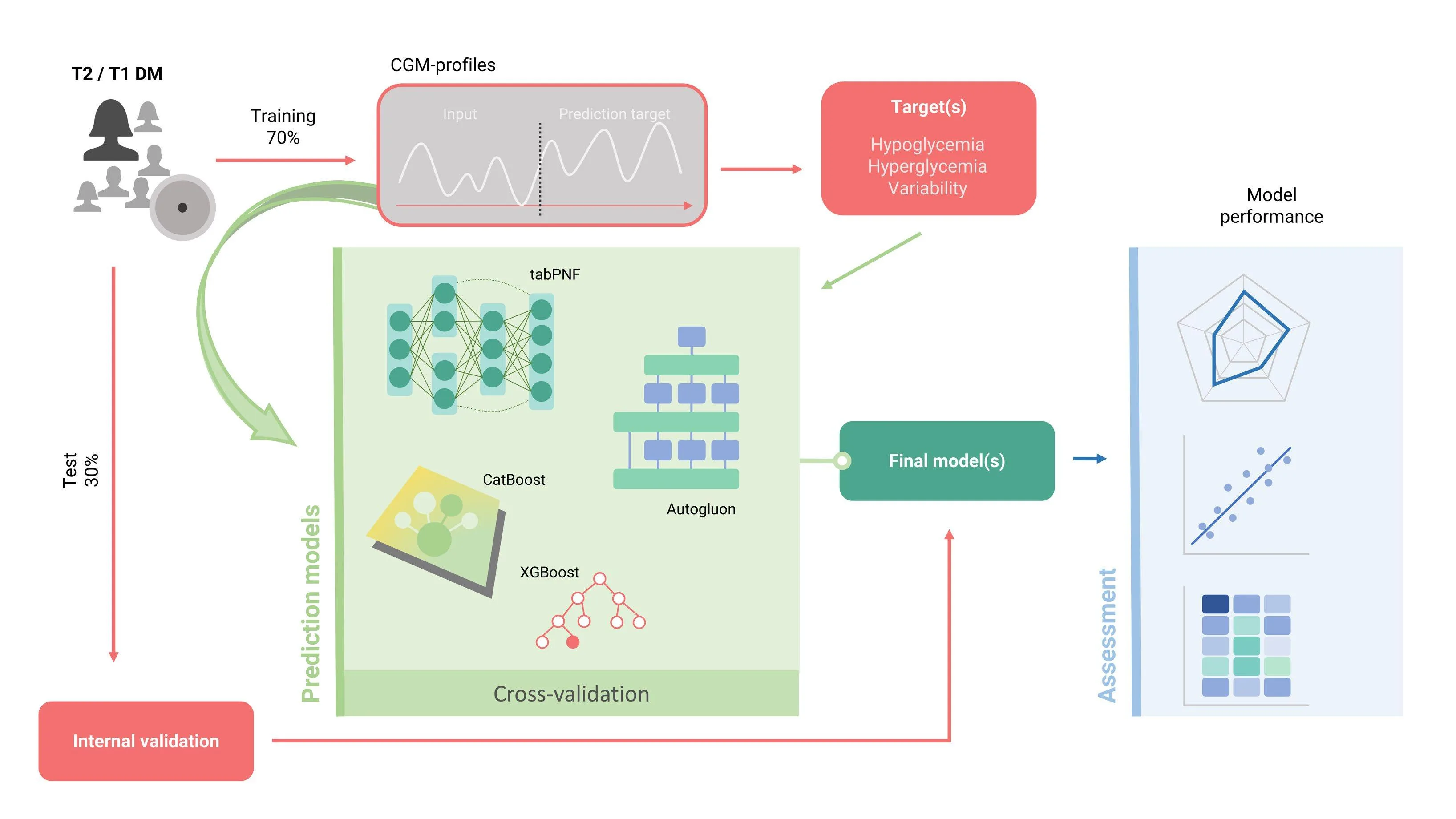
A sensor on the upper arm measures blood sugar around the clock and sends the data to a phone. But by the time the doctor sees it, the event has already happened: sugar dipped overnight, spiked after lunch. What if you could look a week ahead and see what glucose levels will be? That's exactly what the study authors set out to do.
They used records from 4622 weeks of monitoring in people with type 1 and type 2 diabetes. Four computer models, like four different experts, learned from past weeks to predict six metrics for the upcoming week. For instance, how long sugar would stay within safe bounds or how much it would swing. It turned out that all models performed about equally well on most metrics, with prediction errors around 8–16 percent. But rare sugar drops (hypoglycemia) proved trickier: the error jumped to 48 percent, even though in absolute terms it's small. It's like predicting the weather: sunny days are easy to forecast, but a rare thunderstorm is hard.
The practical takeaway: predicting the overall sugar picture a week out is already possible, but rare and dangerous sugar drops remain a tough nut to crack. Perhaps in the future, such predictions will help people with diabetes adjust insulin doses or meal plans in advance, just as a weather forecast helps you grab an umbrella.
The prediction error for rare sugar drops is huge in relative terms, around 48 percent, even though in absolute values it amounts to just a few minutes a day. So the models are 'almost right,' but those few minutes can be the most dangerous of all.