Diabetes is a chronic metabolic disease characterized by persistently high blood sugar levels (hyperglycemia). It arises either because the pancreas does not produce enough insulin (type 1 diabetes) or because the body's cells become resistant to the insulin that is produced (type 2 diabetes). Insulin is the hormone that normally signals cells to take up glucose from the bloodstream, so without effective insulin action, glucose accumulates in the blood, leading to damage of blood vessels, nerves, and organs over time.
History
The term 'diabetes' was used by the Greek physician Aretaeus in the 2nd century CE, but the link to the pancreas and insulin was established in 1889 by Joseph von Mering and Oskar Minkowski, and insulin was first isolated by Frederick Banting and Charles Best in 1921.
How it works
In a healthy person, after a meal, blood glucose rises, triggering the pancreas to release insulin. Insulin binds to receptors on muscle, fat, and liver cells, prompting them to transport glucose inside and either use it for energy or store it as glycogen. In type 1 diabetes, an autoimmune attack destroys the insulin-producing beta cells, so no insulin is available. In type 2 diabetes, the cells' insulin receptors become less responsive, so the pancreas must produce more insulin to compensate; eventually it may fail. Without treatment, high glucose causes osmotic damage and glycation of proteins, leading to complications like retinopathy, neuropathy, and cardiovascular disease.
In practice
Management relies on blood glucose monitoring, insulin therapy (for type 1 and advanced type 2), oral medications like metformin, and lifestyle interventions. Continuous glucose monitors and insulin pumps are modern technological aids.
Fun fact
Before insulin was discovered, the only treatment for type 1 diabetes was a starvation diet, which prolonged life by a few months but left patients severely emaciated.
Water in our body works like brake fluid in a car: as long as there's enough of it, all mechanisms move smoothly, but once the level drops, every part starts wearing out faster. Scientists decided to check how much this wear accelerates if a person is chronically underhydrated, and how it can be spotted from a routine blood test.
Imagine someone hauling two sacks up a hill. One is stuffed with sugar the body cannot process. The other is filled with the years the body has lived faster than the calendar. While the sacks are light, the climb is manageable. But if both are filled to the brim, the legs give way, and the person collapses not with one disease but with several at once.
In the rural district of Agincourt in northeastern South Africa, every family knows when the government payment arrives. For some it is an old-age pension, for others a child grant. The money is small, about 21 dollars per person per month, but for local residents it is a trickle that keeps the household budget from running dry.
A glucose meter that doesn't prick your finger but just looks at your wrist: that's the dream for millions of people with diabetes. It's the promise of algorithms that extract glucose levels from the ordinary pulse signal, the photoplethysmogram (the same one that measures heart rate in smartwatches).
Ordinary models assume that infection is like a steady flow of water that washes over everyone equally. In reality, the stream from a sick person fluctuates: right after infection it barely trickles, then turns into a raging downpour, and later subsides. The chance of catching the virus depends on the strength of this flow at the moment of contact.
Inside each of us, invisible clocks are ticking. They control the release of cortisol — the hormone that helps us wake up in the morning, cope with anxiety, and keep our immune system on its toes. In adrenal insufficiency, these clocks break down: the body can't produce the right amount of cortisol on its own.
Table salt is one of the most studied substances in medicine. For decades, students were taught Arthur Guyton's model: eat something salty — blood dilutes, volume temporarily increases, kidneys promptly excrete the extra water, and everything returns to square one. A neat scheme, like a float valve in a toilet tank.
Every year, the food we eat costs humanity tens of millions of years of life due to unhealthy diets. At the same time, a third of all greenhouse gases warming the planet are produced along the journey from farm to plate. It seems obvious: switch to healthier eating, and we'll save the climate and improve our health. But new research shows these two goals don't always go hand in hand.
Diabetes is a constant reminder of needles. To check glycated hemoglobin (HbA1c — a blood protein that reflects average sugar over three months), you need regular blood draws from a vein. It's unpleasant, requires a lab, and takes time. And if you live far from a city, every test becomes a major expedition.
The new iGLU 5.0 device changes the game.
In the heart of the Milky Way, in the cloud G+0.693, astronomers caught a sweet signal — emission lines of erythrulose, a simple sugar with four carbon atoms and four oxygen atoms.
A person with type 1 diabetes drives a car in thick fog, seeing only a few meters ahead. Blood sugar can plummet or spike, and the insulin pump must react in advance. A four-hour forecast is an attempt to glimpse the road's turn through the haze.
Your finger is a living sensor: beneath the skin, arteries pulse in time with your heart. Traditional blood pressure cuffs squeeze your arm and give a single number, but this ring uses eight electrodes to pass a weak current through the tissue and map blood flow.
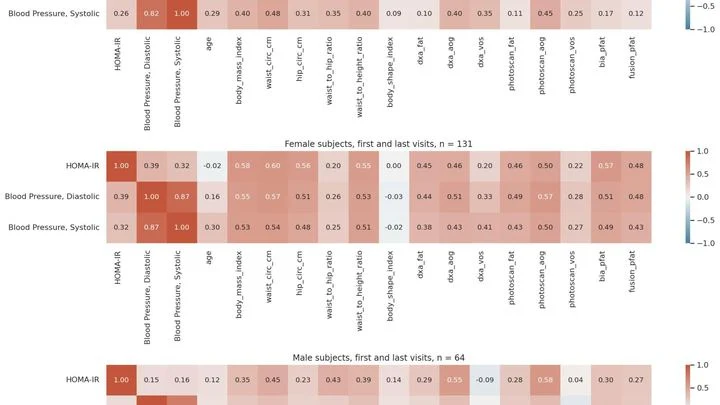
The scale tells you your weight, but it's silent about where those pounds sit — in muscle or belly fat. And it's the fat tucked deep inside, around your organs, that's most often linked to heart disease and diabetes. Previously, you could only see it with an expensive scanner at a clinic. Now, a smartphone is all you need.
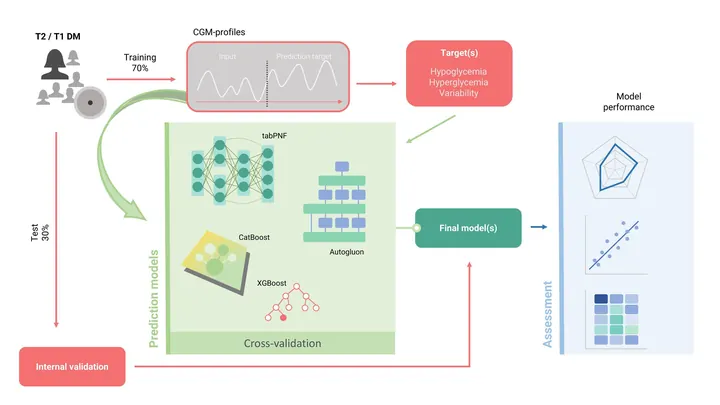
A sensor on the upper arm measures blood sugar around the clock and sends the data to a phone. But by the time the doctor sees it, the event has already happened: sugar dipped overnight, spiked after lunch. What if you could look a week ahead and see what glucose levels will be? That's exactly what the study authors set out to do.