Popular

Hendrik Lorentz

1853 – 1928 · Theoretical physics, Electrodynamics, Optics
Dutch physicist, one of the creators of classical electron theory, precursor to the theory of relativity. He developed the Lorentz transformations, which underlie the special theory of relativity, and explained the Zeeman effect, for which he received the Nobel Prize. His work on the electrodynamics of moving media paved the way for abandoning the concept of the ether.

Biography

Hendrik Antoon Lorentz was born in Arnhem, Netherlands. He studied at Leiden University, where he later became a professor. Founder of electron theory, he introduced the concept of discrete charges and their interaction with the electromagnetic field. In 1902, he shared the Nobel Prize in Physics with Pieter Zeeman for their research on the influence of magnetism on radiation (the Zeeman effect). He chaired the Solvay Congresses, and was friends and collaborated with Einstein. Foreign member of the Royal Society of London and many academies.

Key discoveries

💡 Lorentz was known for his extraordinary modesty and regularly corresponded with Einstein, who called him 'the greatest mind I have ever met.' In 1912, he declined a position at the University of Berlin to remain in Leiden.
Quote: "Happy is he who could know the causes of things."
Links in the knowledge graph 1
Related tags
speed of lightspectroscopy
Related laws
principle of constancy of the speed of lightLorentz transformationsZeeman effect
Related scientists
Henri PoincaréRobert HookeJohann Jakob BalmerJocelyn Bell BurnellArno PenziasCharles TownesJames Clerk MaxwellErwin Schrödinger

Related articles

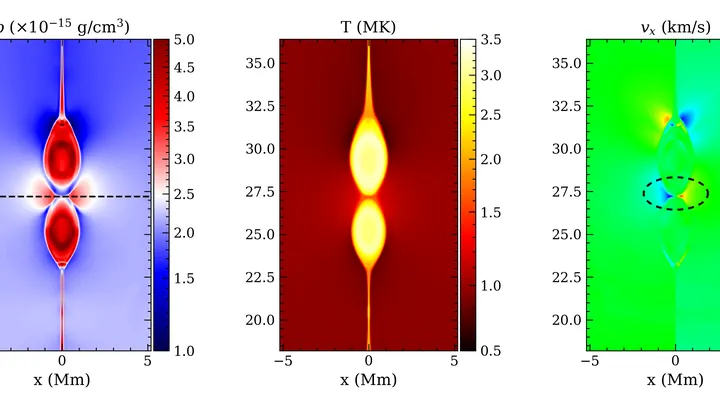
Solar Eruption's Magnetic Field 'Heard' for the First Time

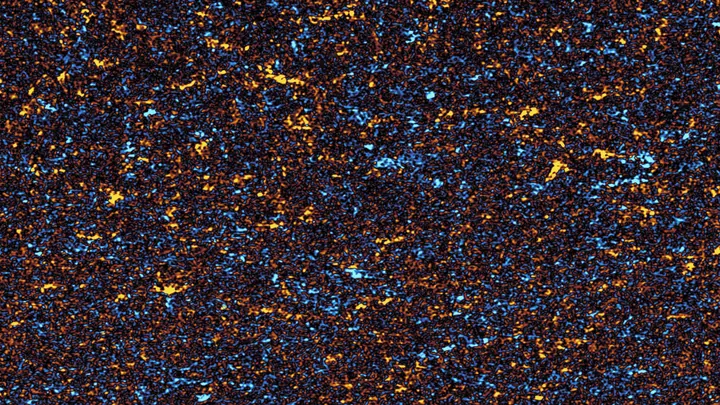
By the frequency of radio waves from a cloud of solar gas, scientists directly measured its magnetic field. It turns out that the invisible force is hidden in tangled clumps, not evenly smeared across the cloud.
arXiv:2509.16453 · 2025-09-19

Magnetic Ripples: How Relativity Plays with Spins

A magnetic material has been discovered where electron spins arrange into ripples due to relativistic effects. This brings spintronics — spin-based electronics — closer to reality.
arXiv:2511.01690 · 2025-11-03

When the Speed of Light Stops Being the Limit

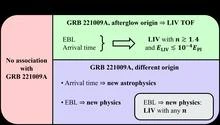
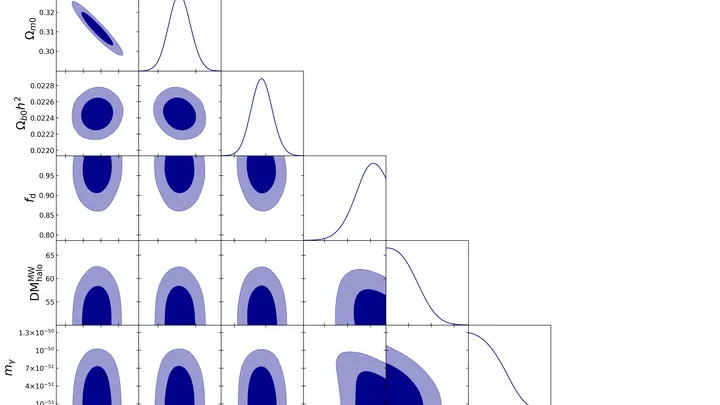
An excess of particles with energies at which they should have disappeared was detected in gamma-ray burst GRB 221009A. Probably, at such energies, the speed of light is slightly higher, which suppresses their absorption. This violation of Lorentz symmetry may open the way to a quantum theory of gra
arXiv:2511.15542 · 2025-11-19

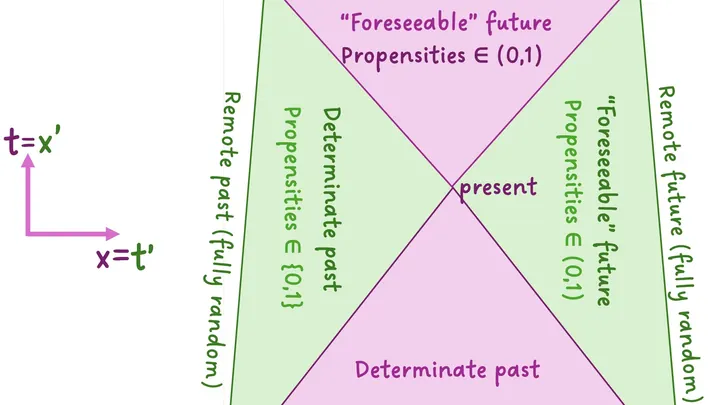
Why Superluminal Signals Tangle Time

To keep the usual order of events with superluminal signals, the world must possess infinite precision—and quantum randomness might turn out to be an illusion.
arXiv:2601.15263 · 2026-01-21

Cosmic Deck: How Shuffling Numbers Creates the Universe

Physicists replaced particles with numerical tables and ran a simulation. Following quantum rules, the tables arranged themselves into an expanding universe with three spatial dimensions and time — with no external guidance whatsoever. This result is like a winning jackpot: it explains how the Big B
arXiv:2604.19836 · 2026-04-21

How Neutrinos Test the Constancy of the Laws of Physics

New neutrino detectors promise to be tens of times more sensitive than existing instruments. They will catch the slightest glitch in the constancy of the speed of light—a violation that would rewrite our understanding of space and time.
arXiv:2604.19880 · 2026-04-21

Cosmic Crystal: How Vacuum Defects Twist Light

The cosmic microwave background not only brings a map of the early universe but also a subtle twist in polarization—just a few thousandths of a radian. For a long time, it was attributed to ultralight axions, but they clash with experiments. A new explanation is more elegant: the rotation arises whe
arXiv:2605.11065v1 · 2026-05-11