Popular

William Unruh

1945– · Quantum gravity, General relativity, Quantum field theory
Canadian physicist, known for the discovery of the Unruh effect: an accelerated observer in a vacuum perceives thermal radiation with a temperature proportional to the acceleration. This phenomenon links quantum field theory with general relativity and has profound implications for black holes and quantum gravity.

Biography

Born in the USA, but spent most of his career in Canada. Studied at Princeton, received PhD under the supervision of John Wheeler. Professor at the University of British Columbia. Winner of numerous awards, fellow of the Royal Society of Canada and the Royal Society of London.

Key discoveries

💡 Unruh is an avid cyclist and uses a bicycle racing analogy to explain the effect: 'If you ride fast enough, you get hot from quantum fluctuations.' The Unruh effect has not yet been experimentally confirmed due to extremely small temperatures.
Quote: "What is emptiness for one observer is a thermal bath of particles for another. Reality depends on motion."
Links in the knowledge graph 1
Related tags
black holeentropyQuantum FieldTime dilation
Related laws
Unruh effect
Related scientists
Fritz ZwickyJacob BekensteinSubrahmanyan ChandrasekharRainer WeissStephen HawkingKarl SchwarzschildJohn Archibald WheelerWilhelm Wien

Related articles

Motion as Fuel: Quantum Engines at Near-Light Speeds

Researchers have shown that if the heat and cold sources in a quantum maser (microwave amplifier) race along at nearly the speed of light, this engine circumvents the classical efficiency limit. Moreover, it can operate even without a temperature difference—the motion itself serves as fuel.
arXiv:2508.14183 · 2025-08-19

How Acceleration Turns Vacuum into a Hot Bath

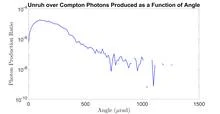
A particle thermometer accelerated through vacuum heats up, and the way it reaches equilibrium depends on the field type and dimensions. Intriguingly, it heats faster than it cools, mimicking the Mpemba effect. This asymmetry provides a fingerprint to identify the Unruh effect.
arXiv:2509.05756 · 2025-09-06

Heat from the void: how to catch the Unruh effect

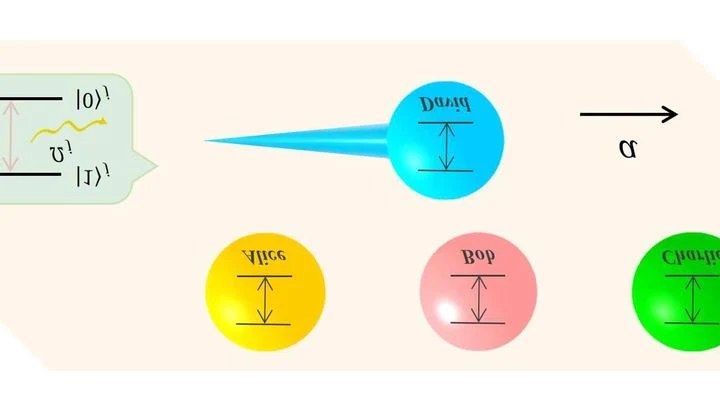
The Unruh effect predicts that the vacuum appears hot to an accelerating observer. But for ordinary particles, this heating is vanishingly small. New work explains how to bypass the impasse: in a superconducting circuit, an ultra-light 'effective mass' is created, making the thermal glow of accelera
arXiv:2512.17959 · 2025-12-18

Lightning over the Horizon: The Collapse of Semiclassical Gravity in Black Hole Evaporation

The information paradox of black holes requires accounting for quantum effects in strong gravity. The semiclassical approach, proposed by Stephen Hawking, assumes that quantum fields on a fixed curved background lead to radiation and mass loss, but the backreaction of radiation on geometry is a crit
arXiv:2605.00780v1 · 2026-05-01

Laboratory Black Holes: Playing with Temperature

Researchers studied the behavior of miniature black hole analogues built from superconductors. They found that in these systems, the dependence of temperature on internal state can be turned on and off—a feature unavailable to real black holes. This paves the way for an engineering approach to under
arXiv:2605.11046 · 2026-05-11

A Vortex's Silent Patch Reveals Its Speed

Physicists have found that the shape of a water vortex's sound shadow can precisely measure its rotation speed. The main surprise: the mathematics of an ordinary sink plug and a giant black hole are the same.
arXiv:2605.20354 · 2026-05-19

Acoustic Black Holes Get Entangled Differently

Scientists modeled a flow where sound gets trapped and found that entanglement entropy grows with volume, not area. The reason: pairs of sound particles (phonons), born at the horizon, remain connected throughout the interior. This helps us understand how information might be preserved inside real b
arXiv:2605.30540 · 2026-05-28

Light Poses as a Fermion During Acceleration

If an electric charge moves along a cleverly designed curve, its radiation starts behaving strangely: photons occupy strictly separate energy levels, as if passing through a turnstile. This effect blurs the line between bosons and fermions and opens up new possibilities for quantum technologies.
arXiv:2606.02824 · 2026-06-01