First Stars: Fireworks Seen by Webb ⚡ экспресс
Original: "Hunting for the First Explosions at the High-Redshift Frontier"
The bright dots in Webb's images are likely not distant galaxies, but lone fireworks — explosions of the first stars that briefly lit up the young Universe.
Links in the knowledge graph 1
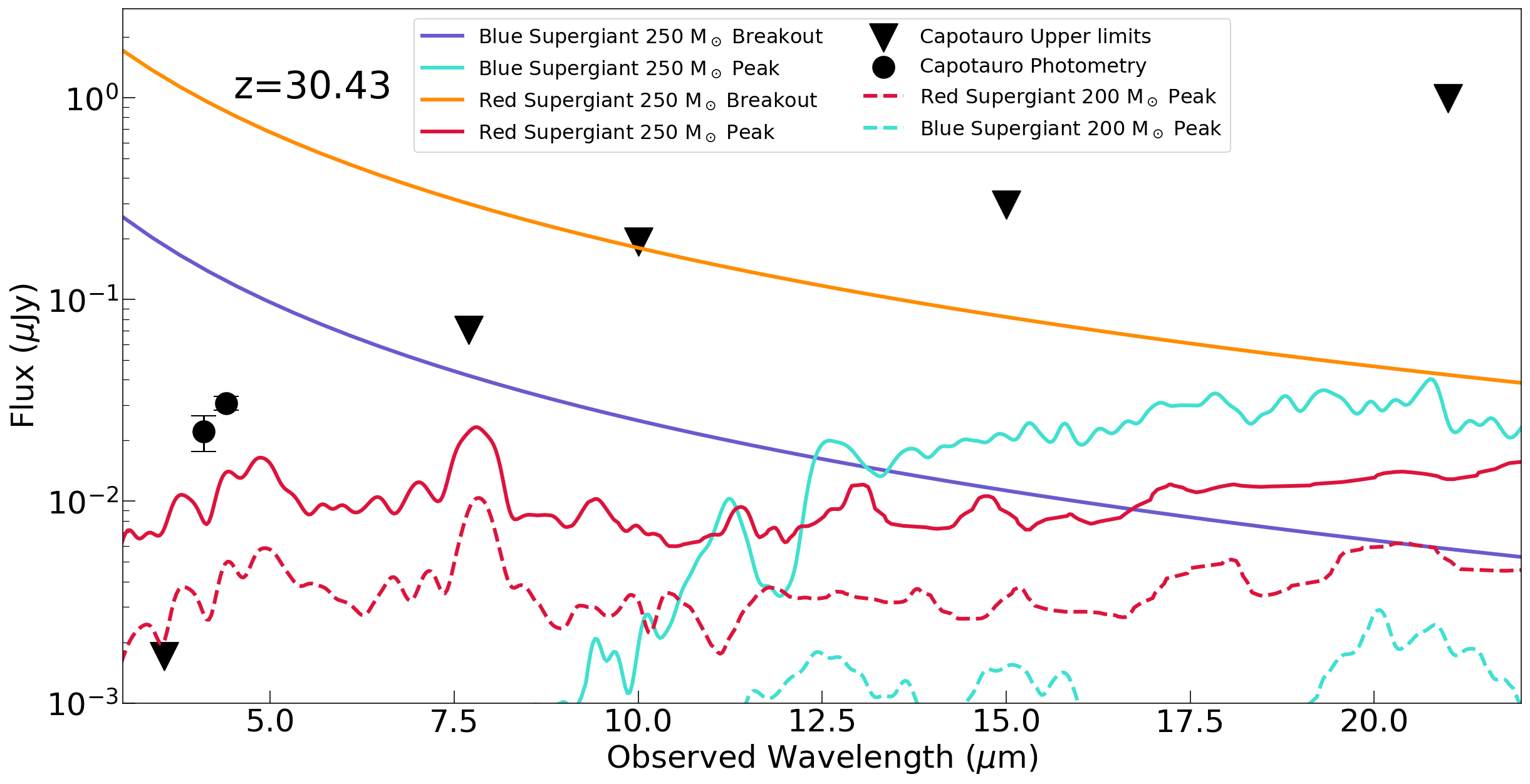
The James Webb Space Telescope looks so far back that it sees a time when the Universe was just 100 million years old. Instead of galaxies, the explosions of the very first stars — pair-instability supernovae — may be hiding there. Confirmation would usher in an era of directly watching the birth of cosmic luminaries.
🎯 Pair-instability supernovae happen only in stars 130–250 times more massive than the Sun. The result: the star is entirely converted into radiation, leaving no neutron star or black hole behind.
🎬 These first fireworks are reminiscent of the 'Moment of Creation' from science fiction: they flared up, lit the primordial darkness, and vanished, paving the way for future galaxies and life.