Popular

Volker Bromm

5 articles · 30 co-authors · latest: 2026-03-20

The 'Chef' Black Hole That Prevents Star Birth

The model shows: the chef black hole heats galactic gas, preventing stars from igniting, and ejects metal-rich material while pulling in fresh gas. This explains the near-total lack of heavy elements in galaxy Abell 2744-QSO1 and the unusual ratio of the hole's mass to stars.
arXiv:2512.14066 · 2025-12-16

First Stars: Fireworks Seen by Webb

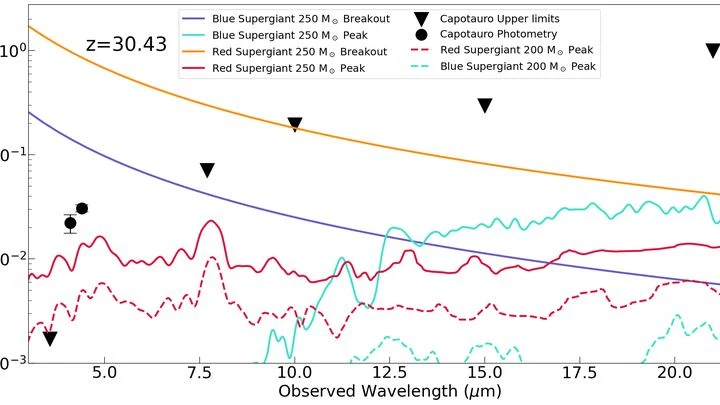
In the James Webb Space Telescope's images, bright dots thought to be distant galaxies might actually be explosions of the first stars — pair-instability supernovae. These cosmic fireworks happen when a massive star made of pure hydrogen and helium is torn apart as light transforms into matter and a
arXiv:2601.02469v2 · 2026-01-05

Сверхновая из детства Вселенной

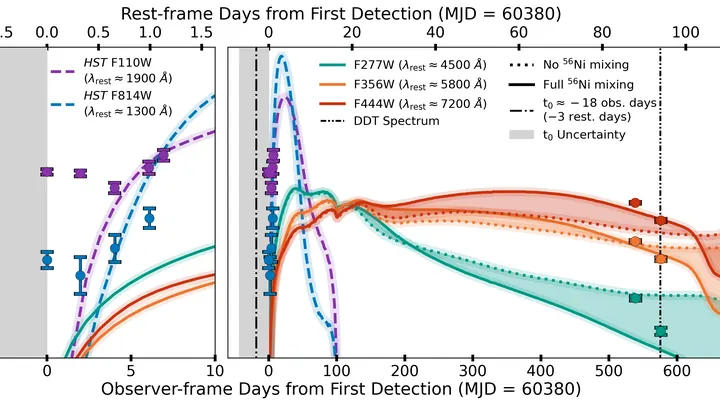
Самую далёкую сверхновую SN Eos подтвердили, разложив её свет в спектр. Взрыв произошёл в среде, почти лишённой тяжёлых элементов, — прямое доказательство рождения массивных звёзд в ранней Вселенной. Открытие стало возможным только благодаря гравитационному линзированию и поможет уточнить темп рожде
arXiv:2601.04156v2 · 2026-01-07

Red Eyes: Cosmic Lens Reveals a Pair of Black Holes

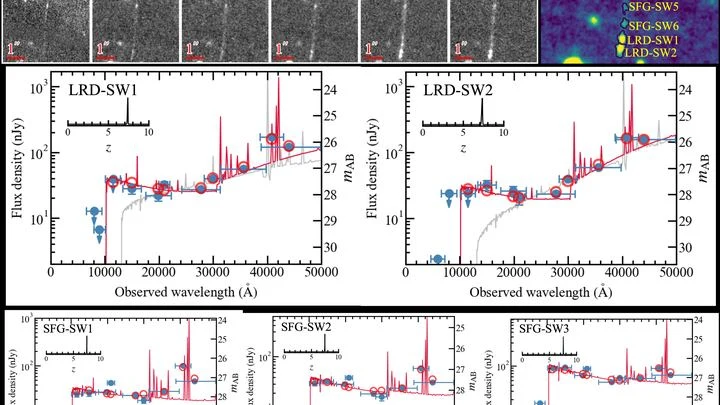
Using a gravitational lens — a massive cluster of galaxies bending light — the James Webb Space Telescope detected two red dots in a distant galaxy. These are intermediate-mass black holes, located not in the center but on the outskirts. The discovery suggests such invisible objects might be widespr
arXiv:2601.06015v1 · 2026-01-09

Light from the Universe’s First Stars Captured

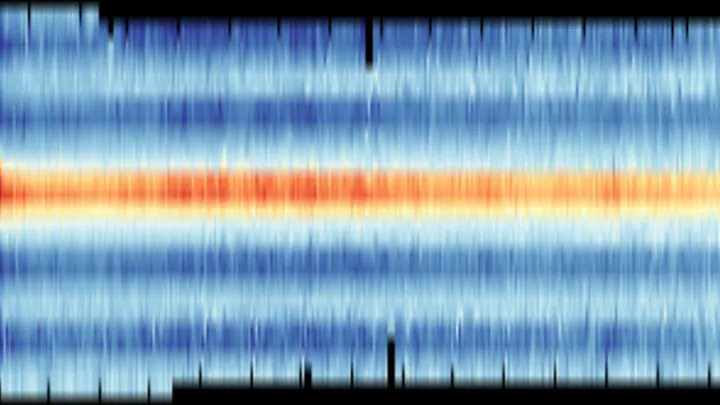
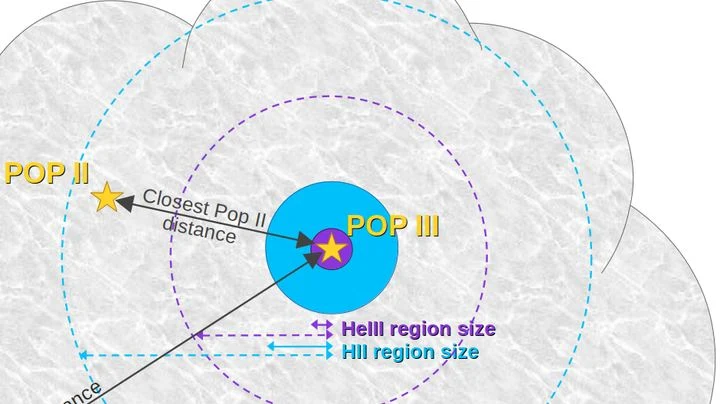
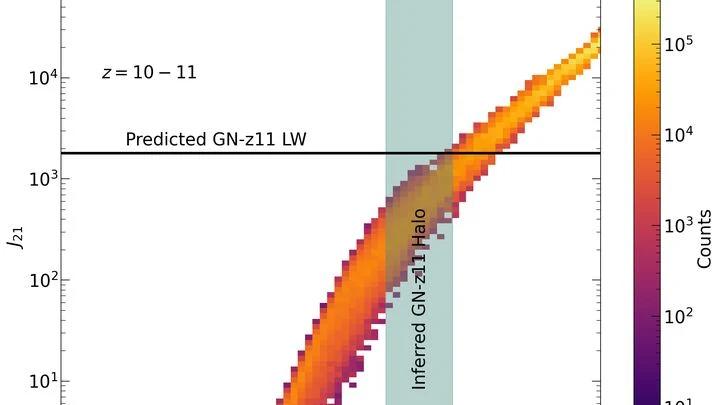
Near the galaxy GN-z11, seen just 400 million years after the Big Bang, the James Webb Space Telescope spotted a bright spot. It glows with hot helium — such radiation can only come from very massive stars devoid of heavy elements, that is, the first generation. If confirmed, we are seeing for the f
arXiv:2603.20362 · 2026-03-20