How to Predict Crystal Quality While It's Still Growing express
Growing an ultra-pure germanium crystal is a bit like baking a finicky soufflé: a slight overheating or an extra speck of impurity, and the whole ingot is only good for remelting. Such crystals are the heart of detectors that catch the rarest events, from dark matter to double beta decay. But only a handful of companies worldwide can grow them with high yield, and the craft secrets are passed down over decades.
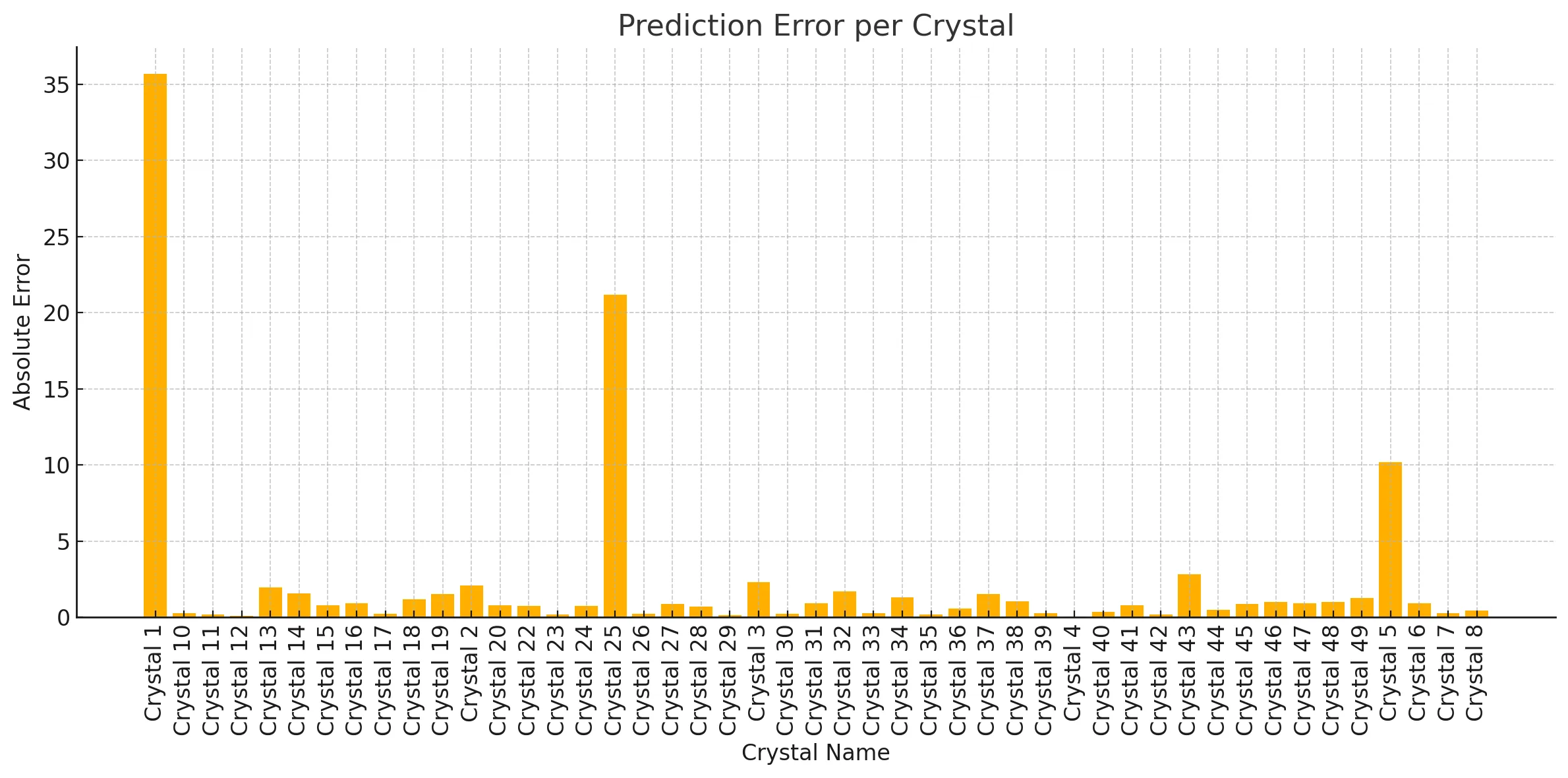
Now a neural network has come to the rescue. It was trained on recordings from 48 real growth runs: every minute, the heater power, the pulling speed of the ingot, and indirect signs of contamination were recorded. The model, built with a BiLSTM architecture and multi-head attention, learned to predict from these signals what fraction of the crystal would end up suitable for detectors. The accuracy turned out to be sufficient to spot a problem well before the process ends.
Feature importance analysis (SHAP) showed that impurity concentration and pulling speed are the two main factors determining yield. This is no surprise to specialists, but previously such conclusions relied on intuition, whereas now they rest on measurable statistics. The practical benefit is clear: you can adjust the growth regime in advance, saving a costly ingot.
If the method catches on, producing ultra-pure germanium will no longer be an art for the chosen few. Detectors for hunting dark matter particles and other rare events will become more accessible, and experiments will move faster. This is a case where machine learning doesn't replace the physicist-technologist but hands them a precise tool instead of trial and error.
Ultra-pure germanium is so sensitive to impurities that a single 'foreign' atom per trillion germanium atoms already ruins the detector. For comparison, that's like one grain of sand in ten railway cars of sugar.