Learning rate is a hyperparameter in machine learning that controls the step size taken when updating a model's parameters during training. It determines how quickly the model's error (loss) decreases as it iterates over data. A high learning rate makes the model learn fast but risks overshooting the optimal solution; a low learning rate makes learning slow but more stable. The learning rate is one of the most critical settings in training neural networks, as it directly influences convergence and final performance.
History
The concept of a learning rate emerged with the development of gradient-based optimization in the 1950s and 1960s, particularly in the context of perceptron learning and early neural networks. It became a standard term in the 1980s with backpropagation.
How it works
During training, the model computes the gradient of the loss function with respect to its parameters. The parameters are then updated by subtracting the gradient multiplied by the learning rate. This is the standard gradient descent update rule. The learning rate scales the gradient step: a larger value means larger jumps in parameter space, while a smaller value means finer adjustments. Modern optimizers like Adam adaptively adjust the learning rate per parameter, but the base learning rate still needs to be set by the practitioner.
In practice
Learning rate scheduling — adjusting the learning rate during training — is used in virtually all deep learning applications, from image recognition to natural language processing, to improve convergence and avoid local minima.
Fun fact
A learning rate that is too high can cause the loss to diverge to infinity, while a learning rate that is too low can get stuck in a plateau, making the training time impractically long.
An old water pipe hums differently from a new one. A pipe that has lost its flexibility answers every surge of water with a sharp echo that races back to the pump faster than in a young system. Something similar happens with our arteries: over the years their walls harden, and the pulse wave, having reached the small vessels, reflects back to the heart almost without delay.
A protein in a cell doesn't hang motionless like a mannequin in a store window. Its atoms are constantly jiggling, stretching, and bending, like a plucked guitar string that keeps vibrating after you strum it. To understand how a protein works, you need to know how tightly each part holds onto its neighbors.
A protein engineer is like a chef trying to make a dish that is tasty, healthy, and cheap all at once. Change one ingredient, and you risk ruining another. In the past, computer assistants could only evaluate protein properties one at a time, missing how they are connected.
A perovskite solar cell is like a young athlete: it performs brilliantly at first, but tires with age. Over eight hours, its performance drops noticeably, with no visible cause like cracks or dust. Scientists took one cell and recorded its performance at 0, 90, 280, and 480 minutes of its life.
A mountain pass connects two valleys. In one, the protein is folded; in the other, it is unfolded. To get from one to the other, you must cross the saddle — the highest point on the path. In protein science, this point is called the transition state, and the coordinate that shows the distance to it is the committor.
A neural network predicts the future of a system — say, how plasma will swirl in a magnetic field or how a face in a video will change. Errors are inevitable, and the further it looks ahead, the more they accumulate. Checking against the correct answer during operation is impossible: it simply doesn't exist.
An artist makes a quick charcoal sketch, and the face in the portrait is already recognizable. Astrophysicists face a similar challenge: the spectrum of a star is its individual portrait, revealing temperature, composition, and gravity.
A hundred thousand stars in the dense core of a globular cluster move like steel balls in a giant pinball machine. Each 'bump' — a gravitational encounter between a binary system and a single star — triggers a cascade of unpredictable events.
Communicating with a satellite is like trying to hear a whisper in a storm: the signal drowns in noise. Engineers have created an AI algorithm that runs directly on the satellite and, with minimal power consumption, detects distortions more accurately than previous methods.
An AI predicting room acoustics is like a student taking an exam with a cheat sheet. If the test points are the same as the training ones, the model simply memorizes the acoustic 'fingerprint' of each position — like a student recognizing a question by the dog-eared corner.
When a radio wave encounters a building in its path, it doesn't just reflect or get absorbed: it bends around it, much like ocean waves flowing around a rock, leaving calm water behind. In radiophysics, this phenomenon creates a radio shadow — a complex pattern of zones where the signal is amplified or attenuated, which scientists call a radio portrait.
Automatic speech judges are algorithms that evaluate pronunciation and emotions. However, they often work like a food critic who delivers a verdict after reading the menu but not tasting the dish.
Imagine a smart antenna panel, a phased array, that steers radio waves traveling at the speed of light. It works like an orchestra: hundreds of tiny emitters, like musical instruments, shift their phase (the moment they 'join' the overall sound) on command via a variable voltage.
Imagine an experienced chef during rush hour: suddenly a stove fails or a key ingredient runs out. Instead of panicking, he instantly reworks the recipes — speeding up some dishes, slowing down others, reallocating resources on the fly. This principle of dynamic adaptation underpins a new generation of ultra-reliable networks.
After a stone is thrown, the circles on water vanish, but the liquid retains microscopic oscillations. The slightest gust, and ripples appear again. Neural networks behave similarly. When electrical signals quiet down, the memory of them remains in the contact points — synapses.
In a soup pot, you only need two thermometers to gauge the temperature everywhere — if you know heat travels in circles from the bottom. Science works the same way: from a handful of measurements, you want to reconstruct the full heat picture.
The system captures the gist of heat flow, compressing it into a handful of governing numbers.
Traditionally, machine learning algorithms operate in a static environment, like water flowing along a pre-cut channel without changing its shape. The new method flips this paradigm: it lets an agent simultaneously master actions and deliberately modify the very environment it inhabits.
Cooking a complex dish requires a clear recipe: first chop, then sauté, add spices at just the right moment. Chemical transformations also follow step-by-step recipes — mechanisms where atoms of carbon and hydrogen rearrange in a strict order.
Previously, neural networks often invented nonexistent steps, like a whimsical cook swapping salt for sugar.
Code-writing assistants often behave like a chef who, to boil a single egg, rereads the whole cookbook. When asked to make a tiny fix, they reopen dozens of files and retrace long-familiar connections. This is unnecessary work — energy going to waste.
A photographer shoots a night forest, trying to catch fireflies in the frame. The flashes are rare and faint, while around there's the noise of wind and distant lights.
Quantum calculations are a recipe with perfect ingredients, but nature-the-chef cooks in her own way. Machine-learned models of atoms memorize the recipe and predict material properties in seconds instead of weeks.
Every group has its unspoken trios: three friends who are always together. And there are pairs that exist on their own. It turns out that how much trios "contain" pairs determines how everything, from a virus to a new idea, spreads through the group.
Scientists introduced a measure they call the nesting coefficient.
Training an accurate aerodynamic model is like culinary art: first, a chef masters hundreds of recipes to grasp the general principles, then easily perfects a specific dish. Engineers created AeroTransformer and fed it 30,000 different wing shapes — a whole galaxy of culinary ideas galaxy.
A uranium nucleus is like a tight wallet snapped shut on two halves. To make it burst and release energy (that is, to make the nucleus split) you have to climb over an energy barrier. The height of this threshold determines whether a substance is stable or ready to fall apart at any moment.
A quantum computer is like an orchestra where each musician plays their part, but one wrong note can ruin the entire symphony. To prevent this, you need a listener who instantly catches the false note without interfering with the performance.
Training a neural network is like sledding down a hill: you need the right speed to avoid getting stuck or flying off the track. In the popular momentum method (like inertia), a constant value of 0.9 is typically used.
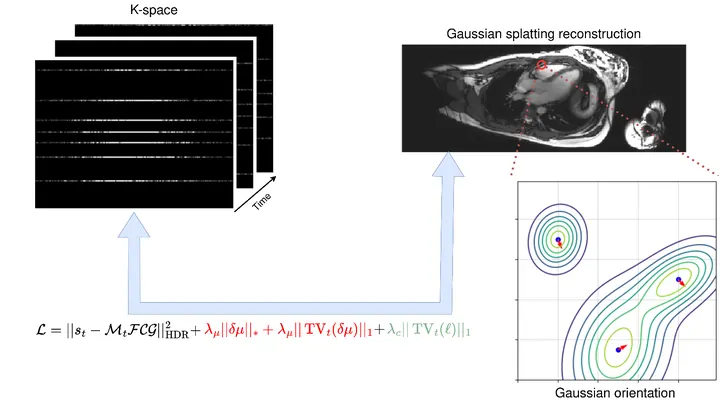
An MRI scanner is like a camera that photographs your insides, but very slowly. The patient has to lie still for several minutes while the heart keeps beating. If the person moves or the rhythm goes off, the image blurs. Doctors then have to repeat the scan, wasting time and nerves.
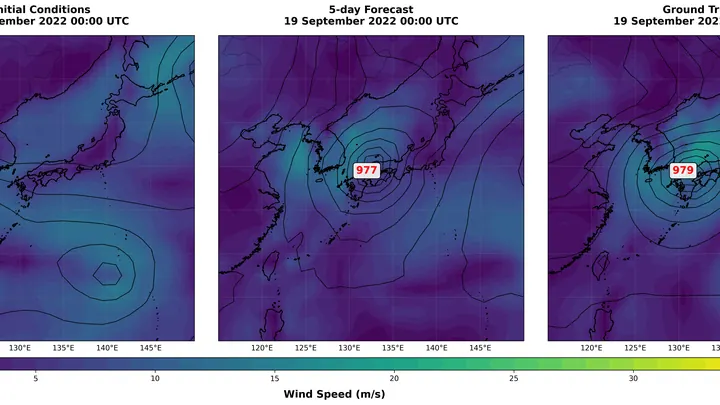
Weather forecasting is like trying to predict where a rock will roll down a slope, knowing the shape of every bump and the force of the wind. Make a mistake at the start, and a week later that error grows into a full-blown storm. In the past, accurate forecasts required massive computers and days of computation.
Before every tokamak startup, a device where superheated gas is held by magnetic fields, operators spend hours calculating how the plasma will behave. Mistakes are too costly: one wrong parameter can ruin the experiment.
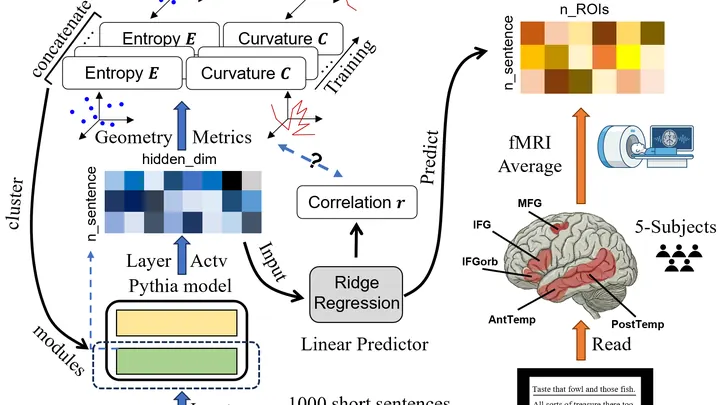
A language model is a multi-layered structure where each layer processes words in its own way. At the start of training, layers are chaotic, but gradually they organize into two teams. The first team works simply: its internal geometry smooths out, becoming less tangled. The second remains complex and intricate.
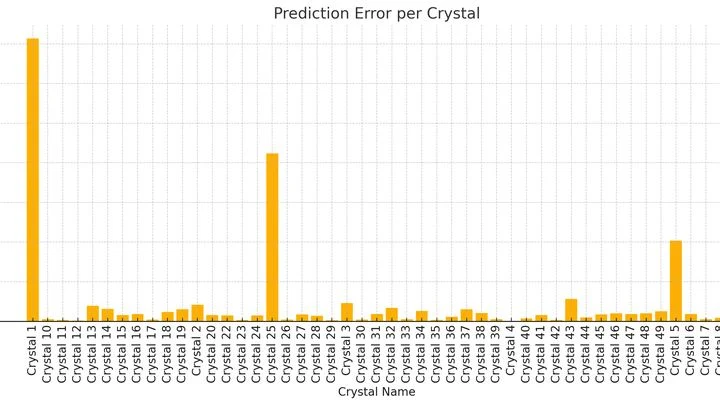
Growing an ultra-pure germanium crystal is a bit like baking a finicky soufflé: a slight overheating or an extra speck of impurity, and the whole ingot is only good for remelting. Such crystals are the heart of detectors that catch the rarest events, from dark matter to double beta decay.
In a dark room, on a table, sit a laser pointer, a piece of glass with tissue, and an ordinary phone camera. Light passes through the sample, and the image shows not cells but a pattern of bright and dark stripes, like the shadow of leaves on a wall.
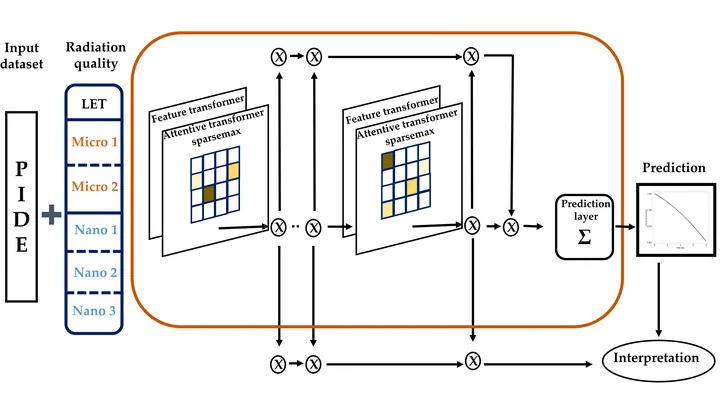
A cell hit by a proton beam is like a city after a pinpoint bombing: some blocks are leveled, others just have broken windows. Whether the city survives depends on which buildings are hit and how the strikes are distributed.
Fine-tuning a neural network is like trying to alter a black hole without touching its event horizon: you change only a tiny fraction of parameters. Researchers looked inside and saw stunning patterns — strong links between pieces of the model, akin to quantum entanglement.
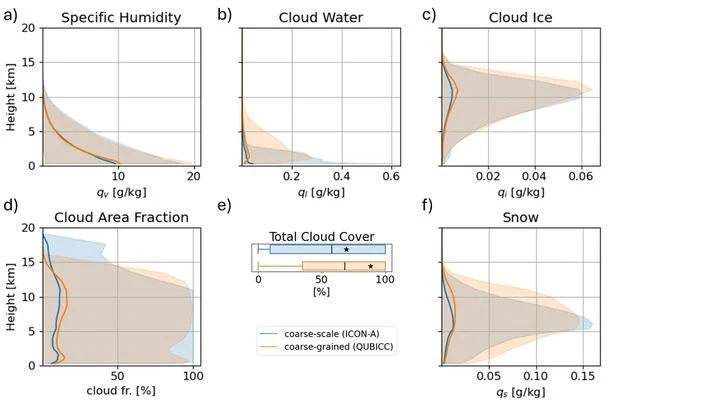
Climate forecasting is like a complex recipe: one wrong pinch and the whole dish is ruined. So it is with clouds — small but decisive. Climate models divide the sky into 50–100 km cells and don't see individual clouds. It's like throwing pepper by the handful when the recipe calls for a pinch.