Cosmic Deck: How Shuffling Numbers Creates the Universe ✎ express
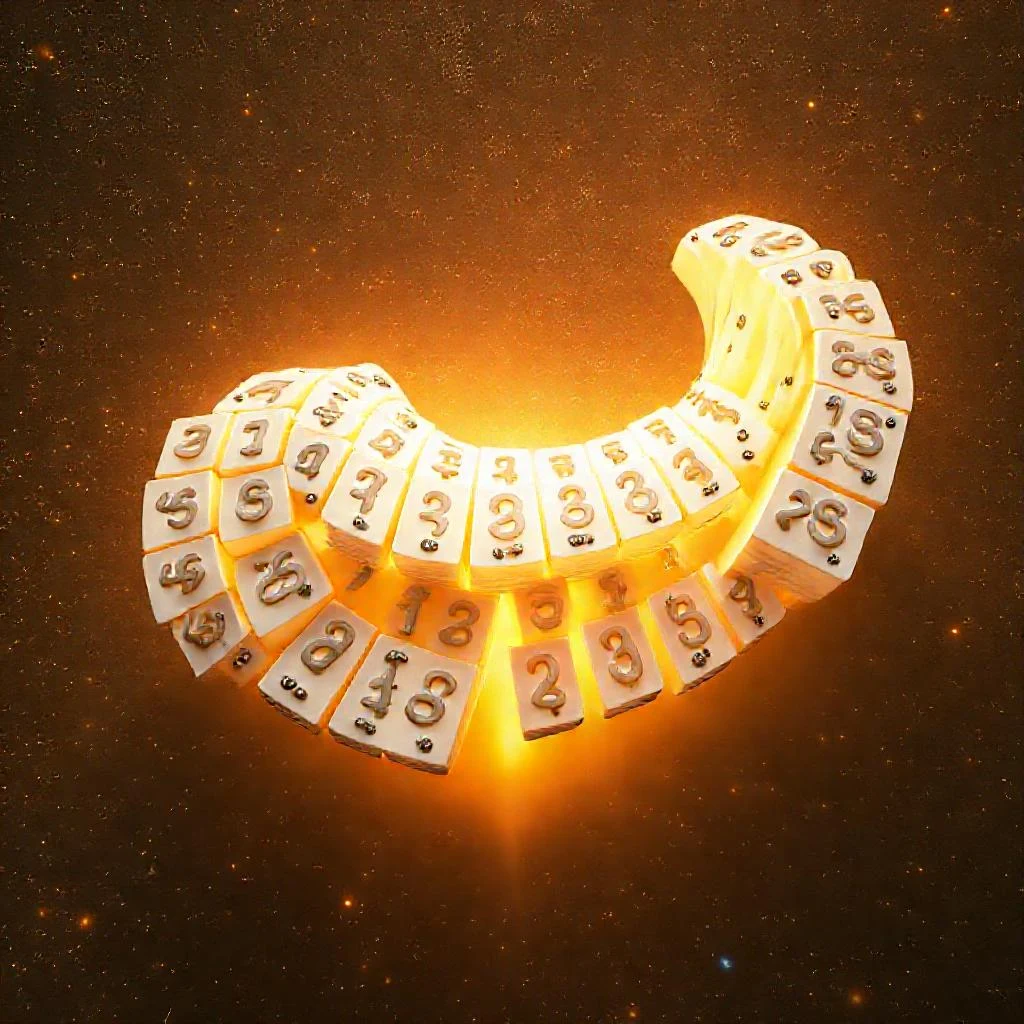
To understand how the universe emerged from the Big Bang, physicists look to Georges Lemaître's idea of expansion, which rests on the laws of Hendrik Lorentz. One daring approach replaces elementary particles with giant tables of numbers — as if instead of the usual roulette balls, you use numbered cards.
For the first time, a numerical simulation of 128×128 tables showed how, at a certain moment, a smooth, continuously expanding spacetime with three spatial dimensions and one time dimension 'falls into place' — exactly our world. Astonishingly: no one preset these parameters; everything emerged from the rules of the game. Thus, the birth of the universe begins to look like the luckiest combination in a cosmic casino.
A 128×128 table holds 16,384 numbers. Their cross-interactions are like a colossal game of cosmic roulette, with the structure of our world at stake.
It recalls 'The Matrix': reality as a numerical pattern. But in this version, the code doesn't flash green on a screen; it lives inside tables that constantly recalculate probabilities.