Stellar Mimicry: Boson Stars Pretend to Be Black Holes ✦
Original: "Bayesian Analysis of Massive Boson Star Models for Sagittarius A* Using Near-Infrared Astrometry Data"
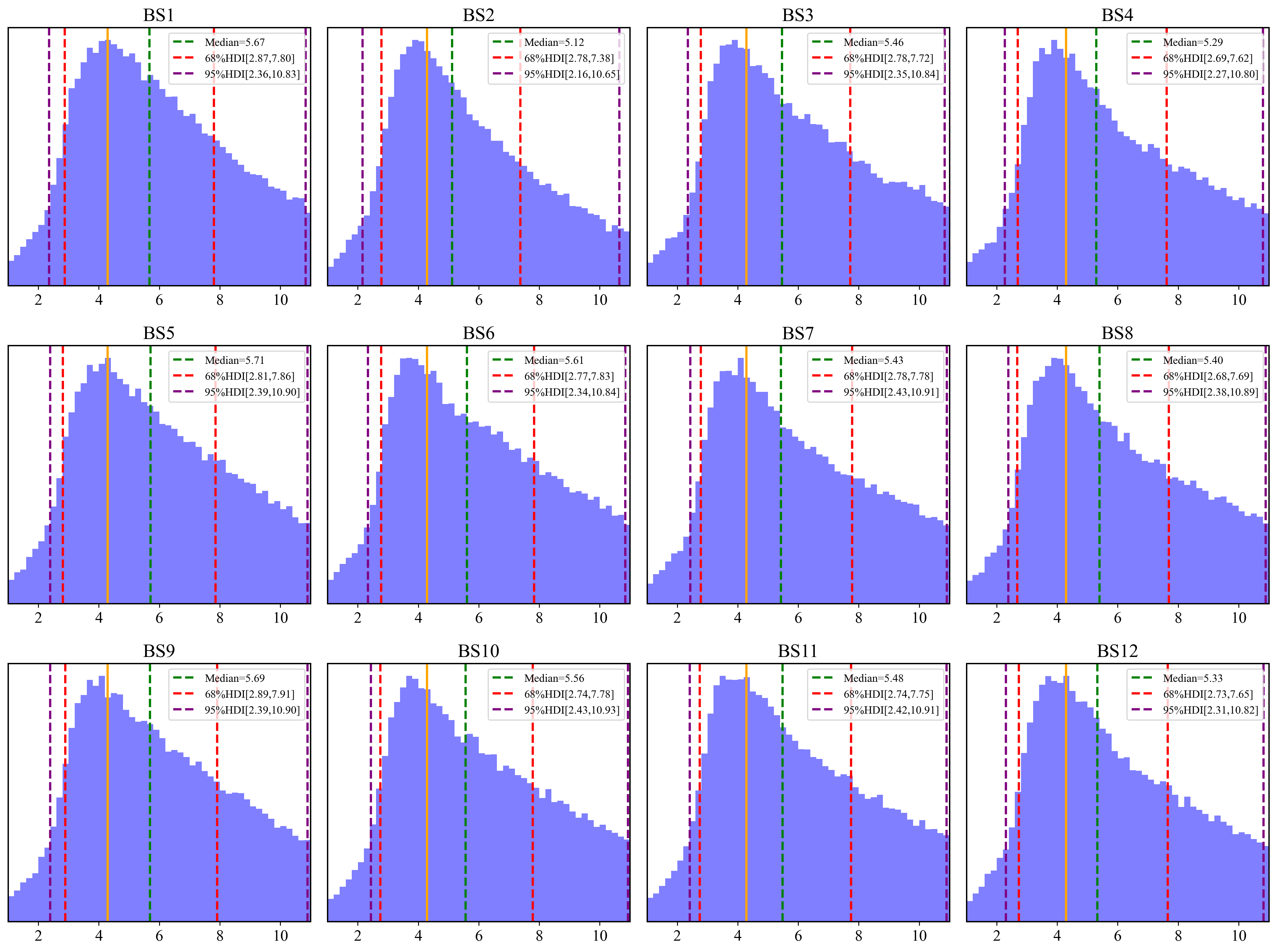
Bayesian analysis from GRAVITY sees no difference: at the Galactic center, perhaps it's not a hole hiding but its ghostly double.
Links in the knowledge graph 1
Sagittarius A* — not a black hole, but a bosonic mimic? Bayesian analysis by GRAVITY can't tell them apart. Like a harmless fly mimicking a wasp, the object masquerades, but without a horizon — only a cloud of axions. Dark matter steps out of the shadows: if many such stars exist, it's not background, it's the main actor.
🎯 The radius of a boson star can be just 2.81 times the gravitational radius — practically like a black hole, a difference of a fraction of a percent. But unlike one, passing photons do not disappear, but retain information about the internal structure, as if passing through a transparent dream.
ds^2 = -A(r) dt^2 + B(r)^{-1} dr^2 + r^2 (d\theta^2 + \sin^2\theta d\phi^2)
Unlike a black hole, there is no event horizon here — the metric functions A and B are finite everywhere.
Z = \int_{\Omega_\Theta} \mathcal{L}(\Theta) \pi(\Theta) d\Theta
Integral of likelihood over prior distribution, a quantitative measure of how well the model explains the data.
Scientists
Stephen HawkingJacob BekensteinAlbert EinsteinFritz ZwickyVera RubinBernhard Riemannblack hole
dark matter
axion
Bose-Einstein condensate
numerical simulation
gravitational waves
neutron star
active galactic nucleus
galaxy
polarimetry
photometryLaws
Hawking radiationgravitational lensingBekenstein-Hawking entropyEinstein field equationsStefan–Boltzmann lawFermi–Dirac statistics