A City as an Organism: The Math of Dengue Fever express
A city is not just a jumble of buildings and streets. For the dengue virus, carried by mosquitoes, a city is a patchwork of neighborhoods, each with its own conditions for outbreaks. In one district, mosquitoes are almost absent; in the next, they swarm as if someone left hundreds of water containers open. Researchers in Ahmedabad built a mathematical model that turns this patchwork into a clear risk map.
The model, named M-SDT (mechanistic model of seasonal dengue transmission), works like an infection ledger. It divides residents into groups: those who haven't yet encountered the virus, those who are infected but feel fine (hidden carriers), and those who are visibly ill. Each transition between groups depends on specific numbers — for example, how often a mosquito bites a person and how long the insect lives. The calibration data were real: monthly disease statistics by zone in Ahmedabad from 2020 to 2024. To keep the model honest, the researchers used a clever method: they repeatedly shuffled the original data and added noise to mimic natural unpredictability. This allowed them to estimate how accurate the forecasts are.
What did the simulation show? First, the city is indeed variegated. In some zones, outbreaks occur regularly, like clockwork; in others, only occasionally. The key parameter is the mosquito-to-human ratio. Where many mosquitoes per person exist, even a small introduction of the virus sparks a fire. Where mosquitoes are scarce, the disease barely smolders. The forecast for the next three years (2026–2028) offers no respite: dengue will remain a familiar seasonal guest, though the scale of waves will vary slightly from year to year.
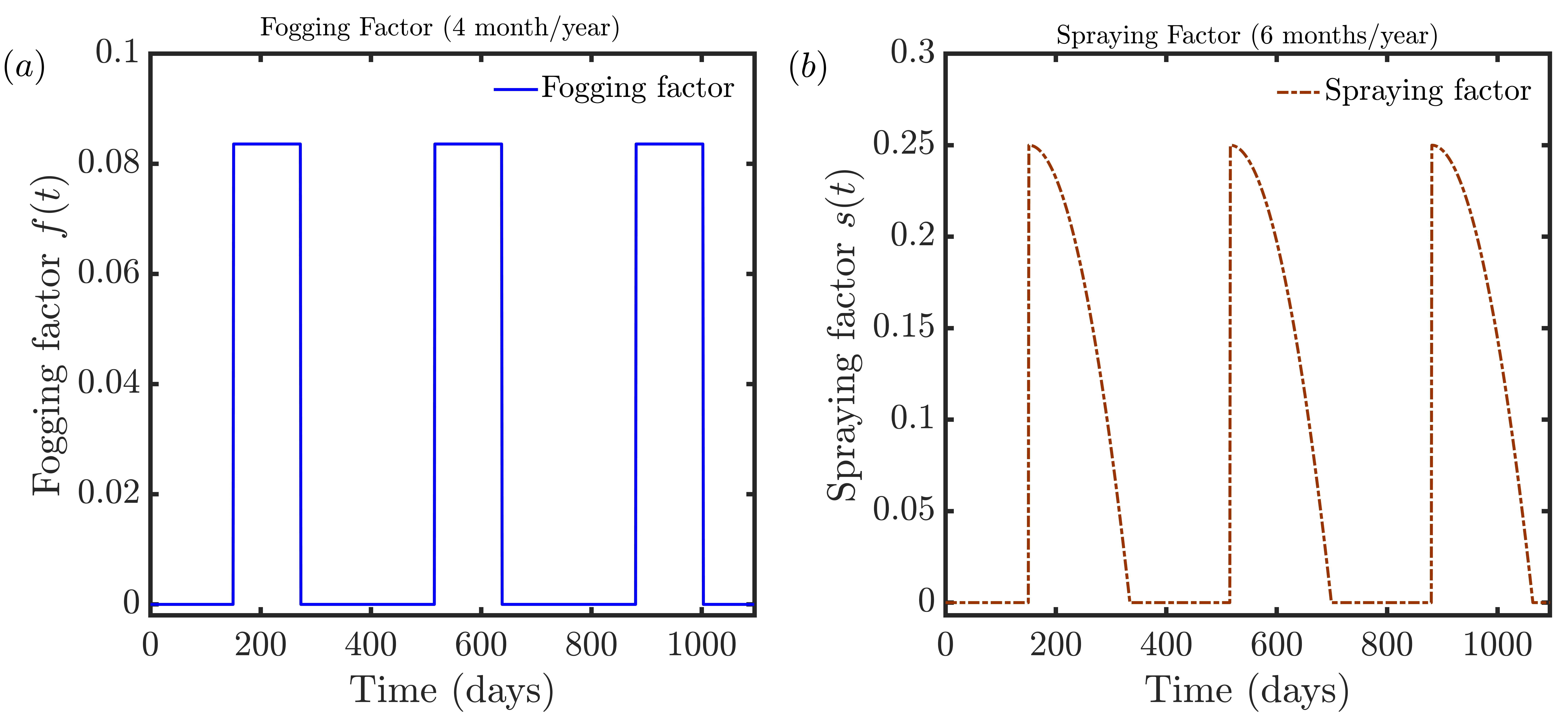
Here's the main practical takeaway: different districts require different approaches. Where mosquitoes are traditionally abundant, fogging may be nearly useless — more aggressive measures are needed. In relatively low-risk zones, targeted wall spraying can quickly quell an emerging epidemic. The model allows not just guessing but calculating where and when each intervention will do the most good. In this way, mathematics becomes a tool for urban public health, turning chaotic fever into a manageable process.
Original abstract
as written by the authors arXiv:2605.17975
Dengue fever poses a persistent public health challenge in rapidly urbanizing Indian cities such as Ahmedabad, where spatial heterogeneity and seasonal variability complicate forecasting and control. In this study, we develop a data-driven compartmental framework to simulate transmission dynamics, generate forecasts, and evaluate intervention strategies across the Ahmedabad Municipal Corporation (AMC). We employ a Mechanistic Seasonal Dengue Transmission (M-SDT) model that incorporates symptomatic and asymptomatic infections. We calibrated the proposed model using zone-wise dengue case data during 2020--2024. Parameter uncertainty is rigorously quantified using a bootstrap sampling framework with negative binomial noise. The calibrated model reveals pronounced spatial heterogeneity across AMC zones, with persistent hotspots and distinct transmission regimes. Forecasts for 2026--2028 indicate continued endemic circulation with moderate inter-annual variability. Sensitivity analysis identifies the mosquito biting rate and vector mortality as dominant drivers of long-term disease burden, highlighting the central role of vector ecology in shaping epidemic outcomes. Evaluating seasonal vector control strategies shows a notable difference in operation; periodic fogging has a cumulative effect over the years, while sustained residual spraying can quickly curb outbreaks and decrease incidence by over 80%. The zone-wise analysis reveals that the mosquito-to-human ratio governs not only the baseline outbreak potential but also each zone's responsiveness to control strategies. Overall, the M-SDT modelling framework enables reconstruction of unobserved dynamics, rigorous uncertainty quantification, and evaluation of targeted, zone-specific interventions, underscoring the importance of integrating fine-scale surveillance data with mechanistic modelling for adaptive urban dengue control.
The Aedes aegypti mosquito, the main dengue vector, rarely flies more than 100 meters from where it hatched. So infection hotspots in a city can be very localized — an outbreak in one block doesn't necessarily mean danger for the neighboring block.
In Michael Crichton's novel The Andromeda Strain, a mathematical model helps predict the behavior of a deadly microorganism — though there, the threat came from space, not from mosquitoes.