In quantum physics, a transition is the change of a system from one energy state to another, typically involving the absorption or emission of a photon. Here, the focus is on nuclear transitions, where the nucleus of an atom jumps between energy levels, releasing or absorbing gamma rays. These transitions are fundamental to understanding nuclear structure and have applications in fields like astrophysics and quantum technology.
History
The concept of quantum transitions was developed in the early 20th century with the Bohr model of the atom (1913) and later formalized in quantum mechanics by Dirac and others in the 1920s. Nuclear transitions were studied extensively after the discovery of the nucleus in 1911.
How it works
A nucleus in an excited state can decay to a lower energy state by emitting a gamma-ray photon, a process known as gamma decay. The energy of the photon equals the difference between the two nuclear energy levels. Transitions can also be induced by absorbing a photon of the right energy, a process used in Mössbauer spectroscopy. The probability of a transition depends on selection rules, such as changes in angular momentum and parity, and is described by Fermi's golden rule.
In practice
Nuclear transitions are used in Mössbauer spectroscopy to study chemical environments, in nuclear medicine for imaging and therapy, and in the design of nuclear clocks, which are ultra-precise timekeepers based on nuclear energy levels.
Fun fact
The Mössbauer effect, which relies on recoil-free nuclear transitions, is so precise that it can measure the gravitational redshift of gamma rays over a vertical distance of just a few meters in the Earth's field.
An empty resonator isn't truly empty. Even in an absolute vacuum, where not a single photon exists, quantum fluctuations persist. They resemble ripples on water in a dead calm: the surface appears smooth, but molecules keep jittering. Physicists have learned to turn this jitter into real waves.
Empty space is not as empty as it seems. According to quantum theory, the vacuum is filled with particles that constantly pop in and out of existence. In 1976, physicist Bill Unruh showed that if an observer moves with acceleration, this 'quantum soup' turns into a genuinely warm bath for them — the Unruh effect.
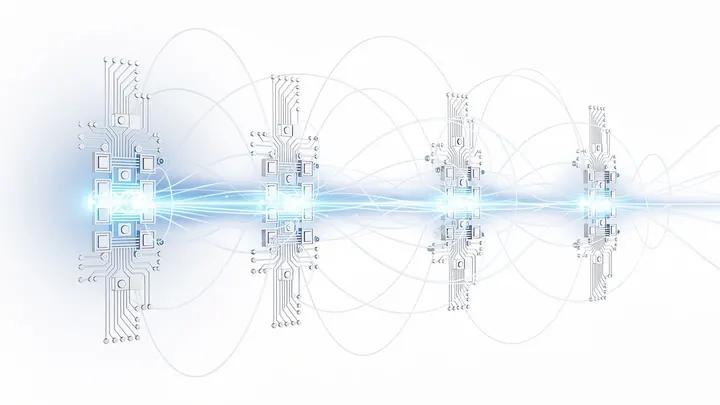
Two pendulums on a shared string trade motion: push one, and the second starts swinging, and a moment later the first gets a push back. In a thorium-229 atom, energy flows nearly loss-free between the electron shell and the nucleus.
In the scorching heart of a dying star, an invisible stream is born — a neutrino gas. The particles race through matter almost without stopping, but when their density is enormous, they start to feel each other. Old calculations described this as a jostle in a crowd: each shove changes direction, but no connection arises between passersby.
In the mountains, there is a saddle — a point where the trail from one valley crosses over into another. Standing exactly on it, you take a step and are already descending the new slope. In chemistry, such a place is called the transition state: a brief moment when atoms are frozen on the threshold of transformation.
Two guitar strings are stretched on the same neck. They are almost identical, but one is slightly shorter — and they sound different. That's roughly how the two isomers of ethanimine work: molecules with the same set of atoms but rotated differently in space. Astronomers spotted this molecule in the dense clouds near the center of our Galaxy.
Atomic nuclei are wrapped in fluffy electron coats — in such attire, they can't get close enough to embrace. But swap the light coat for a heavy one: a muon, a particle from the standard model, shrinks the cloud by nearly 200 times.
A neural network trained on collisions of protons and electrons transferred its skills to a completely different experiment — catching neutrinos. Like a chef who learned French cuisine and then, without preparation, baked an excellent Uzbek plov.
Prostate cancer radiation therapy requires precise calculation of the radiation dose at every point in the body. The classic Monte Carlo method simulates millions of particles and takes hours, while adapting the plan to daily anatomical changes needs seconds.
Light usually pushes an atom straight ahead, like wind pushing a sail. But if the beam is twisted into a corkscrew, the picture changes: the atom can fly off to the side, as if caught by a spinning wheel. In the new work, physicists calculated that such a vortex photon can transfer almost all of its rotation to the atom — up to 100 percent.
Two quantum dots are like two tiny pockets in a piece of silicon where an electron can sit, like a ball in a cup. When the pockets are far apart, each electron lives on its own, and its energy resembles the levels of a solitary atom.
An ion channel in a cell membrane is a gate just a few atoms wide. Every second, millions of charged particles, sodium and potassium ions, pass through it. Classical physics said that to get through, an ion must jump over an energy barrier, like a traveler crossing a high mountain pass.
Electrons in a conductor behave like a crowd on an escalator: each one moves on its own, but together they create a flow. If you make them circle around a ring, their angular momentum (a measure of rotation) can couple to a magnetic field, like gears in a clock.
Igniting a miniature sun is a long-held dream of humanity. Typically, scientists try to confine scorching plasma (a gas of charged particles) at temperatures of hundreds of millions of degrees. But plasma tends to escape magnetic traps, and confinement comes at enormous cost.
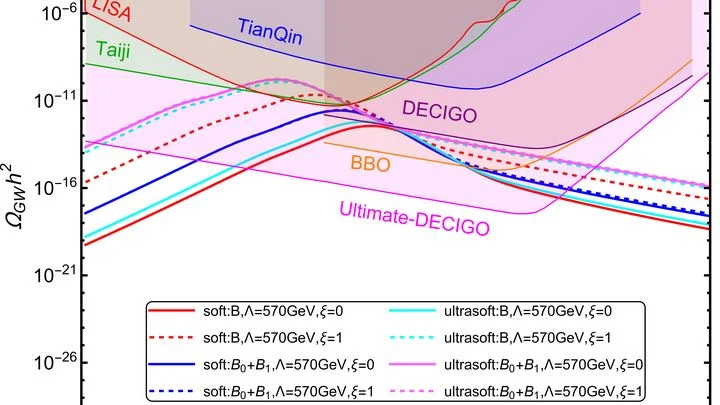
In the infant universe, right after the Big Bang, space was expanding rapidly, and the vacuum resembled a superheated liquid. When 'boiling' began, bubbles of true vacuum emerged. Expanding at the speed of light, they triggered gravitational waves — tremors of space itself that have reached us.
Every breath you take and every muscle twitch runs on a stream of electrons flowing through proteins inside your cells. These proteins aren't static: they constantly change shape, like a spring that compresses and releases. But until now, no one has seen exactly how these movements open or close the path for electrons.
Emptiness isn't always empty: it can hide energy, like supercooled water hides ice. Physicists call this false vacuum — a state that only needs a nudge to cascade into the true one.
Plants employ an army of perfect couriers to deliver energy. Each photon of sunlight is absorbed, and its energy is instantly, with almost no loss, transferred to reaction centers where nutrient synthesis occurs.
In the quantum world, particles can walk through walls: this is quantum tunneling. If you place a detector right in the path of such a 'ghostly' passage, the moment of detection acts like a starting pistol: the particle gets a sharp kick and flies out of the barrier with excess energy, turning into a tiny engine.
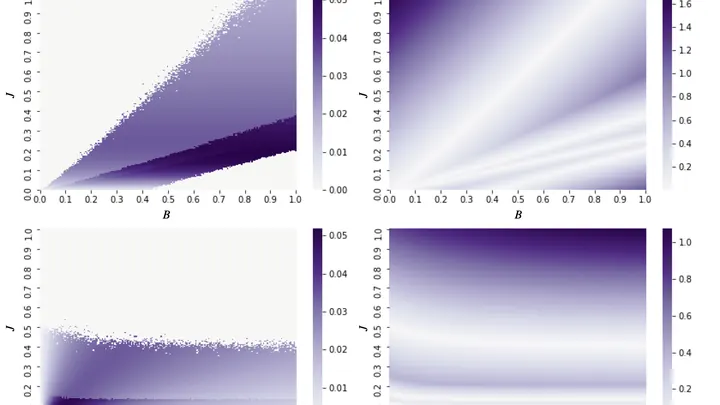
Two travelers head for the same destination. One starts closer but takes a winding country road. The other starts farther away but immediately hits the highway. The second arrives first. In quantum physics, this paradox is known as the quantum Mpemba effect: a state initially farther from equilibrium reaches it faster than one that starts closer.
The hall is silent, but the conductor has already raised the baton. The orchestra is quiet, yet the score is changing. So it is in an optical resonator: there is no light, but the quantum vacuum—that emptiness filled with short-lived field fluctuations—is already conducting the…
Energy as a signature: the sign of the transferred pulse reveals the secret. This metaphor is the key to a new quantum key distribution protocol that uses energy teleportation instead of state measurement.
Quantum entanglement long remained a curiosity — 'spooky action at a distance,' as Erwin Schrödinger put it, which shatters our conventional picture of the world. But in 2008, physicists realized: entanglement can be used not only to transfer bits, but also to teleport energy.
A tiny tungsten tip with a radius of less than a hundred nanometers is the perfect stage for watching a quantum performance. Apply an electric field of a few volts per nanometer, and electrons start flying out of the metal: that’s field emission.
A postal money order doesn't arrive instantly but after a set delay, and the amount credited to the recipient's account ends up larger than what the sender deposited in cash. That's roughly how the new protocol, dubbed temporal quantum energy teleportation (TQET), works.
In ordinary quantum energy teleportation, two parties, Alice and Bob, share a common quantum state.
In a chain of eight spins, a defect lurks — a tiny magnetic moment. The Kondo effect, known since the 1930s, makes electrons around it align into a collective screen. The material's resistance abnormally increases. But detecting such an impurity hidden deep in the structure is like finding a stone at the bottom of a dark pond.
Quantum entanglement is like an invisible spring between particles — squeeze one, and the other twitches, no matter where it is. In the new work, physicists built a model of four spins (tiny magnetic arrows) in a chain, where the end spins are held by a local magnetic field.