Calibration is the process of adjusting a measuring instrument or experimental setup so that its readings correspond to known, traceable standards. In physics, it is the bridge between raw data and meaningful numbers: without calibration, a detector's output is just a voltage or a count, not a temperature, a mass, or a position. The concept appears across vastly different scales — from adjusting the zero point of a balance to aligning the mirrors of a gravitational-wave observatory — but the core idea is always the same: compare the device against a reference, then correct for any systematic deviation.
History
The term derives from the practice of comparing the bore diameter of a gun to a standard gauge ('calibre'), dating back to the 19th century. Modern scientific calibration was formalized with the establishment of international standards like the meter and kilogram in the late 1800s.
How it works
A typical calibration involves applying a known input (a standard mass, a known frequency, a reference voltage) and recording the instrument's response. The difference between the expected and observed output defines a correction function, which is then applied to all subsequent measurements. In more complex systems, like quantum computers or dark-matter detectors, calibration can be an ongoing, automated process: the device periodically measures a reference state and adjusts its parameters to compensate for drift, noise, or environmental changes.
In practice
Calibration is essential in every quantitative science and industry — from medical devices like ECG machines (as in 'Кардиограмма без розовых очков') to space telescopes mapping dark matter, where even tiny systematic errors would corrupt the results.
Fun fact
The 2019 redefinition of the kilogram replaced a physical metal cylinder with a fixed value of Planck's constant, meaning that mass calibration is now ultimately tied to quantum mechanics rather than a piece of metal.
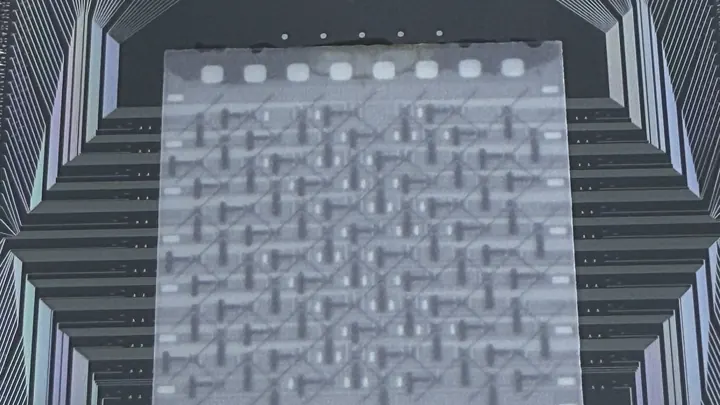
Imagine a huge puzzle where each piece is a quantum particle. To complete the picture, you don't just fit the pieces together: you need to entangle them in a special way. Usually, this is done by carefully applying operations one after another, like assembling the puzzle strictly by the instructions, row by row.
A cup of hot coffee sometimes freezes faster than cold tap water. This paradox, known as the Mpemba effect, has long been considered a curiosity of classical physics. Now its quantum counterpart has helped test and tune quantum processors — devices that may one day power supercomputers.
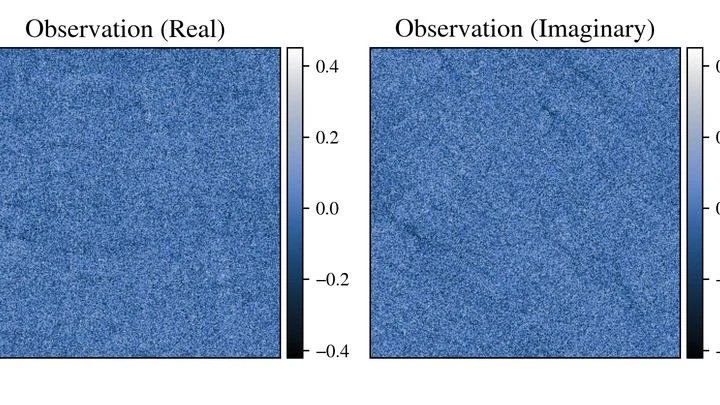
The cosmic dawn is hidden behind a dense veil of time. To see beyond it, you need to catch the radio signal from clouds of neutral hydrogen — the so-called global 21 cm signal. But it is so faint that the receiver's own noise drowns it out.
The 120 residents of Montelago are not people but digital characters. Each, besides a name and biography, has three hidden coordinates: trust in municipal authorities, assessment of source credibility, perceived adequacy of information. These numbers are known to the creators but not to the system itself.
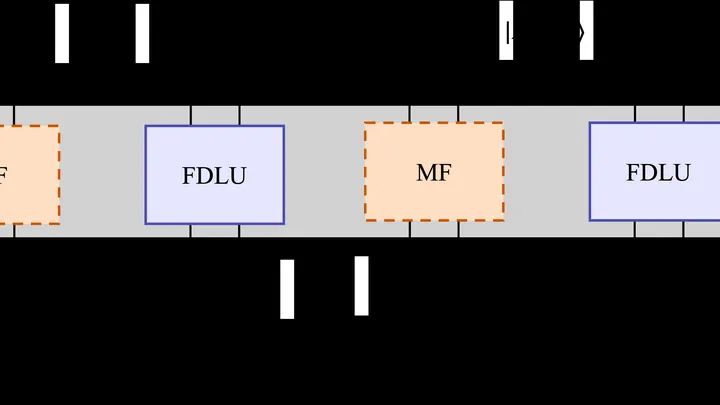
Quantum computing suffers from 'false notes' — errors that arise from the slightest inaccuracy. Now they are eliminated with the precision of tuning a concert grand piano. The idea traces back to the dreams of pioneers — David Deutsch and Peter Shor — of flawless operations.
Tuning a quantum processor is monotonous work: you need to calibrate each qubit — a quantum cell — much like a watchmaker adjusting dozens of tiny gears. Humans get tired and make mistakes.
A lab sends a robot a list of a thousand candidate molecules for a new drug. The predictor robot, trained on old data, gives each one a 'fit or no fit' score. But when the list comes from an unfamiliar area, a different virus or a rare tumor, the robot starts to get confused. Its confidence stays high, while actual hits drop to zero.
A camera takes a snapshot, but the sensor is noisy, the optics blur, and some pixels are overexposed. Reconstructing the original picture is like guessing a melody from a scratched record: there are many possibilities, and which one is true is unclear.
A radiation sensor in the city is like a street musician: it has to hit the right notes even when fingers go numb from cold or the instrument is baked by the sun. Usually, such devices are kept in greenhouse conditions, with heating or cooling, otherwise the energy scale (which distinguishes harmless potassium in concrete from dangerous cesium) starts to lie.
An ECG is not just a wavy line on paper. Like a diary, it records the state of the entire heart: rhythm, wall thickness, and hints of future problems. But currently, programs that learn to read this diary are trained on very narrow tasks — mostly detecting arrhythmias. That's like teaching someone to understand a book by showing them only a list of typos.
In a quiet lab, a device the size of a microwave oven sits on a table. Inside, a coil glides smoothly up and down while a computer reads electrical signals. This is the tabletop Kibble balance — a machine that links mass to quantum constants.
Previously, such balances occupied a whole room and required a team of engineers.
Quantum communication via satellite is like a roll call between two distant lighthouses: the beam must hit the detector exactly, or the message can't be read. But in space, everything shakes — sunlight heats the hull, thrusters cause vibrations, and delicate optics drift off-axis.