The apparent diffusion coefficient is a quantitative measure derived from imaging or microfluidic data to assess molecular mobility in biological or fluid systems.
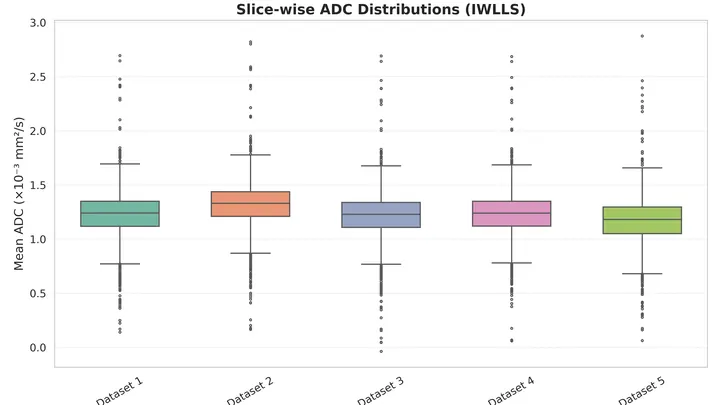
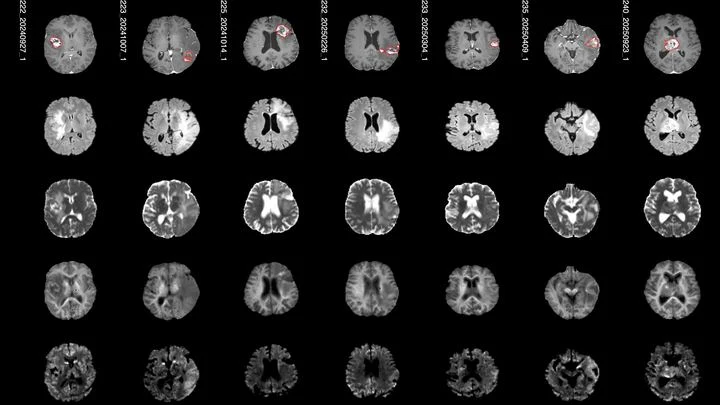
The apparent diffusion coefficient (ADC) is a quantitative parameter derived from diffusion-weighted MRI (DWI). When DWI is performed with different b-factors (gradient pulse amplitudes), an exponentialsignal decay curve is obtained. ADC numerically equals the slope of this curve on a semi-log scale and reflects the average diffusion within a voxel (three-dimensional pixel). On ADC maps, areas with restricted diffusion appear hypointense (dark), which correlates with high cellularity of malignant tumors.
History
Diffusion MRI was proposed by Stejskal and Tanner in 1965, using gradient pulses to measure self-diffusion. In 1984, Denis Le Bihan demonstrated its applicability in medicine, obtaining the first diffusion-weighted images of the brain. The term 'apparent diffusion coefficient' emphasized the difference from free diffusion due to tissue barriers. By the 1990s, ADC had become a routine quantitative biomarker in MRI. In the 2000s, the IVIM concept (Le Bihan et al.) allowed separation of the microcirculation contribution. Today, ADC is a key component of multiparametric prostate MRI and brain diagnostics.
How it works
The DWI sequence includes two strong gradient pulses of equal amplitude G, duration δ, separated by interval Δ. The first pulse encodes the phase of spins according to their position, the second refocuses. If a spin has moved, the phase shift is not compensated, and the signal is attenuated. By measuring the signal at a minimum of two b-values (b = γ²G²δ²(Δ-δ/3), where γ is the gyromagnetic ratio), a plot of ln(S) vs b is constructed. The slope of this plot (absolute value) is the ADC. In practice, a monoexponential model is used, but due to complex microstructure, deviations may occur. The ADC map is computed pixel-by-pixel after model fitting.
In practice
In MRI, ADC maps help distinguish cancer (dense cellular structure, reduced diffusion) from healthy tissue or edema, improving diagnostic accuracy without biopsy.
Fun fact
ADC values help not only to detect cancer but also to predict its aggressiveness: the lower the ADC, the higher the Gleason score on biopsy.
A drop detaches from a faucet nozzle, and a thin filament trails behind it. At the last instant, the filament breaks not in one place but in two—and between them, a tiny sphere, a satellite droplet, hangs suspended. This "debris" of secondary droplets clogs printheads, ruins microchips, and throws off the accuracy of drug dosing.
At night, the bedroom hosts an orchestra, with breathing as the soloist. Under the sheet lies a mat with 512 sensors, each capturing the slightest body movements. When breathing stops for ten seconds, the orchestra falls silent. The challenge is to hear that silence.
Previously, it was unclear which notes in this music matter most.
A raindrop falls on glass and flattens into a pancake. Add a bit of polymer to the water, and it becomes elastic, like jelly. You'd think such a jelly would spread differently.
Toss a handful of sand onto a table — the grains scatter equally in all directions. But if a magnet is hidden under the table and the sand is iron, the trajectories get trickier: an invisible structure overlays the chaos. That's roughly how molecular motion works inside a living cell.
Radiation therapy is a precision strike on a tumor, but every shot must be calibrated to within a millimeter and a fraction of a second. The problem is that existing dosimeters are either bulky, or they distort the beam themselves, or they require pauses for readout.
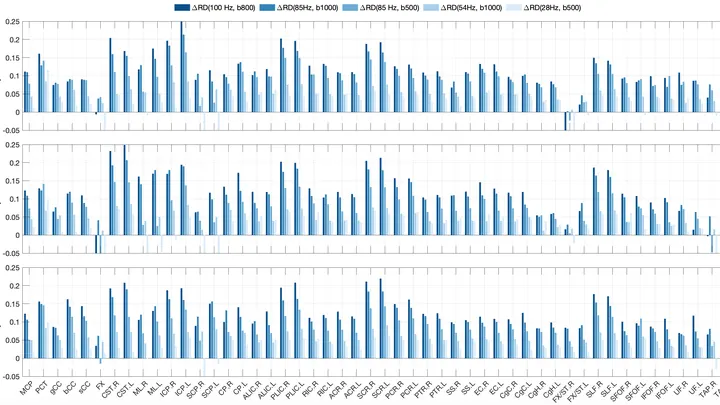
Water inside nerve fibers doesn't move like it does in a glass: it constantly bumps into the walls of axons (the long projections of nerve cells). If you make the pause between MRI radio pulses very short, water doesn't have time to travel far, and its movement reflects the tightness of the surrounding space.
A night river is dotted with tiny sparks. This isn't plankton: it's functional pollen-sensors, millimeter-sized devices that swim on their own and measure the water's chemistry.
Each particle is a tiny lab. Inside, two reagents meet: one triggers a glow upon contact with a pollutant, and the second, a colored filter, blocks out interference.
A car's speedometer shows the speed right now, but to know whether the car will reach its destination in a year, a single glance at the gauge isn't enough. That's roughly how conventional formulas for kidney failure risk work: they rely on one blood test and miss how values have been shifting over months and years.
Prostate MRI scans often look like photos taken through a dirty window: noise, blurred edges, curvature from field imperfections. Scientists checked what happens if you 'wash' that window: remove the excess, correct the distortions, and accurately align different types of scans.
In the brain's white matter, the signal travels along axons — long neuronal processes wrapped in an insulating myelin sheath. Water fills the space inside axons and outside, in the narrow gaps between fibers.
Water is not just a wet substance. On a picosecond scale, it resembles a dance floor where molecules continuously break and form bonds with each other. Usually, this dance is described by one main movement — collective relaxation, as if the whole crowd simultaneously slows down after the music stops.
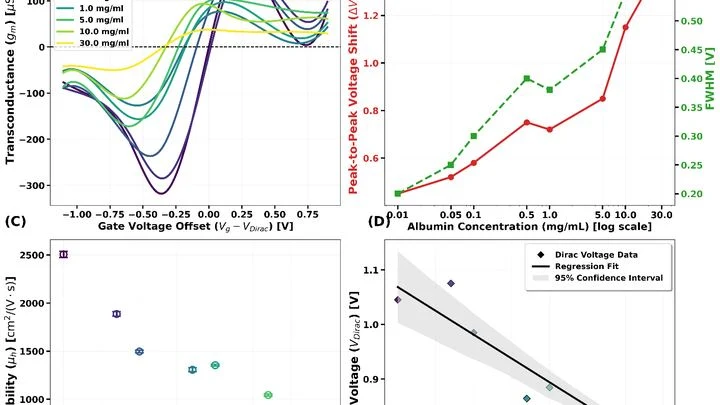
In a drop of blood float millions of albumin molecules — the main transport protein. Its level drops in kidney and liver diseases, so doctors need a fast and accurate way to measure it. Engineers have proposed a detector the size of a dust particle: a graphene transistor that works directly in liquid.
Graphene is a sheet of carbon one atom thick.
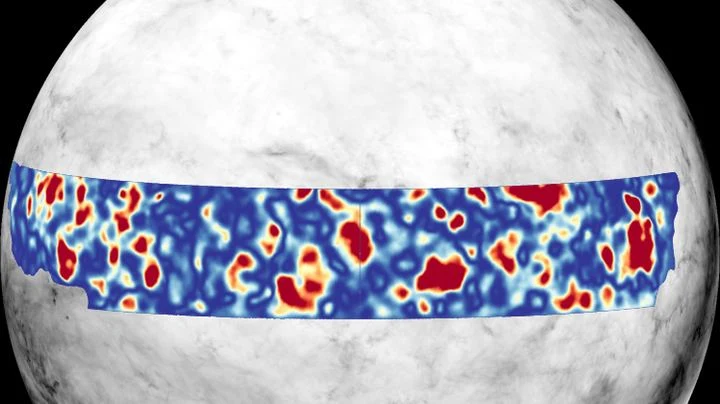
Moving clumps of galaxies and invisible dark matter create wakes in the afterglow of the Big Bang, like boats stirring a pond. This wake, the moving lens effect, is so subtle it shifts the light’s temperature by only a few millionths of a degree: comparable to detecting a candle’s heat from across a continent.
A city is not just a jumble of buildings and streets. For the dengue virus, carried by mosquitoes, a city is a patchwork of neighborhoods, each with its own conditions for outbreaks. In one district, mosquitoes are almost absent; in the next, they swarm as if someone left hundreds of water containers open.
A drop of oil in a glass of water forms a sphere. Inside a living cell, a similar separation occurs, but instead of oil, proteins and nucleic acids form dense droplets — condensates. These droplets act as temporary workshops: they gather needed molecules, speed up reactions, and break apart when the task is done.
To peek inside a muscle, it is illuminated with radio waves in a strong magnetic field: that's how MRI works. Water in cells and water in blood respond differently, but a standard scanner doesn't tell them apart: it produces an averaged image where the signal from capillaries is superimposed on the signal from muscle fibers.
A drop of ink in a glass of water spreads quickly and evenly. But if the water is squeezed between tightly packed spheres, the ink cloud crawls slowly and erratically: it dodges obstacles and gets stuck in narrow necks. Water molecules in living tissue move in much the same way.
Imagine a water park with many pools connected by narrow passages. Visitors, water molecules, splash around in each pool, but occasionally move to the next one. In a brain tumor, these "passages" are protein channels in cell membranes. Their abundance determines how quickly water moves between cells.
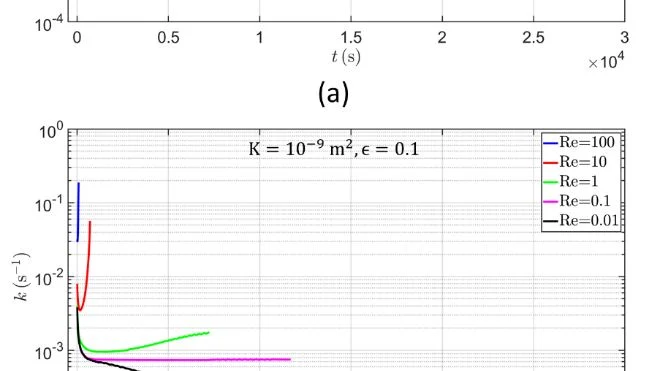
A porous implant filled with a drug works like a sponge that slowly releases the substance into the surrounding fluid. But if the fluid flows quickly, it washes out the drug differently than in a calm environment. The authors computed on a computer how different flow rates and properties of the porous structure affect drug release.
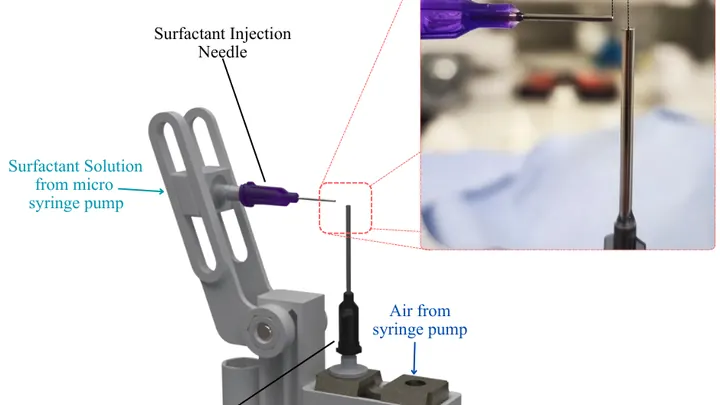
An air bubble escapes from a thin needle at the bottom of a glass and shoots upward. In clean water, it behaves like a spring: it flattens, then stretches, exchanging energy between motion and shape. Add a drop of soap to the water, and the bubble immediately calms down, becomes an almost perfect sphere, and rises smoothly without trembling.
Imagine a city where streets are not straight but winding, with dead ends and hidden passages. A bike courier will take much longer to deliver a package than in a city with a regular grid of roads. Similarly, molecules inside living tissue: their path depends on how "tangled" the tissue structure is.
Scientists built a model that describes the movement of molecules in such a "tangled" environment.
A doughnut-shaped magnetic trap holds plasma made of boron and hydrogen. Inside, the temperature rises above one hundred million degrees — hotter than the center of the Sun. At such heat, nuclei collide and fuse, releasing energy.
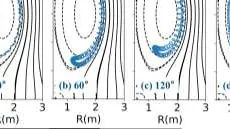
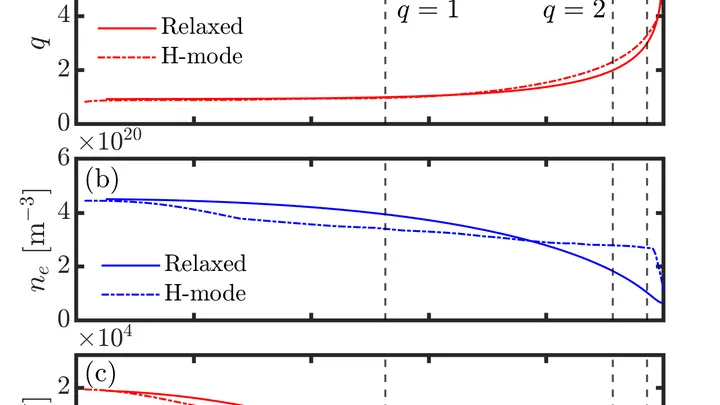
Inside a tokamak, a donut-shaped device where magnetic fields confine plasma, the hot gas of charged particles can start to tremble. At first, everything is calm, but then the temperature drops sharply, and sawtooth edges appear on the graph.
A living cell is like a bustling city: cargo moves continuously along its streets, and traffic flows are regulated so that everything needed arrives on time. But while you can watch a city from a helicopter, the cell's interior has long been observable only through a narrow slit — the microscope showed just a flat picture.
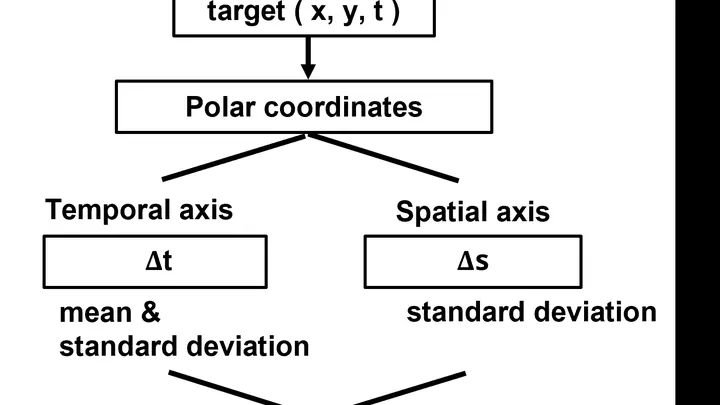
Eyes follow a dot that smoothly traces a complex curve on the screen. For most people, the gaze stays close to it, but for some, it seems to slip or lag behind. Previously, such peculiarities drowned in average numbers: if you add everyone up and divide, the difference almost disappears.
Instead of looking at averages, the scientists decided to examine each person individually.
A water droplet on a leaf disappears faster under the sun than heat calculations would predict. A few years ago, a hypothesis emerged: light itself, without heating, could knock water molecules off the surface. This was dubbed the photomolecular effect. If it exists, clouds, climate, and even everyday clothes drying could work differently.
A cell is a city with gates. Each gate is a protein channel in the membrane: through it, ions, sugars, and signaling molecules pass in and out. Some gates are almost always open, while others open and close randomly, like subway doors that let a passenger through one moment and slam shut in their face the next.
The layer of cells lining internal organs is like a crowd in a packed subway: everyone stands shoulder to shoulder, but sometimes the crowd starts to flow, and people slip past each other. Biologists call this behavior a transition from a jammed, solid state to a fluid one.
A fat droplet inside a living cell is like a bobber in rough water. It doesn't move in a straight line but in jerks, sometimes pausing, sometimes speeding up. Previously, such movements could only be seen in a single plane, like watching the bobber from above without knowing its depth.
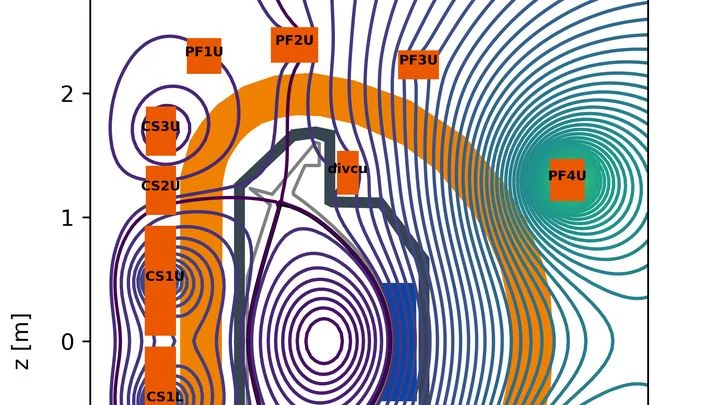
A soup pot is usually round, and a frying pan is flat. The shape of the cookware determines how the boiling water sloshes around. In a tokamak, a device where superheated gas is confined by magnetic fields, the shape of the plasma is also chosen deliberately.
The battery in your phone or electric car is a tiny chemical factory. Inside, lithium ions shuttle between two electrodes, and at the boundary with the liquid electrolyte, a thin film forms: it determines how long the battery will last. This film is called the solid-electrolyte interphase.
Inside a fuel cell, protons must race through a solid material like commuters through turnstiles at rush hour. If the turnstiles are sparse and narrow, the current is weak. In the past, to find a material with good proton conductivity, chemists had to screen compounds almost blindly, one by one.
Two laser beams cross at a tiny angle, and an invisible lattice appears in a cloud of rubidium atoms: some atoms are excited, others are not. Then this lattice begins to melt, like a pattern in the sand under the wind. Atoms collide with surrounding gas molecules and drift apart.
The speed of this blurring depends directly on the surrounding gas.
Cells in our bodies are not rigid bricks but rather squishy sponges soaked in water. Their softness or stiffness matters: cancer cells are often softer than healthy ones, and cartilage must withstand pressure with every step. To measure this stiffness without touching the tissue, scientists use light.
Toss a handful of peas into a pot of semolina porridge — the peas quickly sink, pushing the grains aside. But if you make the porridge very thick and sticky, the peas get stuck. That's roughly how light lithium atoms behaved in a cloud of heavy potassium atoms at temperatures just a few millionths of a degree above absolute zero.
A drop of blood is a bustling city in miniature. Thousands of different molecules scurry through it, each leaving its own trace. But peering directly into this city is hard: the streets are tangled, and there are so many inhabitants that counting them all individually is out of the question.
Scientists have found a way to listen to the whole city at once, without singling out its residents.
A drop of blood can reveal how a tumor in the lungs is behaving. Doctors have long noticed that when the disease retreats, some blood markers rise while others fall. But tying these changes into a single coherent picture has been elusive.
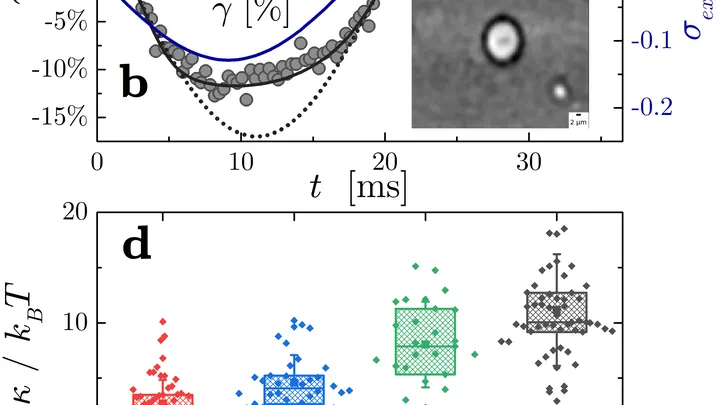
A microscopic gel bead or a tiny oil droplet squeezes through a narrow channel whose walls rhythmically contract and relax. The particle flattens and then recovers its shape, and by how quickly it does so, you can infer its internal elasticity and viscosity.