The Celestial Forge: How Proton Beams Take the Shape of a Hammer ✦
Original: "Hybrid simulations of the proton beam instabilities in the young solar wind. The formation of hammerhead-like distributions"
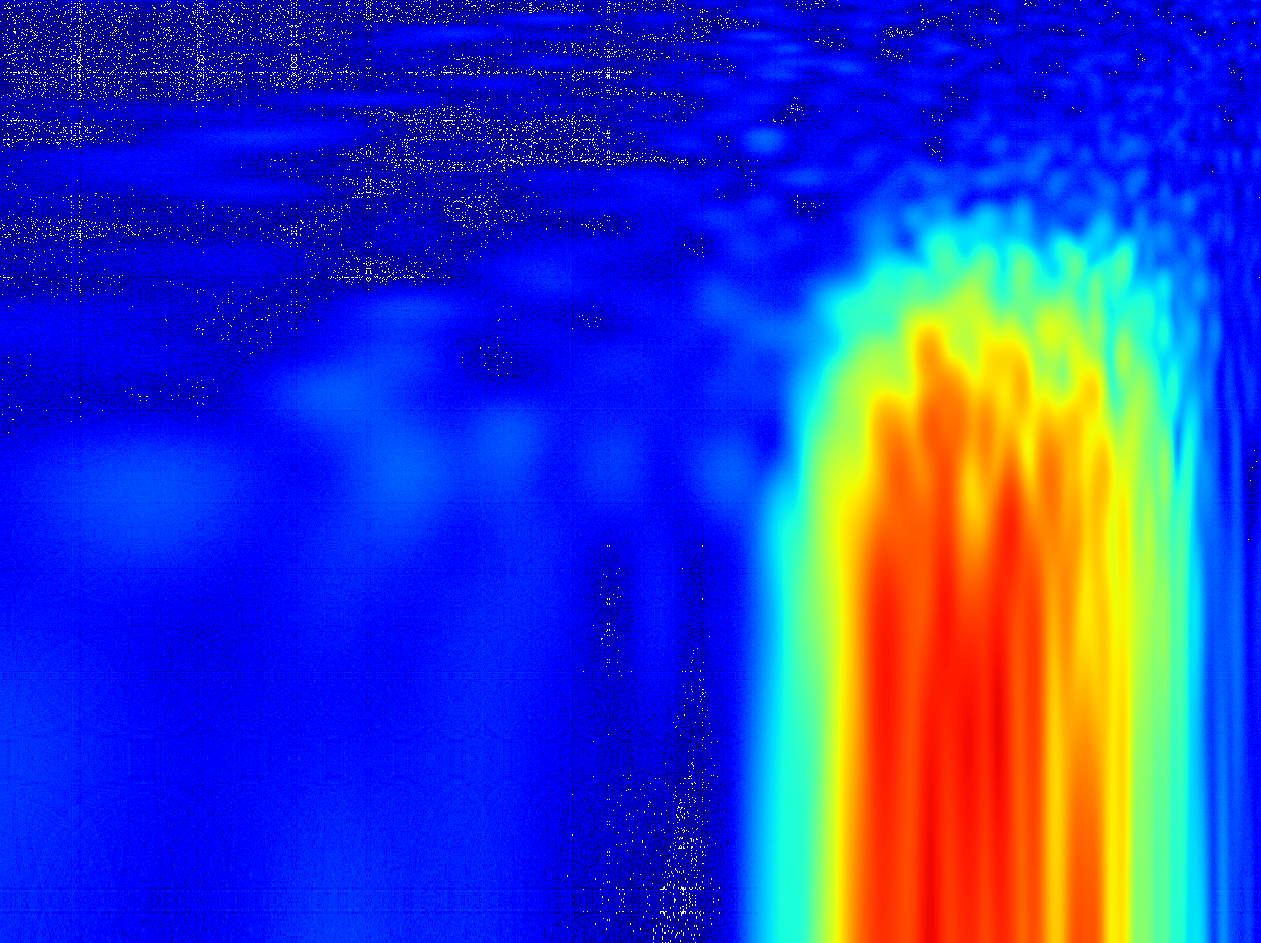
Hybrid simulations showed that electromagnetic waves in the young solar wind inexorably forge drifting proton beams into distinctive ‘hammer-shaped’ structures—exactly those recorded by the Parker probe.
Links in the knowledge graph 1
A proton beam, bursting from the corona, could reach Earth in 20 minutes—but the plasma puts on its own brakes. Electromagnetic waves, like a gust of headwind, sculpt it into a hammer shape. This mechanism governs the birth of energetic particles and space weather—perhaps one day we’ll predict it as precisely as a thunderstorm on Earth.
🎯 A proton beam could reach Earth in 20 minutes, but electromagnetic waves, like a headwind, turn it into the slow solar wind that takes 2–4 days. It's the most efficient cosmic brake, forged by the plasma itself.
\beta_{\parallel} = \frac{8\pi n k_B T_{\parallel}}{B^2}
Who sets the rules: thermal pressure or magnetic field? When beta is small, the field keeps the plasma in a tight grip.
v_A = \frac{B}{\sqrt{4\pi n_p m_p}}
The speed of magnetic ‘sound’ in plasma—like a string along which a wave runs.
Scientists
Alan GuthAndrei LindeGeorges LemaîtreJames PeeblesAdam RiessBrian SchmidtSun
hydrogen
helium
speed of light
entropy
spectroscopy
big bang
cosmic microwave backgroundLaws
Friedmann equationsHubble's lawsecond law of thermodynamicsDoppler effectprinciple of constancy of the speed of lightBekenstein-Hawking entropy