Popular

Plasma Physics physics.plasm-ph

12 articles

Fundamental plasma physics, magnetically confined plasmas, high energy density plasmas, astrophysical plasmas, low temperature plasma applications.

articles

Fusion Energy Will Help Treat Cancer

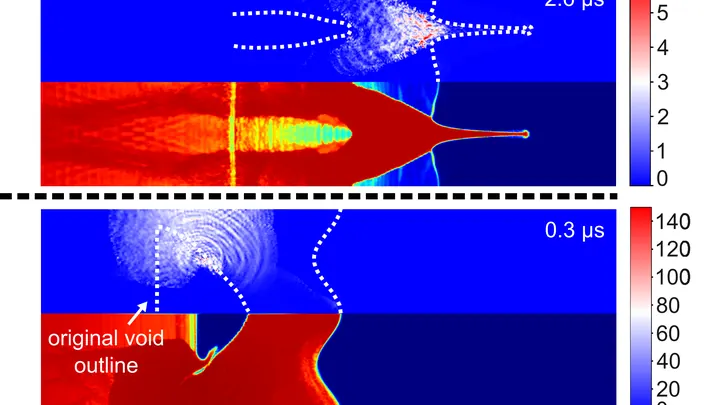
Neutrons from fusion turn stable elements into radiopharmaceuticals—without waste or nuclear reactors. A single compact source will replace dozens of outdated facilities and meet global demand for diagnostic and therapeutic isotopes.
arXiv:2511.02814 · 2025-11-04

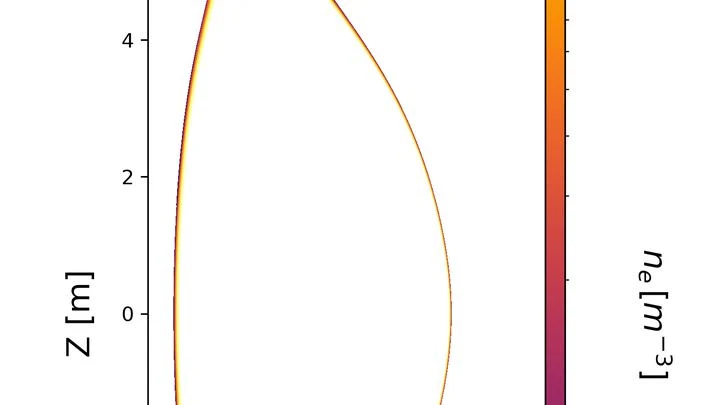
A Scale-Free Fusion Boiler: The Secret's in the Walls

Sponge-like walls absorb plasma particles, preventing them from contaminating the fuel and improving heat retention. But this creates dangerous overheating. Computer simulations show: tracking individual particle motion helps trap harmful impurities and distribute heat evenly. This is a step toward
arXiv:2511.09437 · 2025-11-12

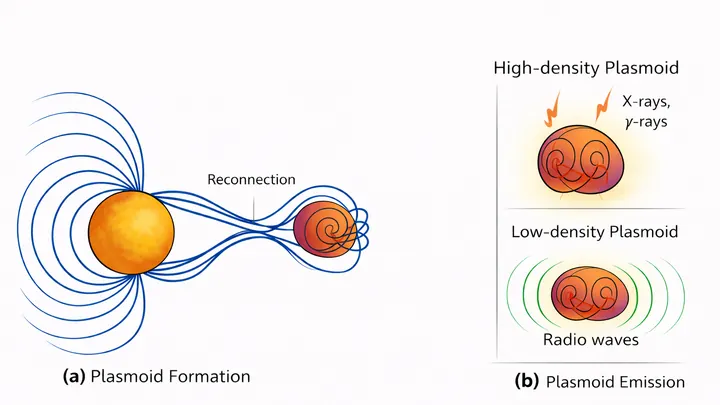
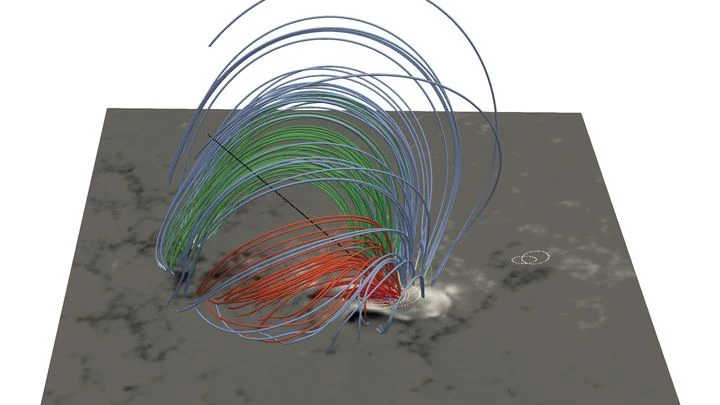
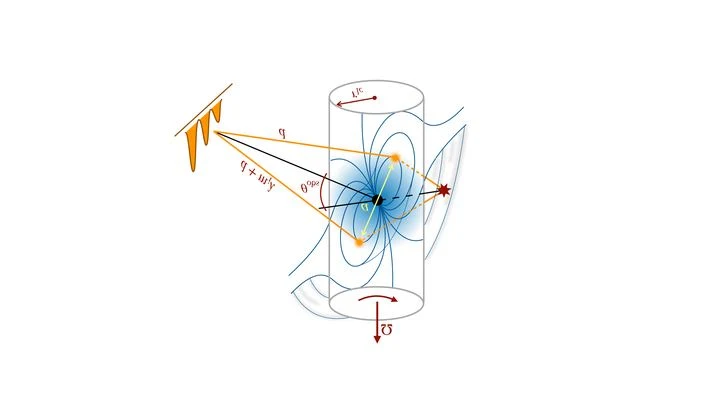
Plasma Sphere Explains Magnetars and Radio Bursts

Magnetars — neutron stars with a monstrous magnetic field — sometimes outshine an entire galaxy. Fast radio bursts are enigmatic radio signals from distant galaxies. A new model unites them: it's all about an expanding cloud of magnetized plasma. A dense cloud produces an X-ray flare, a thin one pro
arXiv:2601.00441v2 · 2026-01-01

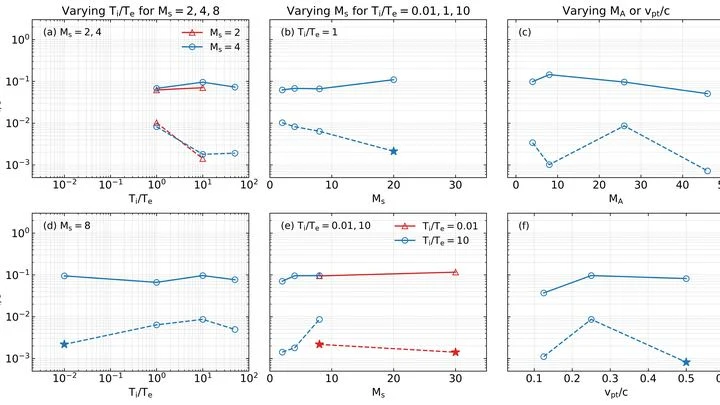
Black Holes as Ghost Particle Accelerators

Using computer simulations, scientists uncovered how natural particle accelerators work in the searing coronas around supermassive black holes. Shock waves in the plasma transfer about 10% of their energy to protons—even from mild shocks. This explains why neutrinos arrive from active galaxies while
arXiv:2601.01999v2 · 2026-01-05

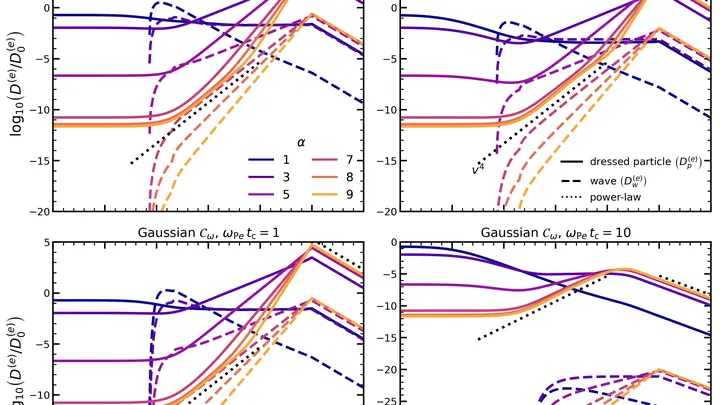
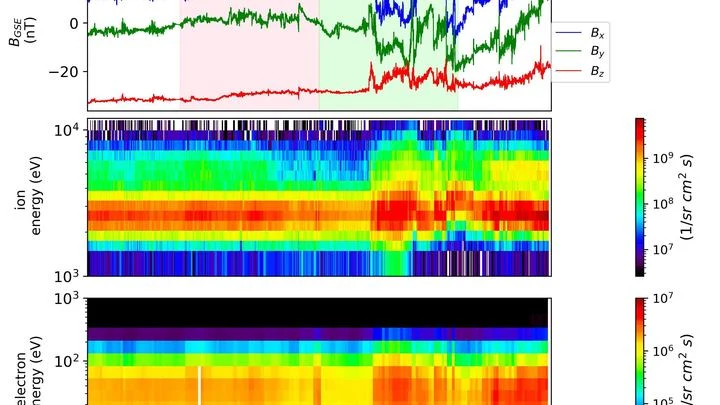
Wind for the swift: how turbulence heats the solar corona

The theory discovered: chaotic electric fields in plasma, like a sieve, sift fast particles from slow ones, forming a universal 'tail' of super-fast particles. The reason lies in the shielding effect: slow particles wrap themselves in charge clouds and become invisible to the field, while fast ones
arXiv:2601.03344v2 · 2026-01-06

Fusion without plasma: a beam instead of the sun

Colliding a particle beam with a 'naked' target opens the way to fusion energy without heating plasma to hundreds of millions of degrees.
arXiv:2601.09458 · 2026-01-14

Muon Trampoline for a Thermonuclear Leap

Scientists have found a way to lower the electric barrier preventing a proton and boron from fusing. A muon temporarily ‘stuck’ to the proton shields its charge, and the reaction probability skyrockets thousands of times. This paves the way to nearly waste-free fusion energy.
arXiv:2604.18928 · 2026-04-21

The Final Symphony of Neutron Stars

New simulations show: before merging, neutron stars twist magnetic fields like strings, generating gamma-ray bursts and radio signals. These precursors will help astronomers prepare for the event and perhaps unravel the mystery of fast radio bursts.
arXiv:2604.22059 · 2026-04-23

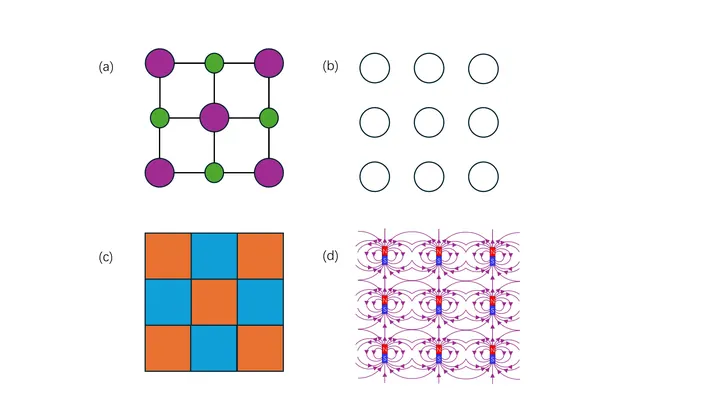
The Formula Governing the Magnetic Fields of Stars

The Grad–Shafranov equation is the key to understanding magnetic fields in hot gas. Previously, it had to be derived anew for each object. New work provides a general form that works both in tokamaks and near black holes. Modeling cosmic magnets has become simpler.
arXiv:2605.08597 · 2026-05-09

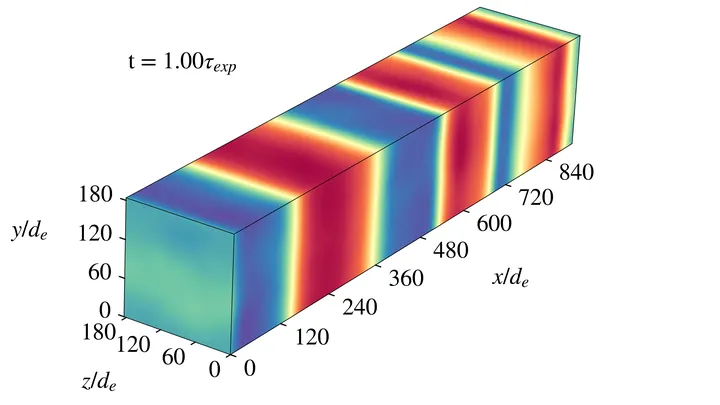
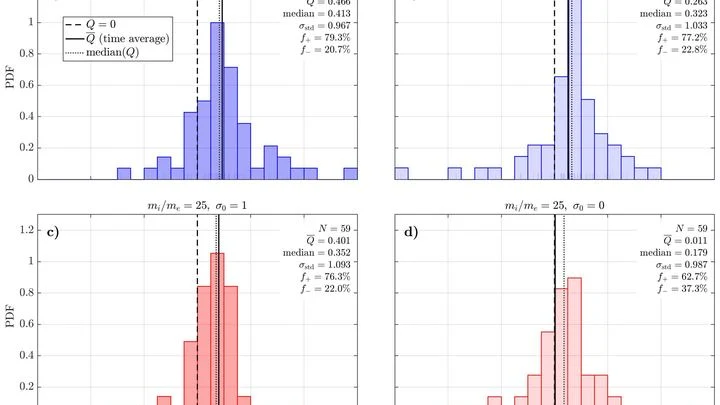
Magnetic Forge: Plasma Pulsations Give Birth to Record Energies

In astrophysical plasma with high beta parameter — from planetary magnetospheres to accretion disks around black holes — particles with non-thermal energies are often detected. New kinetic simulations have shown for the first time: they are produced by magnetic pumping — rhythmic cycles of compressi
arXiv:2606.05286v1 · 2026-06-03

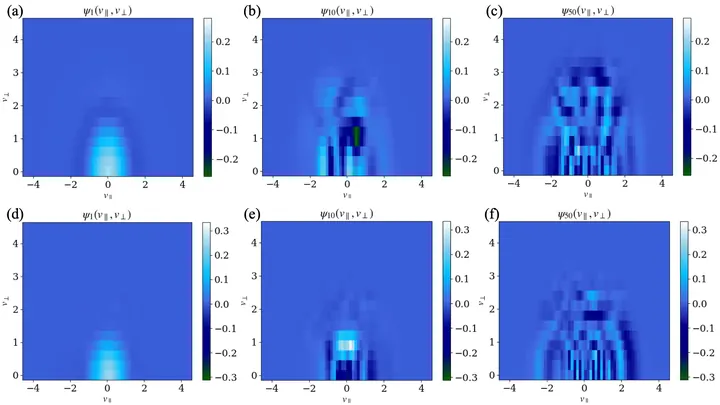
The Celestial Forge: How Proton Beams Take the Shape of a Hammer

Data from the Parker probe, plunging into the very furnace of the solar wind, brought a mystery: proton beams there often have a hammer shape. To understand how this happens, scientists ran hybrid simulations, treating protons as particles and electrons as a fluid. By comparing two regimes differing
arXiv:2606.07838v1 · 2026-06-05

The Universe's Dance Floor: When Dark Matter Breaks into a Quantum Rhythm

Scientists have constructed a rigorous quantum-kinetic theory of gravitational instability for the fuzzy dark matter model—ultralight bosons with a mass on the order of 10⁻²² eV. By applying the Wigner equation and the Landau method, they derived a dispersion relation that revealed a sharp crossover
arXiv:2607.04893v1 · 2026-07-06