Popular

Space Physics physics.space-ph

10 articles

Space plasma physics, heliophysics, space weather, planetary magnetospheres, auroras, interplanetary space, cosmic rays, radio astronomy.

articles

Qubits Need Space: Cold and Weightlessness Help Quantum Computers

Qubits—the computational elements of quantum computers—are extremely delicate. Heat, vibration, and even gravity disrupt their operation. Scientists have found that weightlessness and deep cold near absolute zero create ideal conditions for them. Experiments on the ISS with special quantum states an
arXiv:2512.11091 · 2025-12-11

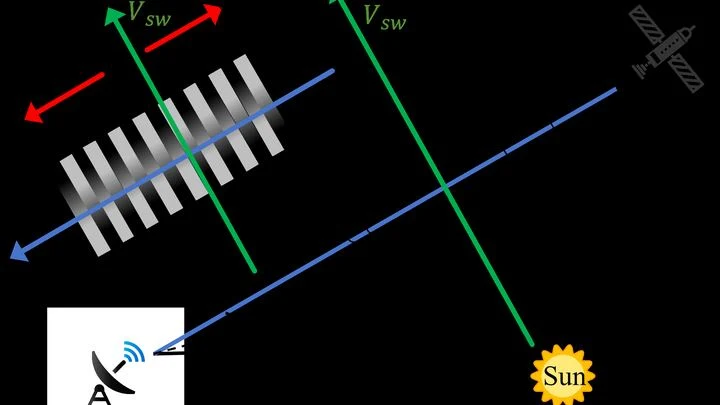
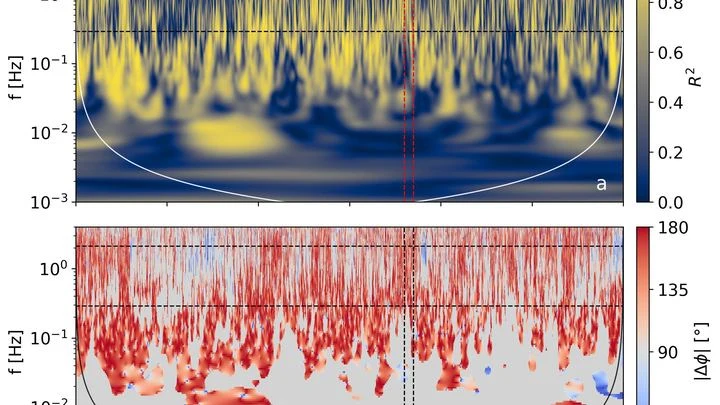
Mixer Waves of the Solar Wind: How the Corona Heats Up

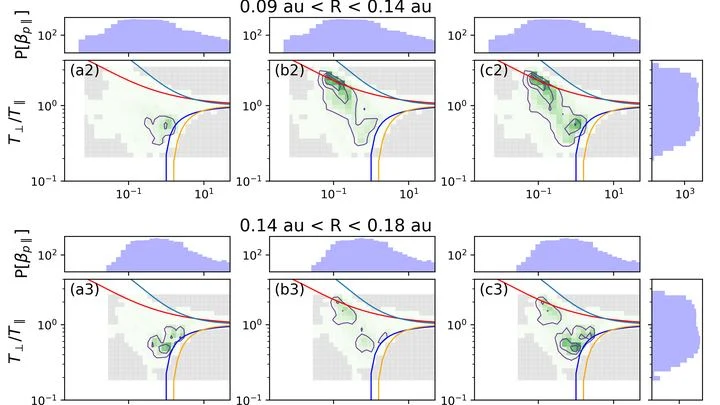
Near the Sun, left-handed mixer waves rage, making the energy spectrum steeper. Right-handed waves are quieter close by but intensify farther out thanks to hot proton streams. This discovery helps predict space weather and understand why the corona is hundreds of times hotter than the surface.
arXiv:2512.11182 · 2025-12-12

Giant Star Betelgeuse Gains a Companion

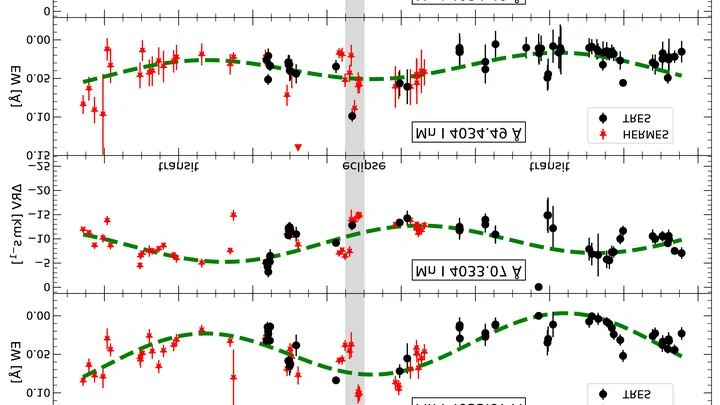
The giant star Betelgeuse may have a companion that dives straight into its outer layers. Every 2000 days, it leaves a gaseous wake, like a boat on water. Amazingly, the giant’s outer shell is cooler than the Sun, so the companion survives. This discovery reshapes our view of how stars behave before
arXiv:2601.00470v1 · 2026-01-01

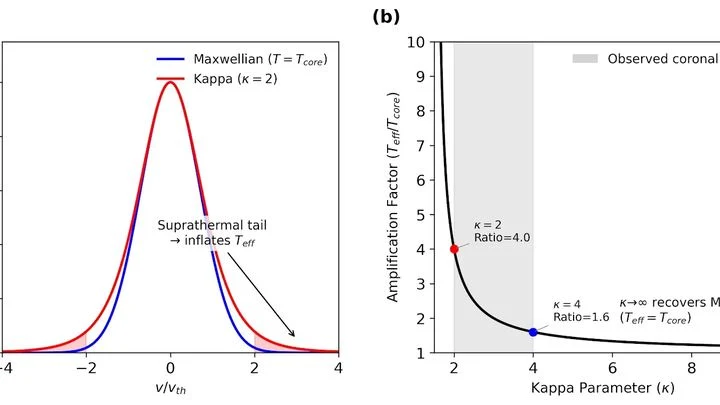
Wind for the swift: how turbulence heats the solar corona

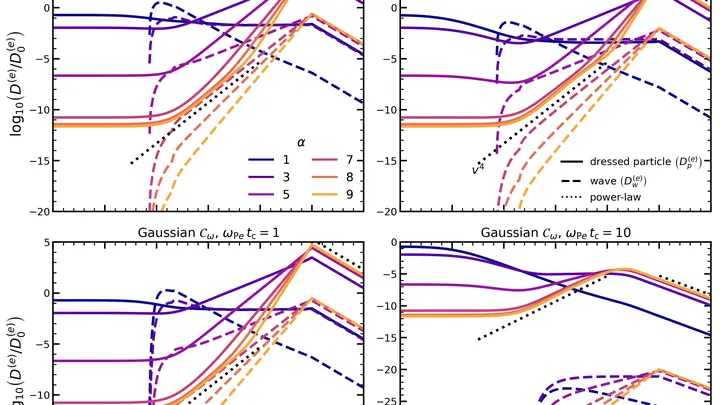
The theory discovered: chaotic electric fields in plasma, like a sieve, sift fast particles from slow ones, forming a universal 'tail' of super-fast particles. The reason lies in the shielding effect: slow particles wrap themselves in charge clouds and become invisible to the field, while fast ones
arXiv:2601.03344v2 · 2026-01-06

All Atoms Fall Alike: A Cosmic Verdict

The idea that all objects fall equally underpins Einstein's theory. On the Chinese space station, physicists compared the fall of two types of rubidium atoms. The result matched the prediction with an error of a few ten-millionths.
arXiv:2603.22981 · 2026-03-24

How the Universe Became Smooth: Unraveling the First Moments

Scientists have proposed a model of the early universe resembling a traffic jam followed by sudden acceleration. This shift in rhythm naturally smooths out large irregularities in the microwave background—the very ancient light that captured the newborn cosmos. It explains Planck satellite data with
arXiv:2605.20076 · 2026-05-19

Levitating Graphite Web Captures the Moon's Embrace

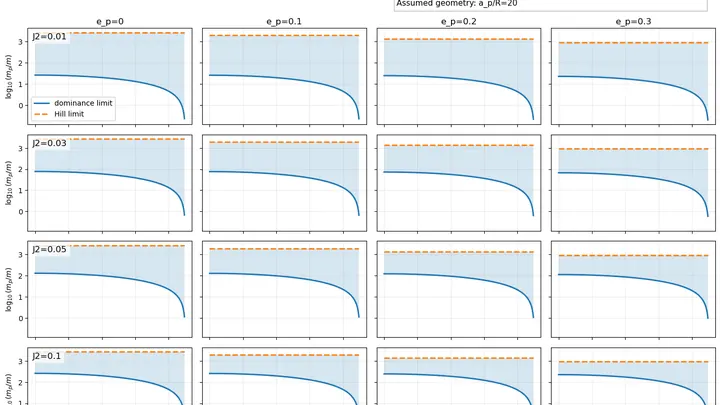
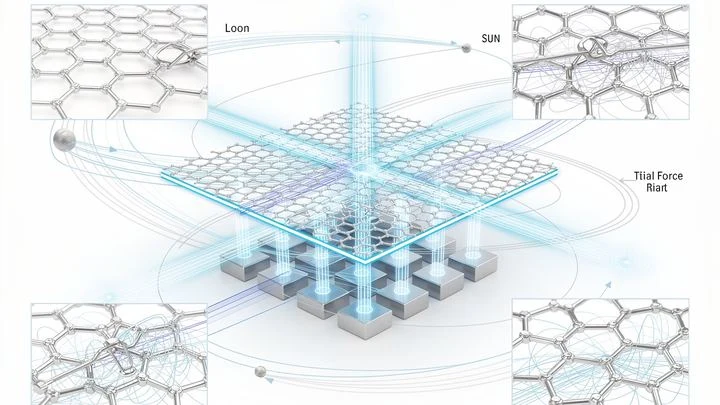
In Southampton, the thinnest graphite flake has been turned into an ultrasoft gravitational antenna. Levitating above magnets, it shifts by nanometers under tidal forces, and a laser interferometer converts this into a precise signal. The instrument distinguishes lunar and solar contributions, achie
arXiv:2606.14738v1 · 2026-06-02

The Flare's Fiery Heart: Ions Race Along Magnetic Lines

Solar flares crank temperatures up to millions of degrees, but iron ions move much faster along magnetic lines than across them. An international team, analyzing nearly 4,600 spectra from the Japanese Hinode satellite, proved for the first time that line broadening is driven not by turbulence but by
arXiv:2606.06577v1 · 2026-06-04

The Celestial Forge: How Proton Beams Take the Shape of a Hammer

Data from the Parker probe, plunging into the very furnace of the solar wind, brought a mystery: proton beams there often have a hammer shape. To understand how this happens, scientists ran hybrid simulations, treating protons as particles and electrons as a fluid. By comparing two regimes differing
arXiv:2606.07838v1 · 2026-06-05

Heavy water ice found in planet-forming disk

The Webb telescope directly observed heavy water ice for the first time in a planetary disk—the birthplace of planets. There's unexpectedly a lot of it, pointing to a turbulent history of the ice that might explain the origin of Earth's oceans.
arXiv:2606.10888 · 2026-06-09