Dancing Dispersion: The Millisecond Life of a Neutron Star ✦
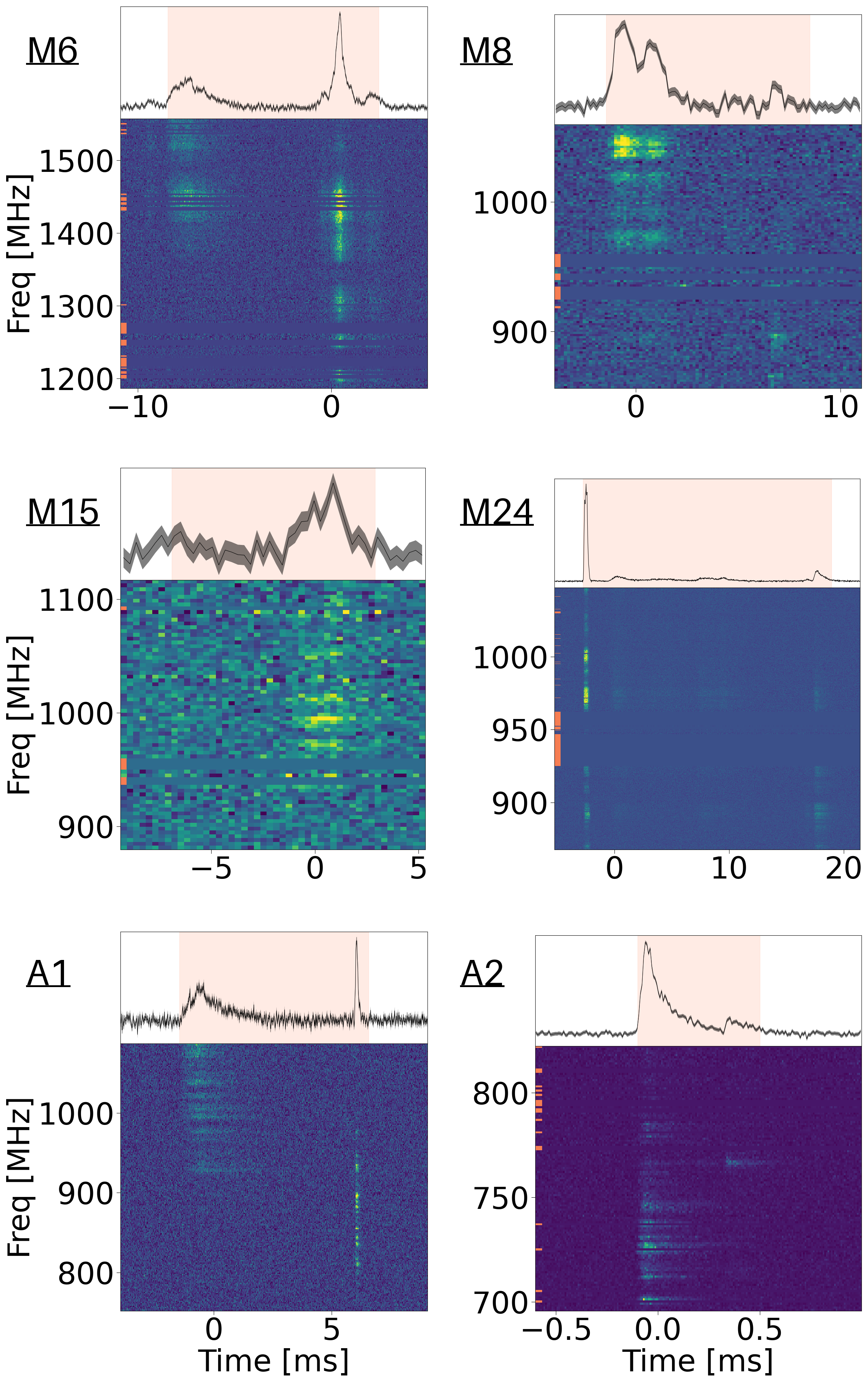
Original: "FRB20250613A: a remarkable repeating FRB with apparent millisecond-timescale scattering variations"
FRB 20250613A — a repeating fast radio burst — gives itself away in a split second: its dispersion jumps 50-fold, revealing a plasma storm around a neutron star.
Links in the knowledge graph 1
A neutron star spins 147 times a second, but its radio beam punches through a plasma wind that changes faster than you can blink. Some bursts drown in the fog, others — super-powerful — burn their way through. Someday, the dance of this beam will become our compass in the search for the hidden matter of the Universe.
🎯 Each click of FRB 20250613A packs the energy of an entire day of the Sun into a thousandth of a second. If you blink, you'll miss about two hundred spins of the neutron star.
p_m = p \exp(-2\sigma_{RM}^2 \lambda^4)
Polarization fades with wavelength, like picture sharpness through the shimmering air above hot asphalt.
a_0 = \frac{e E_0}{m_e c \omega}
Dimensionless field amplitude: when it exceeds unity, electrons become relativistic and the plasma opens up like gates — the beam burns through the fog.
Scientists
Adam RiessBrian SchmidtEdwin HubbleGeorges LemaîtreMaarten SchmidtSaul Perlmutterneutron star
pulsar
spectroscopy
galaxy
supernova
hydrogen
speed of light
Hubble Space TelescopeLaws
Hubble's lawDoppler effectprinciple of constancy of the speed of lightmass–energy equivalenceCoulomb's lawMaxwell's equations