Microalgae Strengthen Emulsions express
An oil droplet in water is like a ball in a crowd. When the crowd is sparse, the balls move apart freely. But if there are many people, each is squeezed by its neighbors, and the whole mass behaves like a single body. That's roughly how an emulsion works — a mixture where oil droplets float in water or vice versa. A thick emulsion resembles cream or mayonnaise: it holds its shape but starts to flow under strong pressure.
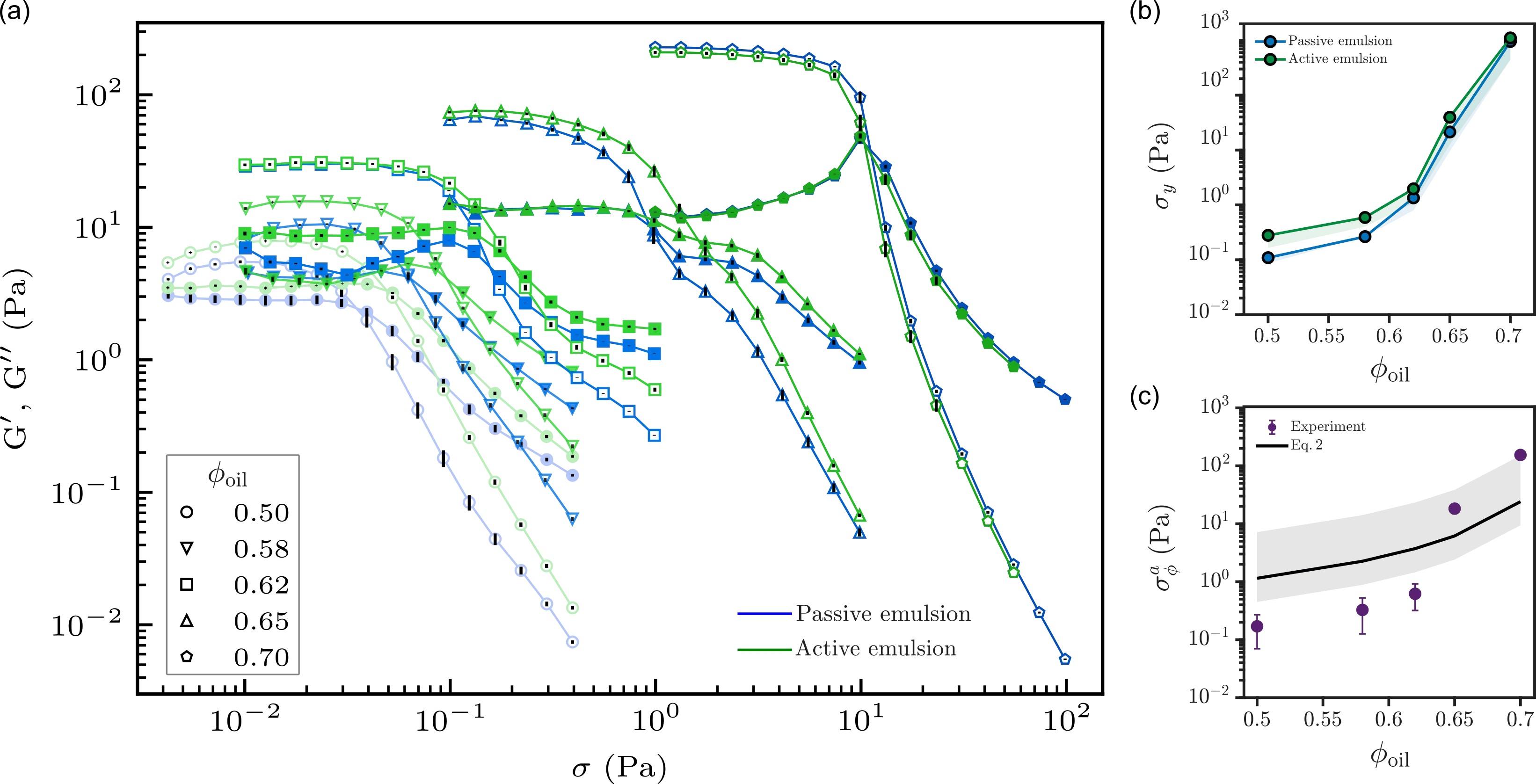
In a new experiment, live single-celled Chlamydomonas algae were introduced into such a mixture. These tiny swimmers beat their flagella like tiny oars and push between the droplets. It turned out that their motion makes the emulsion noticeably stronger: you need to apply twice the force to make it flow. When the same algae are immobilized, the strength doesn't change, so it's the motion that matters, not just the cells taking up space.
These pushes act on the oil droplets like invisible springs: they press the droplets together, and the whole structure becomes stiffer. The algae seem to stitch the emulsion from within. This mechanism allows you to tune the properties of soft materials, from cosmetics to foods, simply by adding living, moving cells and varying their number.
So next time your hand cream feels too runny, remember: maybe it just needed a couple of million swimmers with flagella.
Chlamydomonas is a single-celled alga about 10 micrometers across, ten times thinner than a human hair. It senses light and swims toward it, spinning like a corkscrew.
In Stanisław Lem's novel 'The Invincible', microscopic swimming mechanisms form a cloud capable of altering material structures — much like the algae in this emulsion.