How a Long Laser Pulse Was Squeezed into an Ultrafast Lightning Bolt
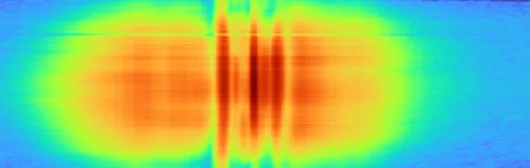
When a blacksmith works the bellows, air comes out in a strong jet. You can do something similar with light: take a long laser pulse and compress it so it becomes shorter and more powerful. Scientists in France compressed an ytterbium laser pulse by a factor of 65. It went from 400 femtoseconds down to 6.2 femtoseconds, and its power climbed to 1.4 terawatts.
How does it work? First, the laser beam is sent through a chamber filled with argon many times. The gas broadens the light's spectrum, adding new colors. Then special mirrors align those colors, and the pulse gets compressed. The same trick is repeated once more with helium. Very little energy is lost: at the end, 12.5 millijoules remain out of the original 18.
Such a short, powerful pulse is needed to accelerate electrons in plasma. Conventional accelerators are huge, but a laser-based one can fit on a tabletop. That could prove useful in medicine and in testing materials for strength.
A pulse of 6.2 femtoseconds is so short that light travels only 1.86 micrometers during it, less than the thickness of a human hair.