Blacksmith's Bellows for Light: Squeezing an Ytterbium Laser Down to a Lightning Bolt
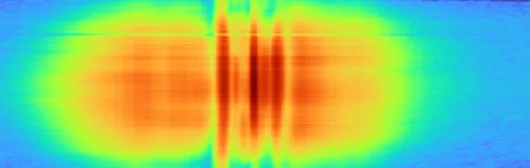
A blacksmith pumps the bellows, and a slow stream of air turns into a sharp jet that can ignite a flame. Physicists treat light much the same way: they take a long laser pulse and squeeze it into a short, powerful flash. In the new work, French scientists compressed the pulse of a commercial ytterbium laser by a factor of 65, bringing its duration down to 6.2 femtoseconds. That is just 1.8 oscillations of the light wave.
The first "bellows breath" happens in a chamber filled with argon. The laser beam passes through it 29 times, and the gas broadens the pulse spectrum: new colors appear that were not there before. Then special mirrors align these colors in time, compressing the pulse. The second "breath" is a helium chamber with nine passes. Here the spectrum broadens even further, and a pair of mirrors completes the compression. In the end, the pulse energy is barely lost: 12.5 millijoules out of the original 18.
Previously, there was no certainty that such a trick was possible with an ytterbium laser. These lasers are known for high average power and reliability, but their pulses are too long for many applications. Now it has been shown that two-stage compression turns them into a tool with a peak power of 1.4 terawatts. The laser delivers a thousand pulses per second, and the beam remains clean and stable.
Such a source paves the way to compact plasma-based electron accelerators. Instead of giant facilities kilometers long, beams of fast particles could be produced on a laboratory table. This could be useful in medicine for targeted irradiation of tumors, in industry for detecting defects in materials, and for creating bright X-ray sources.
The blacksmith's bellows have done their job. A slow stream of light has become a lightning bolt that strikes a thousand times per second and can accelerate particles to relativistic speeds.
A pulse of 6.2 femtoseconds is so short that light travels only 1.86 micrometers during it, less than the thickness of a human hair.