Laserpower is the rate at which a laser beam delivers energy, typically measured in watts. It ranges from milliwatts in everyday devices like barcode scanners to petawatts in the most powerful research lasers, which can briefly outshine the entire Sun's output focused onto a tiny spot. The power determines how a laser interacts with matter: low-power beams can read or write data, while high-power beams can cut steel, fuse plasma, or accelerate particles.
History
The first workinglaser, built by Theodore Maiman in 1960, produced a pulsed beam of about 1 kilowatt for a fraction of a millisecond. Since then, power levels have grown by many orders of magnitude, with chirped-pulse amplification, developed in the 1980s, enabling the petawatt regime.
How it works
Laserpower is set by the gain medium's ability to amplify light and the pumping mechanism that supplies energy. Continuous-wave lasers emit a steady beam, while pulsed lasers concentrate energy into short bursts, achieving enormous peak powers even with modest average power. The beam's power density—watts per square centimeter—is what actually drives effects like heating, ionization, or nonlinear optical phenomena, so focusing a beam tightly can dramatically increase its intensity.
In practice
Laserpower is exploited in industrial cutting and welding, medical surgery, laser fusion experiments, and precision measurements like LIGO's gravitational wave detectors, where even tiny power fluctuations matter.
Fun fact
The most powerfulcontinuous-wavelaser, used in military research, can melt through steel at a distance of over a kilometer, yet its beam is invisible to the naked eye.
Units by system: SI: watt · CGS: erg per second · Planck: planck power · natural: electronvolt per second
Stated relations:case of →power · measures →energy
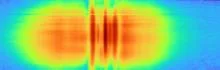
A blacksmith pumps the bellows, and a slow stream of air turns into a sharp jet that can ignite a flame. Physicists treat light much the same way: they take a long laser pulse and squeeze it into a short, powerful flash.
Inside a solar flare, magnetic field lines snap like stretched rubber bands and reconnect — releasing in minutes enough energy to power humanity for millions of years. In the lab, this process, magnetic reconnection, could long be triggered but not stopped. Now physicists have a switch.
An electron beam is a stream of tiny particles carrying an electric charge. When such a beam hits a material, it doesn't just heat it or knock out atoms: it also gives the surface a slight push, like a jet of water pushing against your palm.
A living power system is like an organism: power lines are vessels, current is blood. Data, however, are nerve impulses that used to be lost. mAIEnergy connects these 'nerves' to a shared 'brain'. This data repository combines satellite images, electricity meter readings, articles, and weather reports.
A pot of boiling soup bubbles away, and you'd love to know how hot individual droplets are inside. But you can only dip your thermometer at the edge, where things are calmer. Laser fusion is a bit like that: a powerful laser pulse hits a target, creating a cloud of fast protons.
Tiny magnets inside atoms, nuclear spins, can 'freeze' for long minutes in a cold crystal. This hinders the quick tuning of quantum sensors: everything takes too long to reach the desired state. Physicists have found a way to nudge them with light.
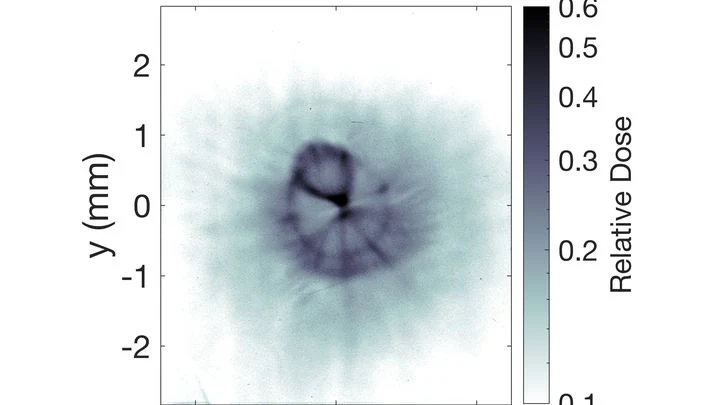
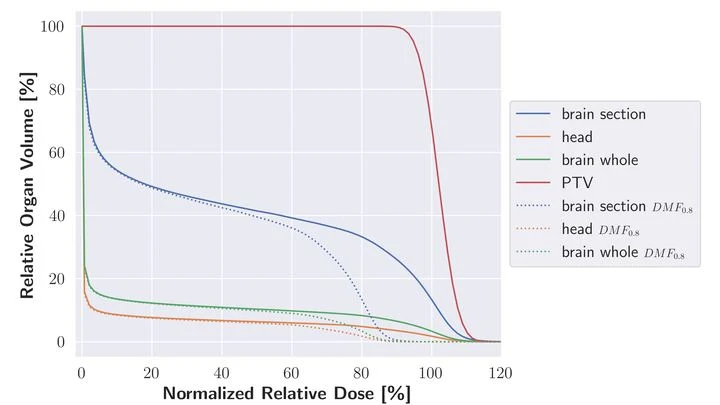
A garden hose shoots a thin, powerful jet. If you sweep it across the yard, you can water the whole bed without flooding the path. That's roughly how the new approach to treating deep tumors works: instead of a broad radiation field, you take a narrow beam of electrons accelerated to nearly the speed of light and scan it across the tumor like a jet of water.
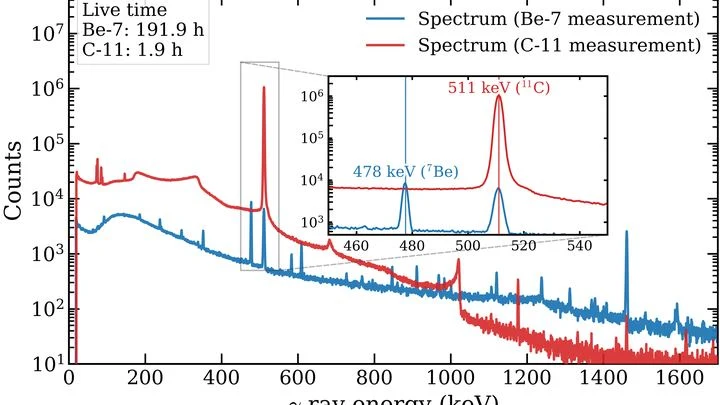
A laser hits a target of thin wires, and within tens of femtoseconds (billionths of a billionth of a second) knocks out a stream of protons. These protons fly into a converter made of lithium and deuterium, where neutrons are born.
An ordinary kitchen knife made of niobium would suddenly start conducting electricity with zero loss at −258 °C. That's how superconductivity works, and you can "switch it on" right at the metal's surface by blasting it with a laser in a nitrogen atmosphere.
An electron beam in an accelerator is like a flock of birds: it flies in a tight group, but over time it spreads out. To keep particles together, heavy magnets are usually used. Here they did without them — the beam squeezed itself.
The laser based on diamond converts almost half of the pump energy into bright yellow light — an efficiency of 47.7%, a record for such devices. But the main advantage is not the power, but the exceptional purity of the color: the beam is so monochromatic that it can be compared to a musical instrument playing just one note without the slightest wavering.
A typical accelerator is like an assembly line where electrons are the workpieces. To get the desired X-ray pulse, the workpiece is fine-tuned after it's already on the line: squeezed, filtered, corrected. In the new work, engineers decided to take a different approach — shaping the workpiece before it even hits the conveyor.
At LCLS-II, electrons are knocked out of a metal by a short laser pulse.
Cosmic rays are charged particles that constantly bombard Earth from deep space. When one of these particles enters the atmosphere, it collides with air nuclei and spawns a whole cascade of secondary particles: electrons, muons, photons.