How a Telescope Sees Through Shimmering Air ✛
When you look at the bottom of a swimming pool, the water shimmers and the pebbles look blurry. Earth's atmosphere shimmers in much the same way, blurring starlight for a telescope. To fix this, telescopes use adaptive optics: a mirror rapidly changes shape, as if smoothing out the water's surface. But even then, small distortions remain, and astronomers need to know their exact shape in order to measure the brightness and shape of distant objects correctly.
Usually this fingerprint is captured from a bright star near the target, but such stars are not always available. The new PSF-R method reconstructs the shape of the distortion without looking at a star, using only data on how the adaptive optics performed. It is like a float that senses a wave without seeing it: from the float's motion, you can reconstruct the wave's shape. The telescope records how the mirror corrected the light, and from those records it computes what the distortion was.
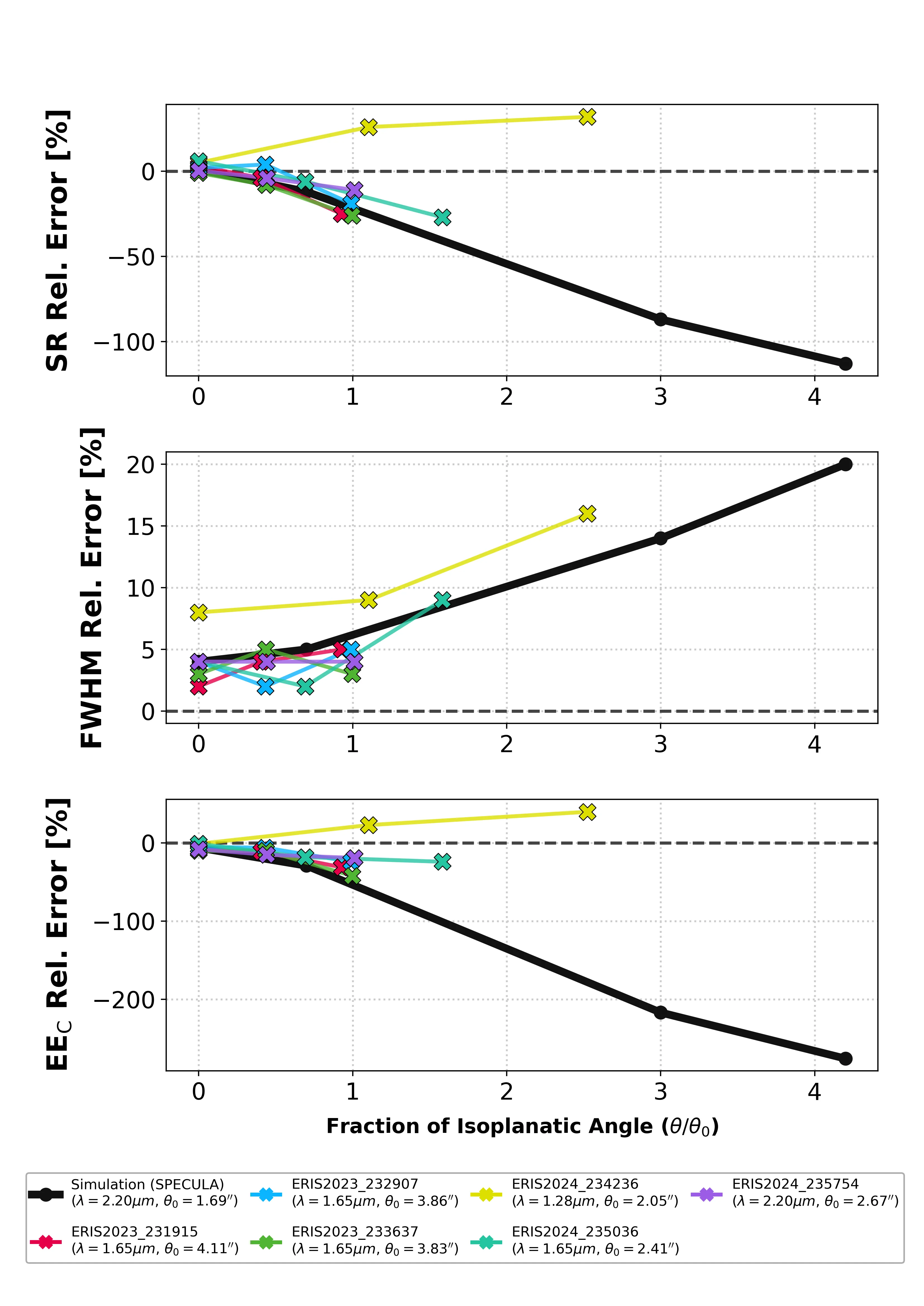
Scientists tested the method on a real telescope, the VLT. They observed three stars and used only data on the mirror's corrections, turbulence profiles, and wind forecasts. The result matched the real distortions with an accuracy of about 10%. That is enough for scientific purposes. On the future ELT telescope, with its 39-meter mirror, the accuracy will be even higher, because a larger mirror provides more information. The method will run automatically for all users, improving observations of galaxies and star clusters.
The method reconstructs the distortion shape without looking at the star itself, using only data on mirror correction. It's like determining the shape of a wave from the movement of a float.