X-ray passports for habitable worlds
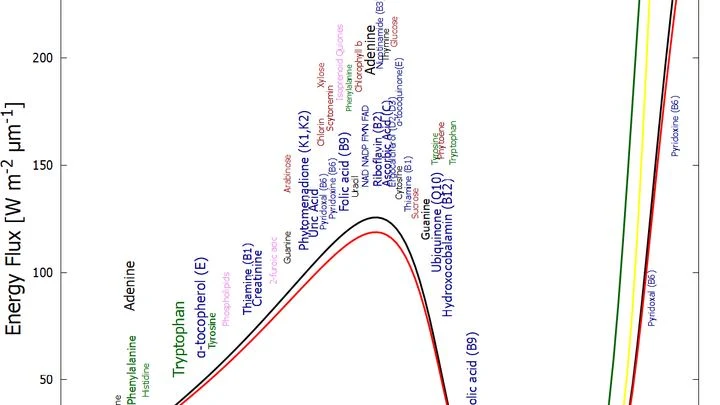
Twelve stars have received X-ray passports. Now, for each of them, we know the exact radiation dose received by a planet in the habitable zone, the region where liquid water is possible.
Light emitted by stars, used as a potential source for quantum imaging in space applications.Starlight is the electromagnetic radiation emitted by stars, primarily in the visible spectrum, but also spanning infrared, ultraviolet, and other wavelengths. It originates from nuclear fusion in the star's core, where hydrogen fuses into helium, releasing enormous amounts of energy that gradually works its way to the surface and escapes into space. Starlight carries information about the star's temperature, composition, and motion, and it is the primary means by which we observe the universe.
The understanding that starlight is a form of electromagnetic radiation was established in the 19th century through the work of Joseph von Fraunhofer, who mapped the dark lines in the solar spectrum, and later by Gustav Kirchhoff and Robert Bunsen, who linked those lines to chemical elements.
Photons produced in the stellar core undergo countless absorptions and re-emissions, taking thousands to millions of years to reach the surface. Once free, they travel across space, spreading out and becoming diluted. When they reach Earth, telescopes collect them, and spectrometers split the light into its constituent colors, revealing absorption lines that fingerprint the elements present in the star's atmosphere.
Starlight is used in astrophysics to determine stellar properties, distances, and the expansion of the universe. It also serves as a potential source for quantum imaging in space, where the natural randomness of starlight can be harnessed for secure communications.
The light from the Sun that you see today is about 100,000 years old, as it took that long for photons to travel from the core to the surface before making the 8-minute journey to Earth.