Popular

Instrumentation astro-ph.IM

74 articles

Detector and telescope design, experiment proposals. Laboratory astrophysics. Methods for data analysis, statistical methods. Software, database design.

articles

Search for alien radio signals along the planetary plane

Analysis of 20 years of NASA antenna operations shows that the most powerful terrestrial radio signals are emitted in the plane of the Solar System. If extraterrestrial civilizations follow the same logic, their transmissions should be sought right there, especially when a planet passes in front of
arXiv:2508.15425 · 2025-08-21

Interstellar Visitors: Searching for Alien Technology

The Vera Rubin Telescope will discover thousands of interstellar visitors. To tell a natural object from a relic of another civilization, scientists have developed a protocol: they’ll study the light 'fingerprints' of these guests.
arXiv:2508.16825 · 2025-08-22

How a baby planet drinks gas: a new discovery

A baby planet absorbing gas has been discovered around the star AB Aurigae. Light from hydrogen revealed its growth with a unique pattern—astronomers observed this for the first time in a planet embryo. This is direct evidence of how giants like Jupiter grow.
arXiv:2508.18351 · 2025-08-25

Moon Bell: A New Way to Catch Gravitational Waves

Scientists from the LILA mission aim to transform the Moon into a gravitational wave detector. Devoid of noise, the Moon will ring like a bell when hit by waves, and laser sensors will measure these vibrations. This opens the low-frequency band and lets us study black hole mergers right back to the
arXiv:2508.18437 · 2025-08-25

Cosmic Rain Will Improve Hurricane Forecasts

An invisible stream of particles from space helps assess atmospheric density. Scientists have shown that even a small muon detector can significantly improve hurricane predictions. This method provides a three-dimensional picture unattainable with ordinary pressure sensors.
arXiv:2509.04627 · 2025-09-04

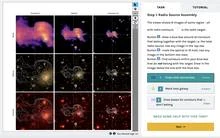
How Volunteers Help Unravel the Mysteries of Radio Galaxies

Volunteers and algorithms unite to sort millions of radio galaxies and build the most detailed map of the southern sky.
arXiv:2509.19787 · 2025-09-24

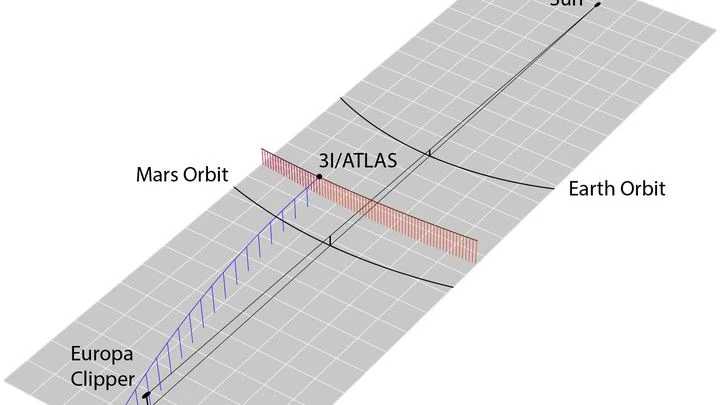
Two Probes Will Dive into the Tail of an Interstellar Comet

A comet from another star system will pass by two Earth spacecraft. In late October, they will spend several days in its tail—this is the first chance to directly study extrasolar material.
arXiv:2510.13222 · 2025-10-15

Coin-sized camera spots distant planets

Scientists pointed the Japanese probe's navigation camera at alien suns and saw giant planets briefly dimming their light. Even such tiny optics, with clever data processing, can rival space telescopes. This trick promises to find planets that have been hiding for years.
arXiv:2510.14229 · 2025-10-16

Earth's Shadow Hunts for Alien Probes

Astronomers tested the idea of using Earth's shadow to detect alien probes. An automated telescope captured brief light flashes near the shadow's edge — objects not listed in any catalog. This could change the approach to the search for extraterrestrial intelligence.
arXiv:2510.17907 · 2025-10-19

The Hunt for Moons of Rogue Planets

Astronomers analyzed data on the orphan planet WISE 0855 — a dim, cold ball not far away. For 11 hours, Webb watched its light, trying to spot the shadow of a moon. No direct discovery happened, but the method proved its worth. If many rogue planets have Titan-sized moons, we will soon find them.
arXiv:2510.24575 · 2025-10-28

Planetary pressure cooker: how gas and rock give birth to oceans

Astronomers have found many rocky planets wrapped in a thick layer of hydrogen. Experiments with pressures of 600,000 atmospheres and heat above 4000°C have shown for the first time: deep inside, hydrogen pulls oxygen from rust (iron oxides) and turns it into water. This unseen chemical factory can
arXiv:2511.01351 · 2025-11-03

Neural Network Discovers New Galaxies Without Any Guidance

Astronomers used a method where the program learns to find patterns without pre-labeled examples. It sifted through thousands of spectra and picked out groups, including rare objects. This will accelerate the analysis of future massive sky surveys.
arXiv:2511.05439 · 2025-11-07

New Schedule for Faraway Worlds

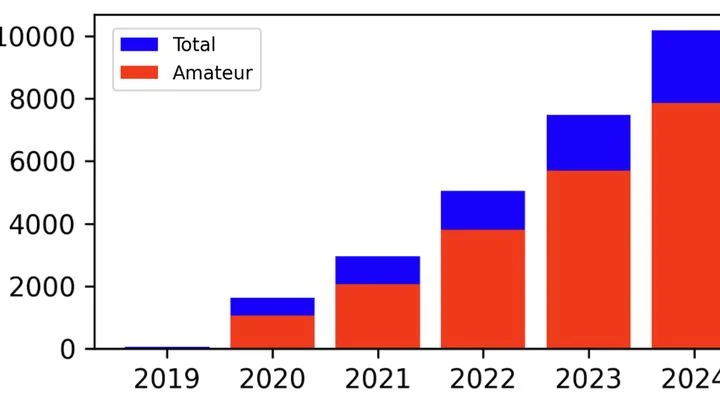
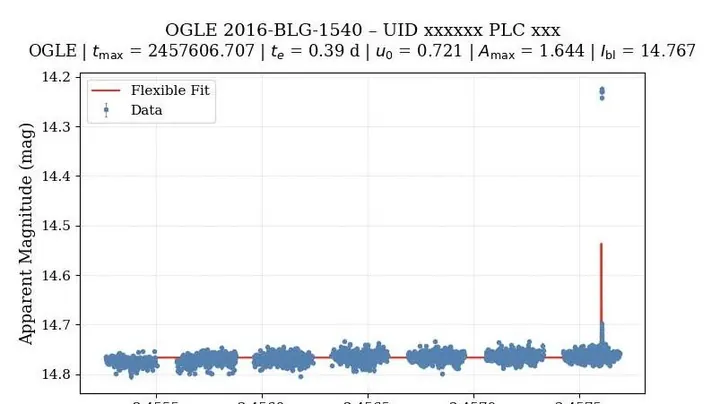
Scientists collected tens of thousands of observations from ground-based and space telescopes to nail down when planets pass across the faces of their stars. It turned out that 45% of the planets needed adjustment. This will help schedule observations on major telescopes like the James Webb. Amateur
arXiv:2511.14407 · 2025-11-18

Mission: Catch a Guest from Another Star System

The Comet Interceptor spacecraft will hide in a gravitational 'niche' lying in wait for a comet. Scientists propose using the same tactic for sudden interception of objects arriving from other stars. For the first time, we'll get a look at the material that builds the universe beyond the Solar Syste
arXiv:2512.00492 · 2025-11-29

Invisible Black Holes: Planets or Something Else?

Scientists reexamined data from the hunt for planets around other stars and identified objects detectable only through gravity. Six suspicious 'planets' and two cases of light bending might actually be primordial black holes. They don't glow, they don't eclipse stars, but they could be the key to da
arXiv:2512.03118 · 2025-12-02

How a galaxy's shape reveals its history

Adding shape information to brightness, astronomers can forgo expensive spectrometers and solve the mysteries of cosmic dust. This method will speed up the study of millions of distant objects.
arXiv:2512.05078 · 2025-12-04

The Last Cry of an Alien Civilization

The brightest astronomical discoveries involve rare and extreme objects. First contact with aliens will likely also happen thanks to a civilization experiencing a brief but immensely powerful flash — possibly its final one. To be noticed, a civilization must release at least 1% of its total energy.
arXiv:2512.09970 · 2025-12-10

How to Make Light Late

Gravity causes light to be delayed — this Shapiro effect has only been tested in space. Now scientists aim to measure it in a lab with a fiber-optic loop. The precision will increase a thousandfold, paving the way to discover unknown laws of nature.
arXiv:2601.00468v2 · 2026-01-01

Catching an Interstellar Wanderer with a Solar Sling

Interstellar object 3I/ATLAS is racing away, and a regular rocket can't catch it. But if you dive toward the Sun and fire the engines at peak speed, gravity acts like a giant sling. This maneuver gives a chance to reach the target in a few decades, but the probe must survive hellish heat.
arXiv:2601.02533v2 · 2026-01-05

One membrane – two mysteries of the Universe

A new type of detector uses a membrane inside an optical cavity to search for two substances at once: gravitational waves and dark matter. Light pressure stretches the membrane, and six such membranes cover frequencies from 0.5 to 40 kHz — from a low hum to a high squeak. Sensitivity to spacetime ri
arXiv:2601.02576v1 · 2026-01-05

A Lunar Telescope Will Reveal the Shadows of Distant Black Holes

Combining antennas on Earth and the Moon will deliver incredible sharpness. Astronomers have selected six black holes in alien galaxies whose silhouettes will become visible. The real twist: to glimpse the thinnest ring of light around them, we'll need antennas floating in space between planets.
arXiv:2601.02812v2 · 2026-01-06

How to Hear a Swarm of Black Holes

Future detectors will catch the hum from mergers of tiny black holes. New work shows how to distinguish this hum from other sources by its volume and frequency, and peer into the first second after the Big Bang.
arXiv:2601.07774v1 · 2026-01-12

The Colors of Life on Distant Planets

Scientists have figured out how to search for life on other planets by looking for colored traces on the surface. These paints are left by living organisms. The HWO telescope will spot such color signatures even if the air shows no signs of life — for instance, when it’s ancient and doesn’t produce
arXiv:2601.08883v1 · 2026-01-12

How LHC can hear dark matter

Sometimes the Large Hadron Collider registers unexplained glitches — UFOs. Perhaps they are caused by tiny clumps of dark matter made of antimatter. Flying through the Earth's crust nearby, such an object generates a sound wave that momentarily disrupts proton beams. Three coincidences within a coup
arXiv:2602.10562 · 2026-02-11

Meteorite craters — a bowl for the first life

Experiments revealed how in the shallow crater ponds of young Earth, lipid bubbles hid from harmful ultraviolet radiation. Gathering into a dense layer at the bottom, they exchanged materials and divided — a crucial step toward the first cell.
arXiv:2602.18510 · 2026-02-19

Radon Hides Dark Matter

Scientists found that noise in dark matter detectors is caused by radon. Its atoms settle on internal metal grids and, when decaying, mimic signals from elusive particles. The created model matched data from the LUX and LZ experiments. This will help purify future experiments and maybe finally catch
arXiv:2602.21177 · 2026-02-24

New Sensors Open Low Frequencies for Gravitational Waves

The low frequencies of gravitational waves were drowning in the constant shaking of the planet. Now laser stabilizers, 100 times more sensitive than the old ones, dampen this noise like active noise-canceling headphones. At 10 oscillations per second, sensitivity skyrockets tenfold, making intermedi
arXiv:2602.23531 · 2026-02-26

Why a Tent on Mars Beats a Full-Blown Planetary Makeover

Making Mars warm and with breathable air would require energy comparable to all of Earth's factories working for hundreds of years. The mirrors needed for heating would cover an area the size of Africa. Instead of a global overhaul, scientists propose building massive dome-tents over cozy valleys —
arXiv:2603.00402 · 2026-02-28

Measuring Black Holes with Spacecraft Stopwatches

When a tiny black hole evaporates, it releases a gamma-ray flash. Nearby black holes produce curved waves; distant ones, flat. Timing differences between spacecraft can gauge that curve to measure distance. No nearby events yet, but future missions could spot primordial black holes — tiny heavy remn
arXiv:2603.16508 · 2026-03-17

Star Superflares: Warming Planets and Synthesizing Amino Acids

In the lab, a mix of carbon dioxide and nitrogen was bombarded with particles, mimicking the young Sun's era. This produced nitrous oxide and glycine. Nitrous oxide, like a lid on a pot, trapped heat—so early Earth didn't freeze. The same mechanism could warm distant exoplanets where stellar heat is
arXiv:2603.18206 · 2026-03-18

Astronomy Teaches Us to See the Invisible in the Brain

An astronomical method for finding supernovae helped reveal nearly invisible neural activity. The Astro-BEATS program subtracts the background from microscope videos, highlighting tiny flashes—they occur spontaneously and previously eluded researchers. This will accelerate the study of brain functio
arXiv:2603.22311 · 2026-03-19

First Images from the New Cosmic Eye

The Vera C. Rubin telescope has released test images of a tiny patch of sky, packed with millions of galaxies and 93 new asteroids. These data will help fine-tune the equipment ahead of a full survey set to begin in 2026, turning the static sky into a movie.
arXiv:2603.23786 · 2026-03-24

The Universe’s Brightest Flash Set the Tempo for the Alien Hunt

Like friends in a dark theater, signals from aliens can be synchronized to a common cosmic flash. Astronomers tested this method for the first time, using the most powerful gamma-ray burst GRB 221009A and the TESS satellite to observe 58 stars. Two suspicious flickers turned out to be interference,
arXiv:2604.06807 · 2026-04-08

Secrets of the Lunar Garden: How Meteorites Mix Cosmic Dust

The Moon looks dead, but its surface is constantly refreshed by meteorite impacts. A new mathematical model recreated this process as a fascinating form of cosmic gardening. It accurately predicted the distribution of rare atom varieties from supernovae. In the future, by studying lunar samples, we’
arXiv:2604.09524 · 2026-04-10

Starlink and OneWeb Satellites: An Unexpected Swap in Brightness

Comparing 1.6 million brightness measurements over five years, astronomers noticed opposite trends: Starlink satellites with sun visors (VisorSat) became 0.6 magnitudes brighter, while OneWeb spacecraft became 0.4 dimmer. Both changes are statistically significant with an error probability below 0.3
arXiv:2604.13145 · 2026-04-14

Pulse of Civilization: The Rhythm That Determines Survival

Scientists calculated a thousand years of the future across ten scenarios. It turns out civilizations pulse: periods of prosperity alternate with decline, like heartbeats. The active time fraction ranges from 38% to 100%. The main factors are the rate of resource depletion and the resilience of know
arXiv:2604.13774 · 2026-04-15

Civilizations' energy growth isn't what we thought

Sixty years of data debunk a popular theory: energy consumption grows twice as fast as predicted, yet even that won't let humanity become a supercivilization. A new approach accounts for not just energy but also information processing, explaining why we still see no alien megastructures.
arXiv:2604.17516 · 2026-04-19

Asteroids Instead of Trucks: Metal for Mars

Metal-rich asteroids could become a source of raw materials for Martian colonies. Scientists have calculated routes to the nearest ones and a way to produce fuel on site. This will make it possible to build homes and vehicles right on the Red Planet.
arXiv:2604.18664 · 2026-04-20

The Loeb Scale: When a Strange Rock Isn’t Just a Rock

The Loeb scale rates the weirdness of an interstellar object on a five-point scale. A ‘candidate’ level isn’t proof, but a green light for intensive observations. Ignoring it is more dangerous than being wrong.
arXiv:2604.20896 · 2026-04-21

The Universe Sings: Resonance of Dark and Ordinary Matter

Scientists have shown that different speeds of dark and ordinary matter create a gravitational resonance. Like a bow on a string, it amplifies sound waves in ordinary matter, explaining the longevity of spiral arms and gas heating. This makes it possible to 'hear' dark matter by its seismic imprint.
arXiv:2604.22665 · 2026-04-24

Gravitational Waves Reveal the Cosmic Missing Link

Merging black holes and neutron stars send out gravitational waves. A neural network trained on these signals can instantly tell if a gap object—the missing link between neutron stars and black holes—is involved. Quick classification directs telescopes to the fleeting light of kilonovae, where heavy
arXiv:2605.00391 · 2026-05-01

Quieter Mirrors — Louder Universe

In gravitational-wave detectors mirrors must reflect light almost perfectly, but heat makes atoms tremble, creating noise. A new coating — a thin pattern plus a few layers — makes the mirror thinner and suppresses the shiver tenfold, opening the way to observing quieter cosmic events.
arXiv:2605.00714 · 2026-05-01

Diagnosis for Distant Worlds: How Not to Mistake Life for Noise

The search for extraterrestrial life is like an unreliable medical test: a single positive result means nothing if the error rate is unknown. A new approach sidesteps this problem by dividing worlds into groups—much like patients with different risk factors. Statistical comparison dramatically reduc
arXiv:2605.02969 · 2026-05-03

Cosmic Tuning Fork: Earth and Moon Resonate with Gravitational Waves

A novel laser ranging technique aims to fill the microhertz gap in gravitational-wave astronomy. By exploiting resonant enhancement at the second harmonic of the Moon’s orbit and phase measurements precise to 80 micrometers, a five-year campaign could reach a sensitivity of Ω_gw ≈ 5×10⁻⁹ — enough to
arXiv:2605.04110v1 · 2026-05-04

How to Peer into the Heart of a Black Hole

Astronomers are turning scattered radio dishes across Earth into a single instrument, which, after an upgrade, will film black holes like a big-budget blockbuster—with unprecedented detail. This will let us witness the birth of giant jets of matter and check whether the law of universal gravitation
arXiv:2605.04133v1 · 2026-05-05

Cosmic Silence: 70,000 Stars Without a Signal

Astronomers used the Green Bank Telescope to search for signals from 70,000 stars. 100 million candidates turned out to be interference from earthly technology. This gives an upper limit: only six out of 100,000 stars within 20,000 light-years might have a transmitter of the required power. 40,000 v
arXiv:2605.05408 · 2026-05-06

Alien Radio Hum: How to Eavesdrop on Distant Civilizations

Traditionally, SETI has searched for narrow radio signals. But Earth's technosphere is humming ever louder, creating a broad radio background. Astronomers have developed a method to detect such a planetary hum around other stars using modern telescopes. This will allow us to find civilizations up to
arXiv:2605.10212 · 2026-05-11

How Antennas on Earth Hear Solar Flares

Ground-based radio receivers monitor the reflection of very low frequency waves from the ionosphere. A flare changes the ionosphere—and the signal distorts. The method is reliable, cheap, and fast, helping protect power grids and communications.
arXiv:2605.11822 · 2026-05-12

Moon Bell: How Gravitational Waves Unveil Lunar Secrets

Scientists have found a way to peer into the Moon's interior by using it as a detector of gravitational waves. Ripples in spacetime passing through the satellite cause it to tremble almost imperceptibly. By analyzing these tremors, the internal structure can be reconstructed ten times more precisely
arXiv:2605.13960 · 2026-05-13

Gravitational Waves: A New Listener at the South Pole

A new type of gravitational antenna will be built in Antarctica. It will capture low-frequency space vibrations that are inaccessible to current detectors, allowing us to hear the cosmic symphony in previously unheard notes.
arXiv:2605.14279v1 · 2026-05-14

Celestial Waves: Found in Just 16 Seconds

Collisions of neutron stars or black holes create ripples in spacetime—gravitational waves. Scientists need to know about such an event instantly to see its light. This is the story of GstLAL, a program that finds the signal in just 16 seconds and almost never shuts down. Thanks to it, out of 250 al
arXiv:2605.19153 · 2026-05-18

How to Reconcile Two Neutron Stars

Observations of two cosmic cataclysms gave conflicting hints about neutron star density. New analysis shows that sound inside them can accelerate to nearly the speed of light, and the structure can be two-layered. This resolves the paradox while staying within relativity.
arXiv:2605.30369 · 2026-05-18

Cosmic sieve: Gaia sifts through billions of celestial bodies

Astronomers passed billions of objects through a computer 'sieve'. The most distant ones slipped through, but the infrared telescope CatWISE2020 caught them, increasing the haul of distant galaxies and quasars by tens of percent — albeit with a small fraction of false positives.
arXiv:2605.23388 · 2026-05-22

Light Carousel Measures Earth's Rotation

Deep inside the Gran Sasso underground lab, a prototype called TRIO has come to life—a device built like a light carousel. Two beams race around a ring in opposite directions, and the slightest rotation alters their meeting point. A special design suppresses internal tremors and lets the ring be sca
arXiv:2606.02594 · 2026-05-22

How Gravitational Wave Polarization Reveals Hidden Patterns of Space

Gravitational waves aren't just the hum of space. They have polarization, a direction of oscillation that has been ignored until now. A new approach, like polarized sunglasses, filters out glare from bright black hole mergers and reveals the background's true pattern for the first time.
arXiv:2605.25772 · 2026-05-25

Gravitational Waves: Listening to Space without Templates

Pulsars are cosmic lighthouses beaming radio pulses with the precision of atomic clocks. A passing gravitational wave disrupts this rhythm. Instead of searching for familiar patterns, the new technique listens to all the noise and picks out any signal, decomposing it into frequencies and applying a
arXiv:2606.00577 · 2026-05-30

Stellar Orthography: How ExoVeil Reads Missed Planets

Traditionally, astronomers caught planets by waiting for multiple passes across stars. ExoVeil breaks this mold: a transformer neural network learns to predict the star's normal twinkling and spots even a lone shadow. A blind analysis of Kepler data revealed 179 new candidates, and on TESS data with
arXiv:2606.02778v3 · 2026-06-01

Dance of Photons: When the Solar Sail Becomes Its Own Brake

What happens to a solar sail at near-light speeds? An analysis of three components of light pressure — incident, specular, and diffuse — revealed a critical threshold. The relativistic Doppler effect weakens the mirror-like thrust, and after v=0.75c, diffuse scattering reverses sign and decelerates
arXiv:2606.04052v1 · 2026-06-02

Levitating Graphite Web Captures the Moon's Embrace

In Southampton, the thinnest graphite flake has been turned into an ultrasoft gravitational antenna. Levitating above magnets, it shifts by nanometers under tidal forces, and a laser interferometer converts this into a precise signal. The instrument distinguishes lunar and solar contributions, achie
arXiv:2606.14738v1 · 2026-06-02

The Universe's Radio Concert: How 30 Seconds of Silence Are Changing Physics

Using the OVRO–LWA array, astronomers conducted an unprecedented survey in the 50–86 MHz band with 10 Hz resolution. The 30-second exposure produced over three million images, setting strict limits on the power of hypothetical transmitters around nearby stars. No extraterrestrial signal was detected
arXiv:2606.04304v1 · 2026-06-03

Speed Filter of the Skies: How Swift Visitors Elude Telescopes

Since 2017, only three interstellar bodies have been discovered — Oumuamua, Borisov, and ATLAS. New research reveals: rapid sky motion renders most such objects invisible. Analytical models and simulations show that faint visitors streak by faster than survey cameras can capture. This explains the p
arXiv:2606.05344v1 · 2026-06-03

Cosmic Prospector: Sifting Stars in Search of Life

Where to look for intelligent brothers? A new parametric filter of seven criteria rejects stars unable to support complex life. From Gaia DR3's 1.74 million stars, it eliminated 55.4%, retaining 777,835 priority targets — mostly G and K dwarfs. Key rejection factors: low metallicity and youth. Notab
arXiv:2606.06692v2 · 2026-06-04

Visitors from the Abyss: How Passing Planets Shaped Earth's Fate

Hundreds of rogue planets lurk on the outskirts of the Solar System. Their close encounters with Earth—even without a collision—cause waves, eruptions, and climate shifts. This explains past mass extinctions.
arXiv:2606.17105 · 2026-06-14

The Indigenous Perspective on the Drake Equation

The Drake Equation estimates the number of extraterrestrial civilizations, but many of its factors are a mystery. A view from the perspective of indigenous traditional knowledge dramatically changes the picture: life becomes ubiquitous, and the Galaxy—densely populated.
arXiv:2606.26296 · 2026-06-24

Traces of Mind: What We Miss in the Search for Aliens

Between searching for life and technology, there is a gap: how to notice intelligence without machines? Noosignatures — any ordered traces of a thinking being — fill this void. From a paw print to a signal without a key: a new method expands the chances of finding alien intelligence even where life
arXiv:2606.28437 · 2026-06-26

Cosmic Radio: How a Neural Network Catches the Whisper of Neutron Stars

The Aframe algorithm, previously honed on black hole mergers, now teases out signals from binary neutron star mergers from the noise of gravitational wave detectors in fractions of a second. Thanks to a trick from the radio engineer's toolbox—heterodyning—minute-long 'chirps' are compressed to just
arXiv:2607.01372v1 · 2026-07-01

The Cosmic Club with Face Control: The Mystery of Quasar Broad Lines Solved

Broad emission lines are the hallmark of active galactic nuclei, but they mysteriously weaken both at low and critically high accretion rates. A new study proposes a unified mechanism: the filtering of ionizing radiation by dense inner disk structures plays the decisive role. The effective flux reac
arXiv:2607.01479v1 · 2026-07-01

The Silence of the Interstellar Wanderer: The Hunt for Radio Signals from 3I/ATLAS

Astronomers took advantage of the visit of the interstellar object 3I/ATLAS to conduct a unique radio reconnaissance. Using the 500-meter FAST telescope and the method of canonical polyadic decomposition, they analyzed the data, trying to extract periodic signals against the background of terrestria
arXiv:2607.01666v1 · 2026-07-02

The Voice of Light: How Secret Rings Reveal Themselves in the Disk of CI Tau

Protoplanetary disks harbor complex architecture, but the narrowest rings elude direct view. By analyzing how brightness varies along the disk's tilt, scientists found a 'double peak' — a telltale signal of optically thick rings in an optically thin background. This method unveils substructures beyo
arXiv:2607.02660v1 · 2026-07-02

Cosmic Debt: How a Planet's Mass Locks Civilizations Forever

Scientists from Blue Marble Space combined geophysics, atmosphere, and rocket dynamics to find the limits of chemical escape from exoplanets. A payload of 1,000 kg — like that of the Voyager probes — was used as a benchmark. It turned out that for a planet more massive than about 11.5 M⊕, the number
arXiv:2607.02691v1 · 2026-07-02

Icy Whisper: O-PTIR Captures Amino Acids Beyond Diffraction

The O-PTIR method shatters the diffraction barrier: infrared heating translates into thermal expansion, read by a visible laser. This enables submicron resolution and sensitivity down to 0.2 µM. Crucially, organics distort the ice's own absorption bands, creating a subtle yet informative spectral fo
arXiv:2607.05629v1 · 2026-07-06

Cosmic Calligraphy: A General-Purpose Neural Network Catches Fast Radio Bursts

Fast radio bursts—ultra-short but colossally powerful radio flashes from distant galaxies—leave an elegant curved trace on spectrograms, resembling a calligraphic flourish. For decades they were hunted with heavy algorithms and narrow neural networks, until the most unexpected tool was tried: a mult
arXiv:2607.07382 · 2026-07-08

Cosmic Flash: Why Advanced Civilizations Vanish from the Ether

A model based on exponential technological growth shows: the faster a civilization develops, the shorter the period during which it emits technosignatures we can detect. At rates comparable to Earth's after the emergence of AI, this window could be less than twenty years. Traditional narrowband sear
arXiv:2607.07413 · 2026-07-08

The Search for Extraterrestrial Life: From Smoke to Gardens

We've been searching the skies for factory chimney smoke, but we should be looking for blooming gardens. A new approach in astronomy suggests shifting focus from pollution to ecological harmony.
arXiv:2607.07592 · 2026-07-08