cs.LO cs.LO

3 articles

articles

math.LO2026-06-303 minarXiv:2607.01271
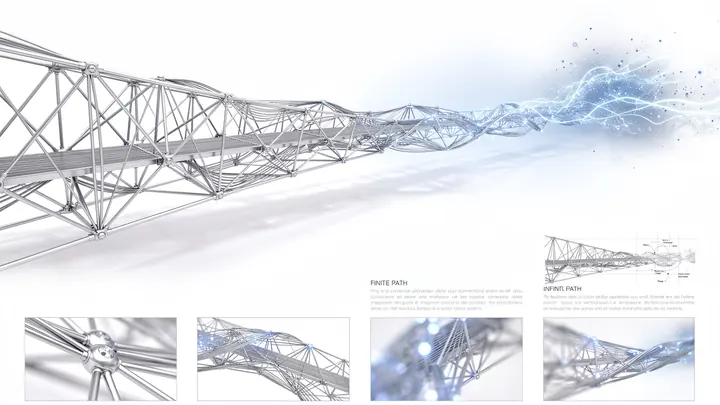
The Bridge That Only Holds the Finite
In the world of logic, there is a bridge. It spans the chasm between a rule's admissibility and its derivability from axioms. As long as rules involve only a finite number of premises, the bridge holds firm — for classical logic, anything that doesn't violate truth is already contained in the syntax. But add infinite premises, and the supports start to tremble. The bridge, alas, is not all-powerful.
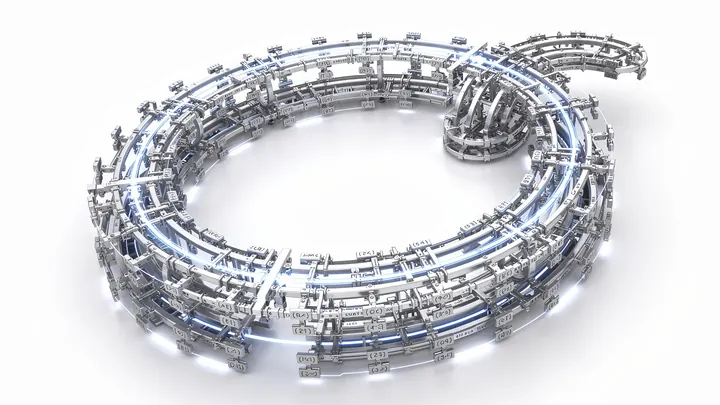
The Logical Ouroboros: When K-SAT Denies Itself
Fall 1956. Kurt Gödel puts pen to paper, drafting a question for the dying John von Neumann: Can the satisfiability of a Boolean formula be checked faster than brute-force trial and error? The answer comes 69 years later, and it turns out to be the bite of the logical ouroboros, the mythical serpent that devours its own tail. The serpent is born from randomness.
cs.LO2026-07-151 minarXiv:2607.13531express
Chemical Soup Computes Numbers: How Reactions Became a Computer
In boiling soup, molecules collide chaotically and react. But if you measure how their concentrations change, patterns emerge. This is how carbon chemical networks work — mixtures of molecules that spontaneously 'cook' information, turning each reaction into an elementary computation. Previously they were used only for modeling nature.