La sombra de la Tierra busca sondas extraterrestres exprés
En el siglo XVIII, William Herschel ya buscaba vida en Marte. Hoy, los astrónomos apuntan no a planetas, sino a artefactos, por ejemplo, sondas alienígenas que se esconden en el sistema solar. El problema es que detectar un objeto diminuto cerca del deslumbrante sol es casi imposible. Una nueva idea: convertir la sombra de la Tierra en un filtro natural.
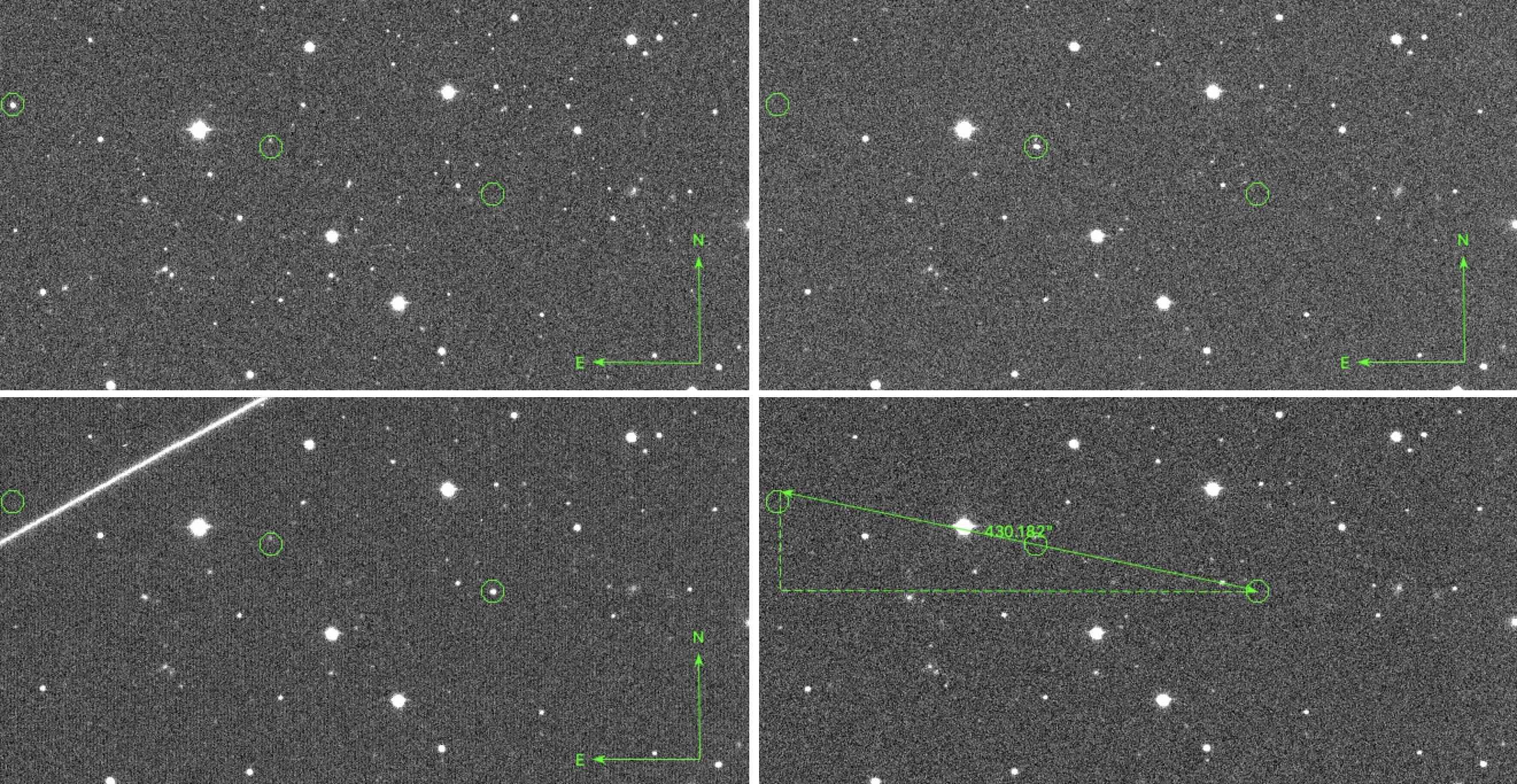
La sombra funciona como un pozo profundo. Durante el día, desde el fondo del pozo se pueden ver estrellas porque las paredes bloquean la luz directa. De manera similar, el cono de sombra de la Tierra, que se extiende un millón y medio de kilómetros en el espacio, oculta el Sol y hace visibles los débiles destellos. Un equipo de científicos analizó imágenes del telescopio automático Fritz Zwicky, que fotografía el cielo cada noche. Buscaron objetos que parpadean en el borde de la sombra durante solo un par de segundos.
En los datos se encontraron decenas de fotometría rápidos desconocidos, no catalogados previamente. Lo más probable es que sean basura espacial o asteroides, pero la técnica en sí ha demostrado su eficacia. Un barrido sistemático del «pozo» podría convertir la exoplaneta de un sueño en una ciencia observacional.
Resumen original
tal como lo escribieron los autores, en inglés arXiv:2510.17907
For centuries, astronomers have discussed the possibility of inhabited worlds - from Herschel's 18th-century observations suggesting Mars may host life, to the systematic search for technosignatures that began in the 1960s using radio telescopes. Searching for artifacts in the solar system has received relatively little formal scientific interest and has faced significant technical and social challenges. Automated surveys and new observational techniques developed over the past decade now enable astronomers to survey parts of the sky for anomalous objects. We briefly describe four methods for detecting extraterrestrial artifacts and probes within the Solar System and then focus on demonstrating one of these. The first makes use of pre-Sputnik images to search for flashes from glinting objects. The second method makes use of space-borne telescopes to search for artificial objects. A third approach involves examining the reflectance spectra of objects in Earth orbit, in search of the characteristic reddening that may imply long-term exposure of metallic surfaces to space weathering. We focus here on a fourth approach, which involves using Earth's shadow as a filter when searching for optically luminous objects in near-Earth space. We demonstrate a proof-of-concept of this method by conducting two searches for transients in images acquired by the Zwicky Transient Facility (ZTF), which has generated many repeated 30-second exposures of the same fields. In this way, we identified previously uncatalogued events at short angular separations from the center of the shadow, motivating more extensive searches using this technique. We conclude that the Earth's shadow presents a new and exciting search domain for near-Earth SETI.
La sombra de la Tierra se extiende a una distancia de aproximadamente 1,4 millones de kilómetros, es decir, casi cuatro veces la distancia a la Luna.