Cuatro planetas adolescentes alrededor de una estrella joven exprés
A 350 años luz de nosotros, alrededor de la estrella V1298 Tau orbitan cuatro planetas. Son de 5 a 10 veces más grandes que la Tierra, pero más ligeros de lo que parecen. Durante nueve años, los astrónomos han seguido su movimiento para entender de qué están hechos y cómo vivieron en el pasado.
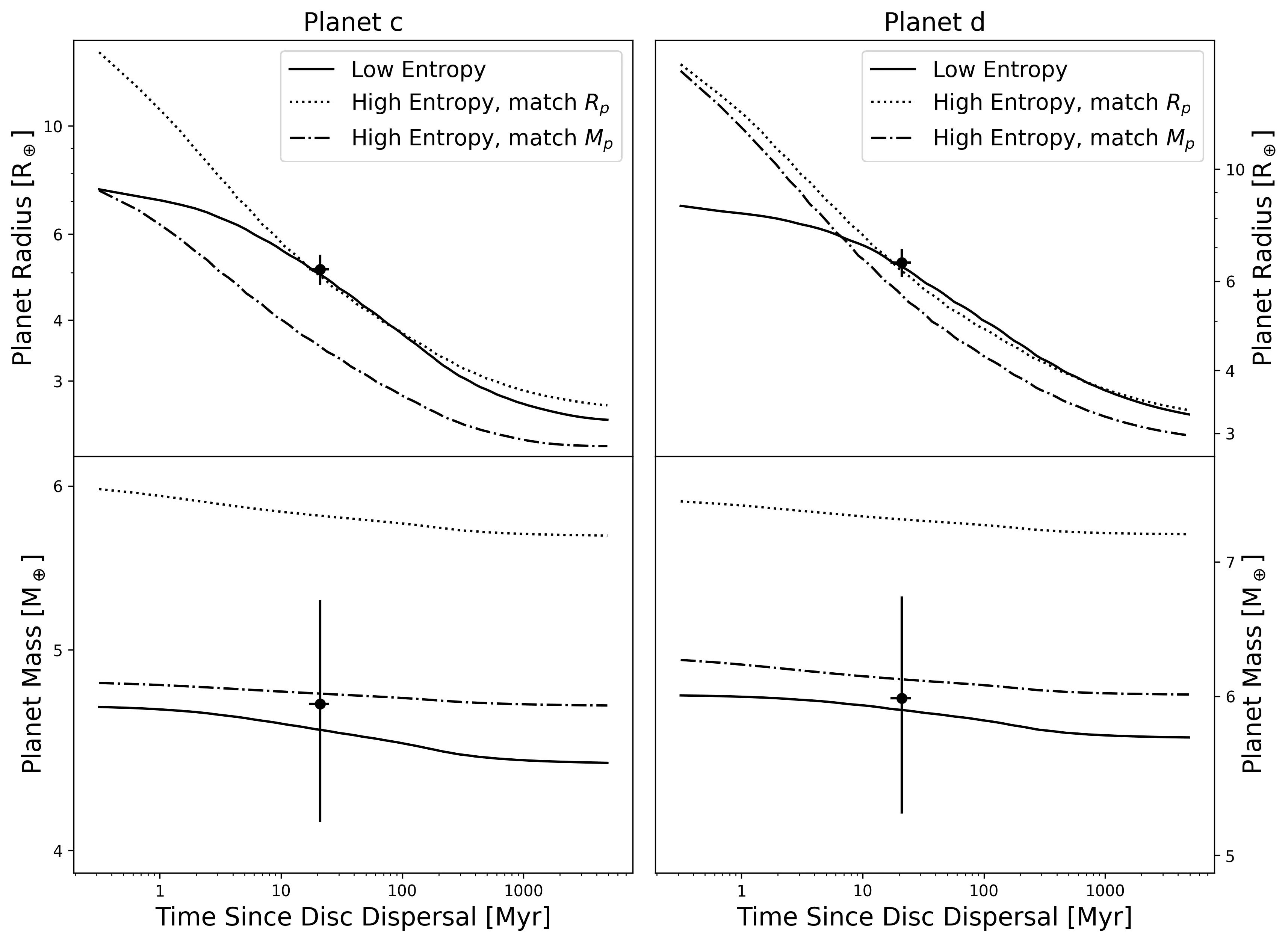
Resulta que las órbitas son casi circulares, lo que indica que en el pasado no hubo colisiones violentas ni encuentros con otros cuerpos. Los planetas crecieron tranquilamente, como árboles en un bosque silencioso. Después de que se dispersó el disco de gas del que nacieron, se enfriaron rápidamente. Ahora son esponjosos como bolas de nieve, pero con el tiempo se contraerán hasta alcanzar el tamaño de supertierras, los planetas más comunes de la galaxia.
Resumen original
tal como lo escribieron los autores, en inglés arXiv:2601.10598
The Galaxy's most common known planetary systems have several Earth-to-Neptune-size planets in compact orbits. At small orbital separations, larger planets are less common than their smaller counterparts by an order of magnitude. The young star V1298 Tau hosts one such compact planetary system, albeit with four planets that are uncommonly large (5 to 10 Earth radii). The planets form a chain of near-resonances that result in transit-timing variations of several hours. Here we present a multi-year campaign to characterize this system with transit-timing variations, a method insensitive to the intense magnetic activity of the star. Through targeted observations, we first resolved the previously unknown orbital period of the outermost planet. The full 9-year baseline from these and archival data then enabled robust determination of the masses and orbital parameters for all four planets. We find the planets have low, sub-Neptune masses and nearly circular orbits, implying a dynamically tranquil history. Their low masses and large radii indicate that the inner planets underwent a period of rapid cooling immediately after dispersal of the protoplanetary disk. Still, they are much less dense than mature planets of comparable size. We predict the planets will contract to 1.5-4.0 Earth radii and join the population of super-Earths and sub-Neptunes that nature produces in abundance.
Si pusiéramos estos planetas en agua, flotarían: su densidad es menor que la del agua.