Suvrath Mahadevan

5 articles · 30 co-authors · latest: 2026-06-18
72 citations · h-index 5 · 20 papersData: Semantic Scholar

We have retold 5 papers by this author. 1 of them with a full read. most often about: large-scale structure, exoplanet, galaxy. 30 co-authors across our retellings.

Links in the knowledge graph
The Invisible Conductor of the Super-Puff Planet System
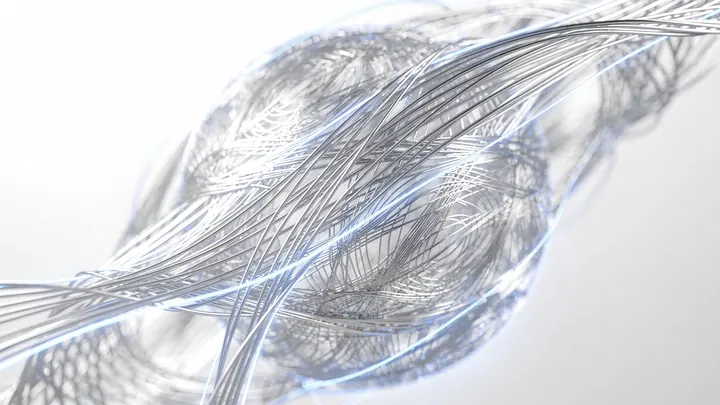
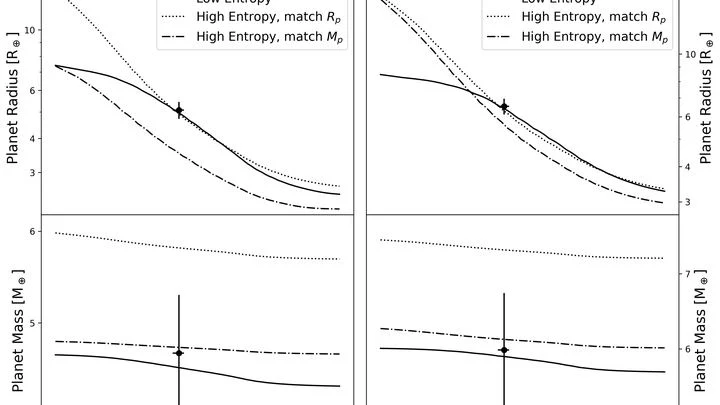
The three planets in the Kepler-51 system have long intrigued astronomers: they are Saturn-sized but less dense than water. These 'super-puff' worlds, with masses no more than ten Earths, are like cosmic dandelions — massive yet almost weightless. Their orbits are arranged like musicians in an orchestra, each playing its part, beating the rhythm with transits.
Exoplanets2026-01-151 minarXiv:2601.10598express
Four Teenage Planets Around a Young Star
350 light-years away, four planets orbit the star V1298 Tau. They are 5–10 times larger than Earth but lighter than they appear. For nine years, astronomers tracked their motion to understand what they are made of and how they lived in the past. The planets are lined up in a chain: their orbital periods are nearly in 3:2, 2:1, and 3:1 ratios.
Instrumentation2026-02-031 minarXiv:2602.03752express
Invisible Lenses Made of Grass
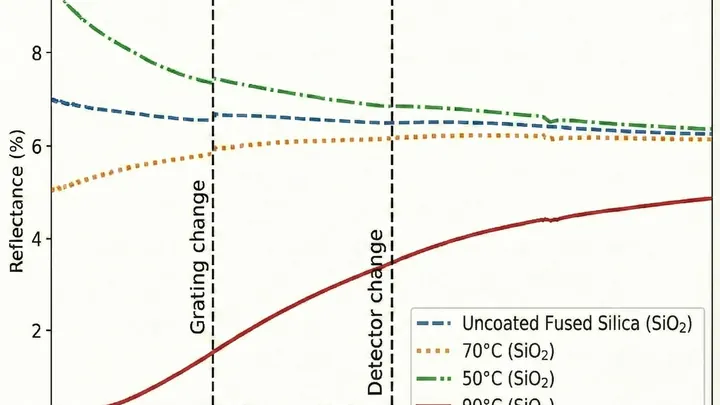
When light hits a transparent plate, some of it bounces off the surface. For astronomers, that means losing precious photons from distant stars. New 3D-printed microlenses made from IPX Clear resin transmit visible and near-infrared light, but at the air boundary they lose about 8%. The solution came from nature.
Stellar2026-04-082 minarXiv:2604.07527express
A Dance of Two Stars 57 Light-Years Away
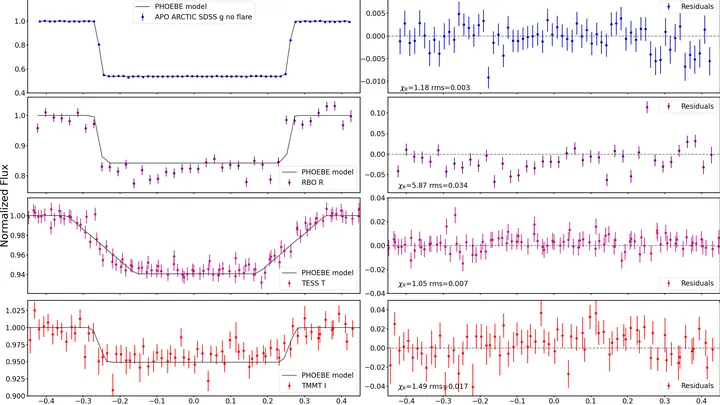
Every 15 hours, in a constellation 57 light-years away, a miniature solar eclipse takes place. A tiny white dwarf — a star the size of Earth but heavier than the Sun — ducks behind the disk of a red dwarf. For astronomers, this is not just a pretty coincidence but a way to peek into the pair's past.
Exoplanets2026-06-182 minarXiv:2606.20789express
How Tidal Waves Sort Planets
A pot of boiling soup is shaken hard — the liquid sloshes, waves crash against the walls. Something similar happens inside a gas planet when it swings past its star on an elongated orbit. The star's gravity excites powerful internal waves in the planet, known as tidal fundamental modes. These waves can completely change the planet's fate.