Un anneau géant dans le cosmos express
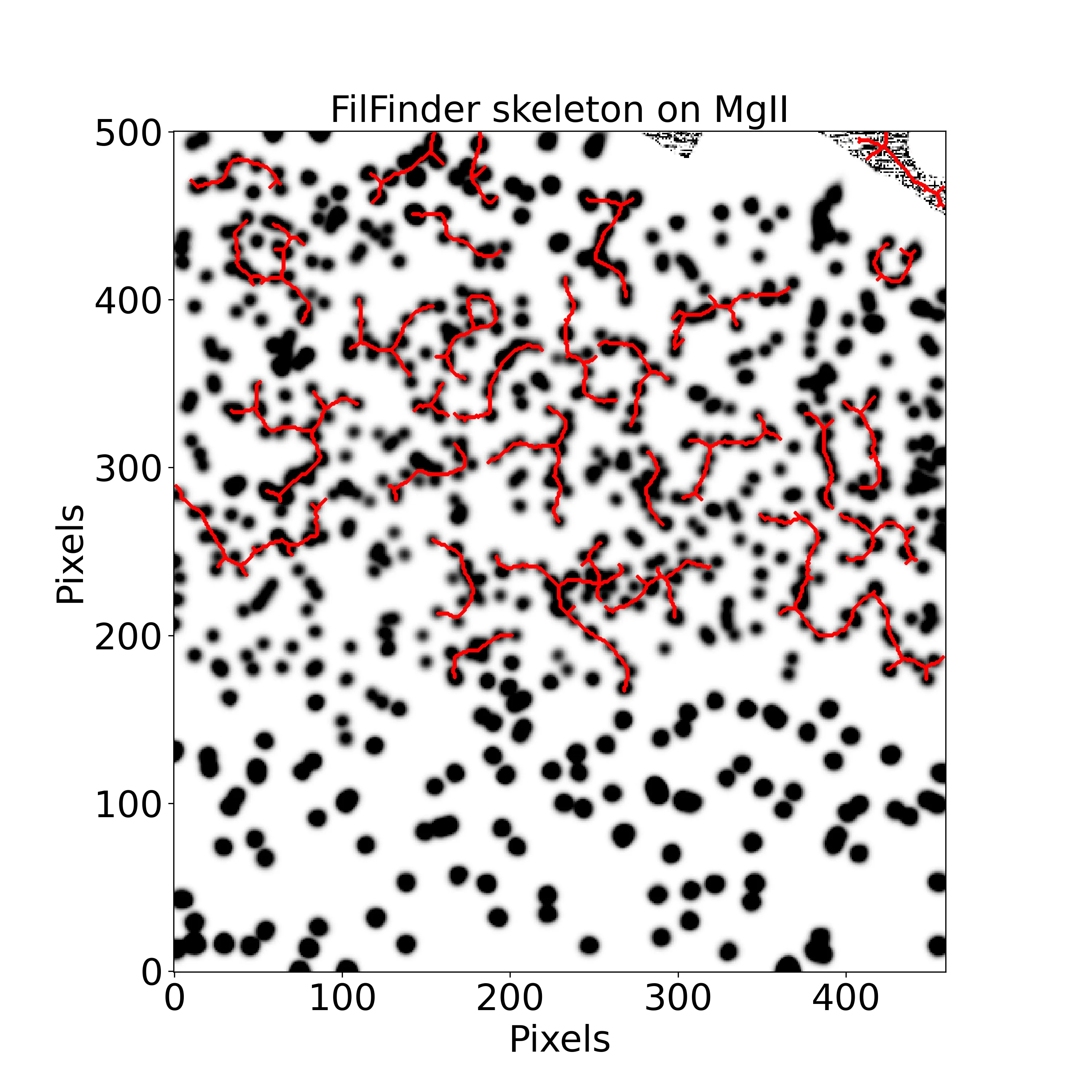
Le ciel nocturne nous réserve parfois des énigmes à couper le souffle. L'une d'elles est un anneau de galaxies qui s'étend sur un tiers de l'horizon. Les astronomes l'ont baptisé « Grand anneau céleste » : un amas de galaxies étiré en un mince filament qui se referme en une circonférence d'environ 400 mégaparsecs de diamètre. Si l'on alignait 1300 Voies lactées bout à bout, on obtiendrait à peu près cette longueur.
L'anneau se trouve à 7 milliards d'années-lumière de nous, dans une région où deux structures superlatives avaient déjà été repérées : l'Arc géant et le Grand Anneau. La nouvelle formation semble les enlacer, reliant des arcs épars en un contour unique. Le côté gauche de l'anneau se divise en deux : un chemin plus allongé, l'autre presque parfaitement circulaire. On dirait deux ellipses superposées, vues sous un léger angle.
De tels anneaux nous obligent à revoir nos idées sur la répartition de la matière. Le modèle standard dit que la matière est dispersée uniformément, sans contrastes marqués à grande échelle. Mais ces structures rappellent que la toile cosmique dont est tissé l'Univers recèle encore bien des surprises. Et cet anneau qui occupe un tiers de l'horizon n'est qu'un de ses motifs, que nous commençons tout juste à comprendre.
Résumé original
tel que rédigé par les auteurs, en anglais arXiv:2604.17534
We present the discovery of `A Giant Ring on the Sky' (GR); a ring-like, ultra-large-scale structure at z~0.8, located in the same field that contains the previously-documented Giant Arc (GA) and Big Ring (BR). The GR was predicted from the presence of a Northern Arc (NA) filament (noted in previous work), which looked like it could, with more or enhanced data, connect with the GA to form a giant ring that encompasses the BR. There is now much evidence to support the reality of a GR. There appear to be two overlapping versions of the GR which differ by only the left-hand-side trajectory; this branching in the LHS of the GR was identified with the FilFinder algorithm and appears to correspond to both the GR prediction (the extended, elliptical, GR from the GA+NA ellipse), and the visually-identified ellipse (the visually-impressive, almost contiguous, roughly circular, GR which is enhanced by a tilted viewing angle). The branching in the GR seems to be hinting at multiple, overlapping ring features. The GR consists of a thin, filamentary northern region, a clustered, ambiguous southern region (including the members of the GA), and filamentary branching towards the LHS. Statistical assessment with elliptical shells, and optimum elliptical-shell-matching, identified two $$> 4\sigma$$ ellipse features corresponding to the GR prediction and to the visually-identified GR. Additionally, the 2D Power Spectrum Analysis identified significant ($$3.5 \sigma$$) clustering on scales ~320Mpc. We also applied our statistical assessments to random data and to FLAMINGO-10K simulated data. The results demonstrate that, while superficially `significant' elliptical shells can be reproduced in random data with the optimum ellipse-matching method (many trials giving the `look-elsewhere' effect), with 2D PSA all of the random fields, and FLAMINGO-10K fields, were found to be entirely consistent with random.
Le diamètre de cet anneau est d'environ 400 mégaparsecs. Si vous le traversiez à la vitesse de la lumière, le voyage durerait plus d'un milliard d'années.
De telles superstructures rappellent l'« Anneau » des romans de Larry Niven — sauf que là-bas il était artificiel, alors qu'ici il est créé par la nature elle-même.