Солнце тянет электроны назад, а они всё равно улетают экспресс
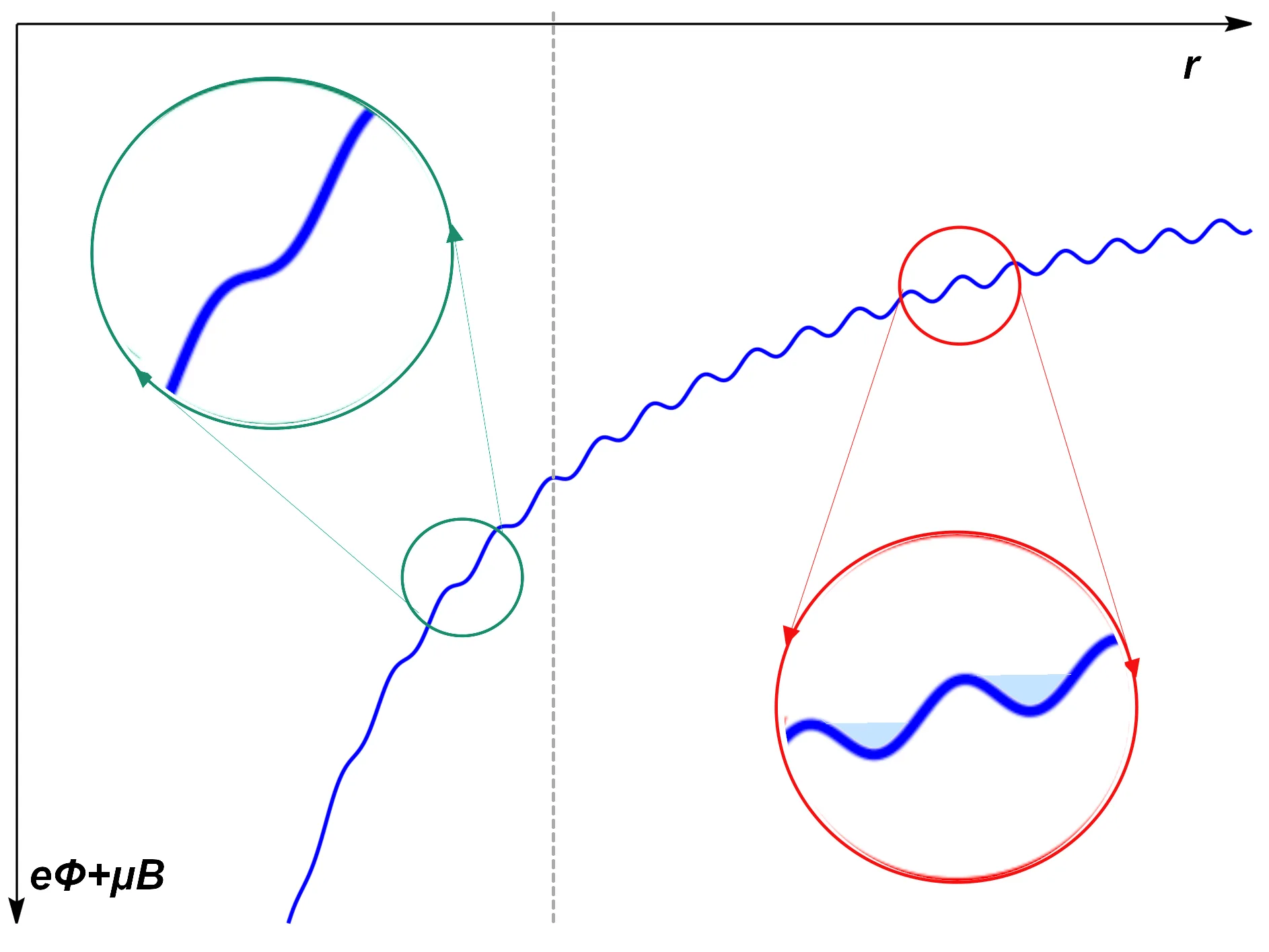
Солнце постоянно испускает поток заряженных частиц — солнечный ветер. Среди них много электронов, и часть из них летит обратно к Солнцу. Но наблюдения показывают: обратно возвращается меньше электронов, чем должно быть. Раньше думали, что виновато электрическое поле Солнца, которое тормозит частицы.
Новое исследование предлагает другое объяснение. В солнечном ветре магнитное поле постоянно колеблется и создаёт маленькие магнитные ловушки. Они похожи на карманы, которые движутся вместе с ветром. Электрон, попавший в такой карман, не может сразу вернуться к Солнцу. Он сначала вырывается, но быстро попадает в следующий карман. Так частицы теряют энергию и остаются в потоке ветра.
Учёные рассчитали, что измеренная граница энергии электронов показывает только глубину одного кармана, а не всего электрического поля Солнца. На самом деле поле может быть в несколько раз сильнее. Это меняет представление о том, как солнечный ветер разгоняется. Захваченные электроны образуют основную массу ветра, и электрическое поле играет в этом бо́льшую роль, чем считалось.
Так Солнце, словно пастух с невидимыми карманами, удерживает часть своих электронов в потоке ветра. А мы теперь лучше понимаем, почему солнечный ветер такой, какой он есть.
Оригинальная аннотация
как её написали авторы, на английском arXiv:2602.16221
This paper re-evaluates the relationship between the observed sunward electron cutoff energy and the depth of the Sun's global electrostatic potential. It investigates whether taking into account the effects of local traps formed by magnetic fluctuations provides an alternative explanation for the observed electron deficit. The fluctuations of the highly variable interplanetary magnetic field form a series of shallow magnetic mirror traps that move at approximately the speed of the solar wind. The study investigates the dynamics of electrons as they move outward against an attractive solar electrostatic potential and interact with these traps. By following the motion of the electrons using first-principles calculations, we assess the effect of the traps on the velocity distribution of the particles. Electrons that escape the local trap continue to lose energy as they move outward until they are eventually captured by subsequent traps, preventing them from returning to the observer as sunward-moving particles. We derive a mathematical expression for the cutoff velocity, defined as the limit beyond which particles can no longer overtake the outer endpoint of a local trap. It turns out that the observed cutoff energy characterizes only the local potential drop within a trap, rather than the total depth of the Sun's potential well. The true potential well can be significantly deeper, scaled by the ratio of the radial distance from the Sun to the trap size. Furthermore, electrons captured by these moving traps contribute to the formation of the solar wind core population. The Sun's electrostatic potential is a more significant factor in solar wind acceleration than previously interpreted from cutoff data. The interaction between electrostatic deceleration and moving magnetic traps provides a new framework for understanding the origin and behavior of the solar wind core electrons.
Солнечный ветер дует со скоростью около 400 километров в секунду — это в тысячу раз быстрее самого сильного урагана на Земле.
В романе Артура Кларка «Солнечный ветер» парусник движется под давлением света, но на самом деле ветер состоит из частиц, которые ведут себя гораздо хитрее, чем думали фантасты.