النجوم التي قد تنشأ فيها الحياة: الإجابة في اللون سريع
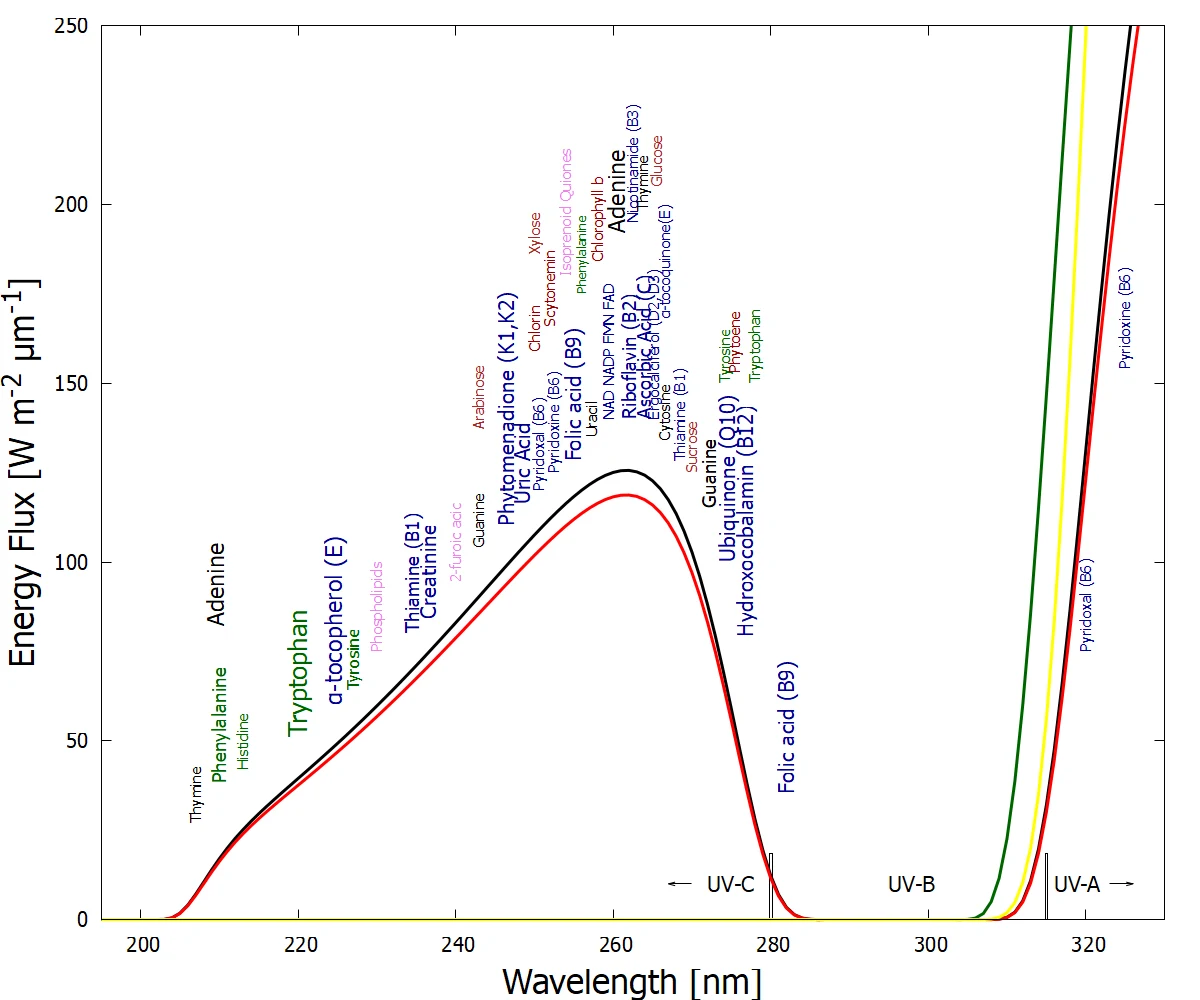
بدأت الحياة بجزيئات شبيهة بالواقي الشمسي الطبيعي — على أساس الكربون، كانت تمتص الأشعة فوق البنفسجية الناعمة لـالشمس الفتية وتحولها إلى حرارة. هذه الطريقة في تبديد الطاقة لم تكن مجرد تدفئة: بل أجبرت الجزيئات على التنظيم الذاتي، مثل طهاة يعجنون من فوضى المكونات عجينة منظمة. لكن الأشعة فوق البنفسجية أداة متقلبة. الضوء الناعم يربط الذرات برفق، بينما الضوء القاسي يكسر الروابط بالكاد ما إن تنشأ.
قارن علماء الفلك البصمات القوس قزحية لضوء النجوم واكتشفوا أن التوازن المثالي لا يوجد إلا في نجوم الفئات F وG والنجوم الضخمة من فئة K. ولكن لتطور الذكاء لا يصلح سوى النوع G — شمسنا. الأقزام الحمراء، وهي الأكثر عددًا في المجرة، تعطي فقط حرارة متوهجة: وكواكبها على الأرجح قاحلة. والآن ينحصر البحث عن عوالم مأهولة في النجوم الصفراء، وقد تكون الإشارة تعتيمًا غير عادي للمحيط في نطاق الأشعة فوق البنفسجية.
الملخص الأصلي
كما كتبه المؤلفون، بالإنجليزية arXiv:2511.08624
The thermodynamic dissipation theory for the origin of life asserts a thermodynamic imperative for the origin of life, suggesting that the fundamental molecules of life originated as self-organized molecular photon dissipative structures (chromophores or pigments) that proliferated over the ocean surface to absorb and dissipate into heat the Archean solar soft UV-C (205-285 nm) and UV-B light ($$<$$320 nm) of our G-type star. Shorter wavelength hard UV-C light ($$<$$205 nm) may, depending on atmospheric conditions, have reached Earth's surface and ionized and dissociated or otherwise degraded these carbon-based pigment molecules (as probably occurred on Mars after losing most of its atmosphere). Here we assess the possibility for an abiogenesis of life similar to ours through molecular photon dissipative structuring on planets similar to early Earth but orbiting different star types at distances normalized to the solar constant. Emission spectra of star types are analyzed to determine the ratio of integrated photon fluxes in the soft UV-C wavelength (dissipative structuring) to hard UV-C wavelength (degradation) regions. Our analysis suggests that star types favorable to the dissipative structuring of life, potentially evolving towards complex life forms such as bacteria, are only the F, G and high mass K-types, with intelligent life only possible on G-type stars. Low mass K and M-type stars are highly unlikely to harbor life. Biosignatures related to the thermodynamic imperative of photon dissipation are proposed.
قرابة 20% من النجوم الشبيهة بالشمس في المجرة قد تحتوي كواكب بمناخ فوق بنفسجي ملائم — وهذه مليارات الفرص للحياة.
يحب كتّاب الخيال العلمي أن يعمروا الكواكب حول الأقزام الحمراء (كما في 'إنترستيلار')، لكن النموذج الجديد يظهر أن ضوءها غير كافٍ 'لعجن' عجينة الحياة الجزيئية.