الغبار الذي يحجب رؤية ولادة الكون سريع
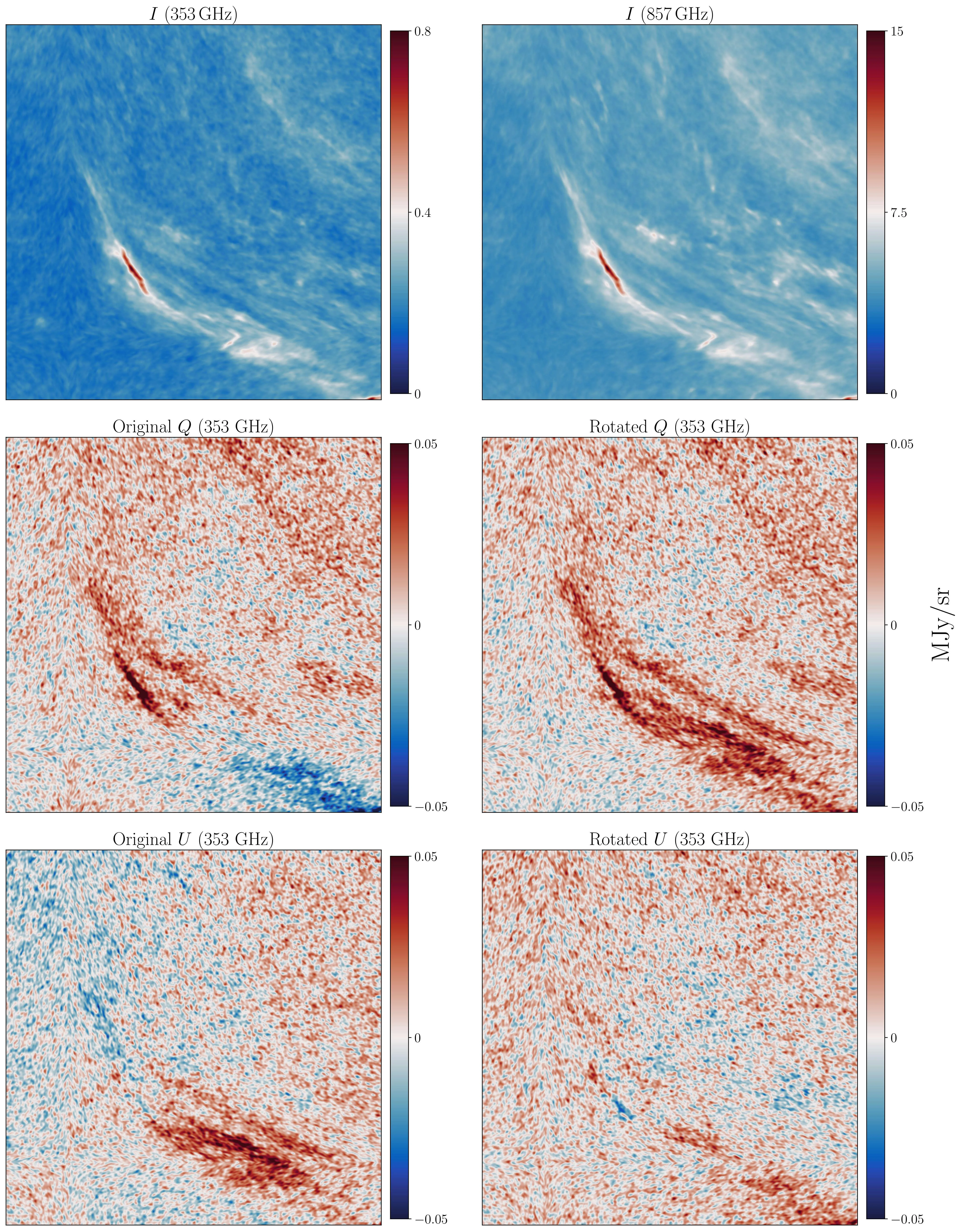
إشعاع الخلفية الكونية هو توهج خافت بقي بعد الانفجار العظيم، مثل أثرٍ يبرد من جمرة نار. وفيه مشفرة موجات ثقالية ربما نشأت في أجزاء من الثانية الأولى، عندما تمدد الكون أسرع من الضوء. لكن بيننا وبين هذا الضوء القديم يعلق غبار مجرتنا. فهو أيضًا يصدر إشعاعًا مستقطبًا — أي ضوءًا تهتز موجاته في اتجاه معين. والنتيجة فوضى: تنظر إلى السماء فتجد إشارة الغبار وإشارة إشعاع الخلفية مختلطتين معًا.
وقد حاول العلماء سابقًا إزالة الغبار، لكن الخرائط كانت مشوشة: ففي المناطق التي يقل فيها الغبار، كانت الضوضاء العشوائية تطغى على الإشارة الضعيفة. أما الطريقة الجديدة فتعمل بشكل مختلف. فهي لا تنظر إلى كل نقطة على حدة، بل إلى كيفية تشكل الغبار في خيوط وتكتلات — مثل نسيج العنكبوت في زاوية الغرفة. ولتحقيق ذلك، يُستخدم أداة رياضية تفكك الصورة إلى أنسجة بأحجام واتجاهات مختلفة. ثم تُختار خريطة غبار بحيث تتطابق إحصائياتها مع ملاحظات تلسكوب بلانك. الأمر أشبه بتركيب أحجية دون معرفة الصورة النهائية، لكن مع العلم أن القطع يجب أن تترتب بنمط معين.
أظهر اختبار على منطقة ساطعة من السماء أن الطريقة الجديدة تعيد بناء التفاصيل الدقيقة لسحب الغبار أفضل من الخرائط القديمة. وهذا مهم، لأن التفاصيل الدقيقة تحديدًا قد تتنكر في صورة إشارة الموجات الثقالية. فإذا خلطنا بينهما، قد نعتقد خطأً أننا وجدنا آثار الانفجار العظيم، بينما هي مجرد غبار.
الآن لدى الفيزيائيين الفلكيين مجموعتان من الخرائط: واحدة تراعي الضوضاء العشوائية، وأخرى حتمية تُظهر البنى المؤكدة فقط. وكلتاهما ستساعدان في طرح الغبار من البيانات والوصول إلى إشعاع خلفية نقي. وعندها، ربما نتمكن من رؤية كيف تمدد الكون في لحظاته الأولى — أسرع من أن يعبره الضوء.
الملخص الأصلي
كما كتبه المؤلفون، بالإنجليزية arXiv:2602.04528
Polarized dust emission is a major astrophysical foreground contaminant of the cosmic microwave background polarization (CMB), which must be accurately measured to look for the faint primordial polarization B-modes of inflationary origin. The available maps to date, obtained from Planck space mission data, are noise-dominated in the high Galactic latitude regions that are most relevant for CMB observations. The goal of this work is to obtain better dust polarization maps from Planck observations, by exploiting both the dependence between polarization and total intensity, as well as the non-Gaussian filamentary structure of the dust emission. To this end, we use scattering transforms, which provide a stable and interpretable representation of complex non-Gaussian textures, allowing for a data-driven analysis approach requiring no explicit priors on dust. The analysis is performed locally on Cartesian patches of sky, where Stokes linear polarization parameters, redefined in a local reference frame, are modeled as the sum of a signal of interest and a nuisance term. Using multiple realizations of the random nuisance term, we recover the polarized dust maps by minimizing a composite objective function that enforces multiple statistical constraints in scattering space. The proposed algorithm reconstructs maps of polarized dust emission whose statistics are consistent with those expected from the Planck data once random nuisance realizations are added. This is confirmed in a validation test using a high signal-to-noise sky region as a test case. Comparisons with existing dust polarization maps and models show that our approach better recovers small-scale polarized dust emission, and that our reconstructed power and cross-spectra closely match those of the dust polarization maps. A second set of maps that deterministically reproduce the features of the dust polarized emission is also produced.
استقطاب الضوء يشبه اتجاه اهتزاز حبل أُرسلت عليه موجة. فالغبار في المجرة يرصّ جزيئاته على طول المجال المغناطيسي، ولهذا يصبح ضوءه مستقطبًا.
في رواية آرثر كلارك «ضوء أيام أخرى»، ترى التلسكوبات عبر أي عوائق، وهنا يحارب العلماء الغبار الكوني ليطلوا على البداية الأولى.