أذن ميركات الراديوية تلتقط همس التوهجات الشمسية سريع
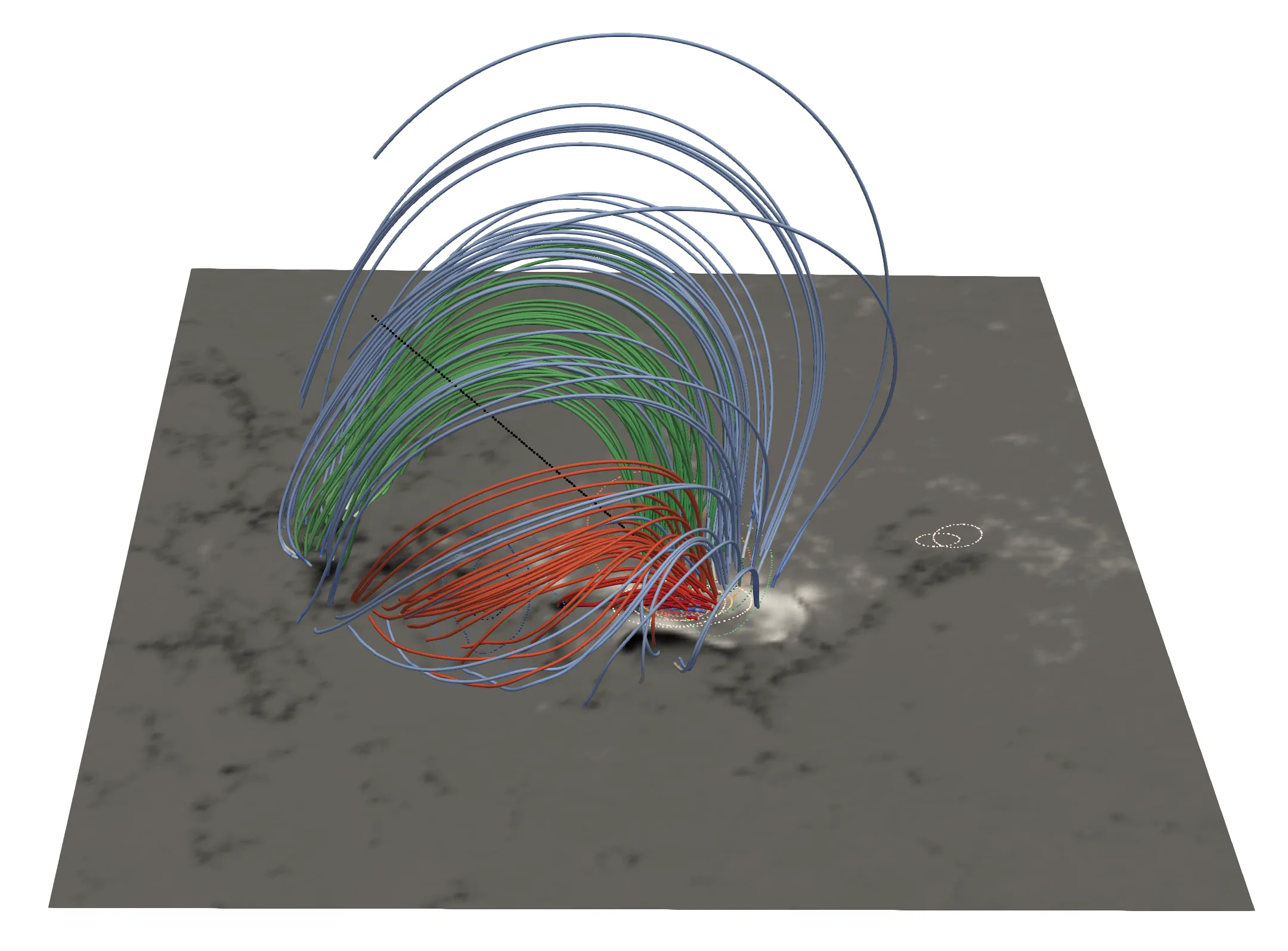
التوهج الشمسي كالرعد في سماء صافية: انفجار طاقة قصير لكنه عنيف. التقط التلسكوب الراديوي ميركات في جنوب أفريقيا أحد هذه التوهجات من الفئة M1.3 وفحصه بدقة غير مسبوقة. الأدوات المعتادة ترى إما تفاصيل ساطعة أو خافتة، لكن ليس كلاهما معًا. تمكن ميركات من رؤيتهما معًا، مثل أذن تسمع دق الطبلة وحفيف الأوراق في آن واحد.
في نطاق الراديو، ظهر التوهج كمصادر منفصلة متعددة. بعضها ومضات متماسكة ساطعة تشبه الطقطقات الحادة، والبعض الآخر توهج غير متماسك خافت ينتشر عبر المنطقة النشطة. هذا يعني أن مجموعات مختلفة من الإلكترونات التي تسارعت بفعل الحقول المغناطيسية تشع بطرق مختلفة. وبمقارنة خريطة الراديو بصور الأشعة السينية وحسابات الحقول المغناطيسية، رأى الفلكيون أن كل مصدر يقع في حلقة مغناطيسية خاصة به.
هذه النتيجة ليست مجرد صورة جميلة. إنها تُظهر كيف يمكن لمصفوفة المستقبل العملاقة SKA-Mid أن تحلل التوهجات إلى أجزائها: من أين تأتي الجسيمات المتسارعة، وأين تتمزق الخطوط المغناطيسية بالضبط، وكيف تنتقل الطاقة من مكان إلى آخر. ميركات هو حجر اختبار، وقد برر التوقعات بالفعل.
الملخص الأصلي
كما كتبه المؤلفون، بالإنجليزية arXiv:2602.05282
Radio observations provide powerful diagnostics of energy release, particle acceleration, and transport processes in solar flares. However, despite recent progress in radio interferometric imaging spectroscopy, current instruments still face limitations in image fidelity and resolution, restricting detailed spectroscopic studies of flaring regions. Here we present high-fidelity imaging spectroscopy of a M1.3 GOES class flare with MeerKAT, a precursor to the future-generation array SKA-Mid. Radio emissions at the observed frequencies typically originate in the low corona, offering valuable insights into magnetic reconnection and primary energy-release sites. The obtained images achieve an unprecedented dynamic range exceeding 10^3, enabling simultaneous analysis of bright coherent bursts and faint incoherent emission from the active region. Multiple spatially distinct coherent sources are identified, implying contributions from different populations of accelerated electrons. The incoherent emission extends beyond AIA structures, highlighting MeerKAT's ability to detect dilute but hot plasma invisible to Extreme Ultraviolet instruments. Combined with co-temporal Hard X-ray images and magnetic field extrapolations, the radio sources are located within distinct magnetic structures, further revealing their association with different populations of accelerated electrons. These results demonstrate MeerKAT imaging spectroscopy as powerful diagnostics of solar flares and pave the way for future solar flare studies with SKA-Mid.
النطاق الديناميكي للصور التي تم الحصول عليها يتجاوز 1000، وهذا مثل رؤية مصباح ساطع وجمرة متوهجة في صورة واحدة دون تعريض زائد.