مكثف فائق من قميص قديم سريع
تم溶解 قميص قديم في قلوي للحصول على هلام، وأصبح هذا الهلام قلب مخزن الطاقة. أما المكون الثاني فصُنع من الشيتوزان، وهي مادة مستخلصة من قشور الجمبري. لا معادن هنا: فقط قطن معاد تدويره ومأكولات بحرية.
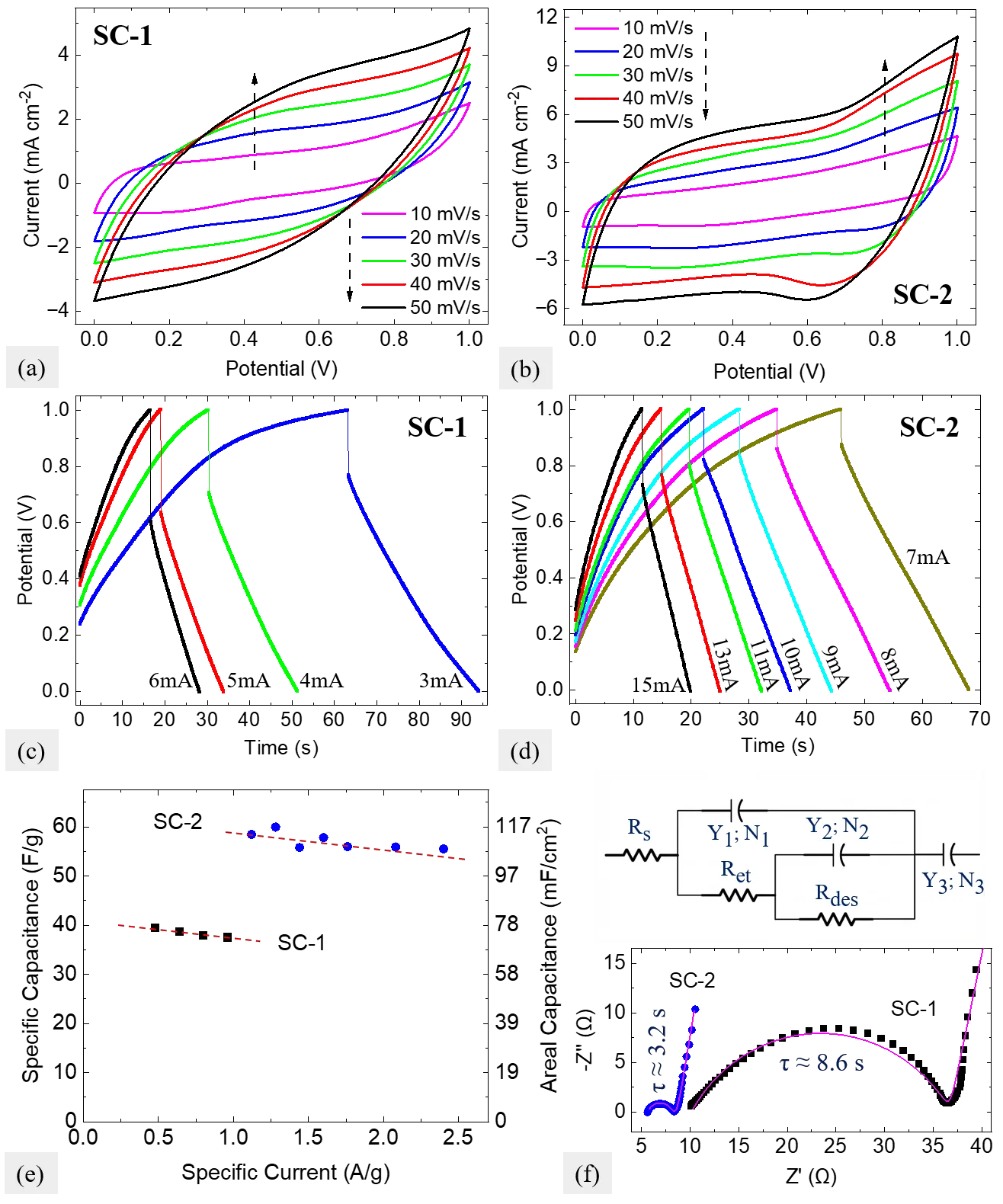
تم نقع الهلام في ملح الأمونيوم، فارتفعت موصليته بنحو الضعف: من 17.1 إلى 37.8 ملي سيمنز لكل سنتيمتر. الأمر أشبه باستبدال مسار ضيق للأيونات بطريق واسع — فالشحنات تتحرك أسرع. في الاختبارات، أظهر الجهاز زمن استجابة قدره 3.2 ثانية، وهو ما يضاهي المنتجات التجارية.
بعد 1000 دورة شحن، لم تنخفض السعة بل زادت بنسبة 12.3%. زادت المقاومة قليلًا: من 18 إلى 22 أوم. السبب هو آثار ضئيلة من الحديد من الغلاف الفولاذي تفاعلت مع الهلام. في بطارية قرصية مدمجة، لن يحدث هذا. هذا ليس عطلًا، بل خاصية من خصائص الإعداد المخبري.
يمكن التخلص من هذا المكثف الفائق دون الإضرار بالبيئة. فهو لا يتطلب معادن نادرة مثل الليثيوم أو الكوبالت، وهو مصنوع من مواد تُرمى عادة. ربما قريبًا ستُستخدم الجينزات القديمة لتشغيل الأجهزة الإلكترونية القابلة للارتداء.
الملخص الأصلي
كما كتبه المؤلفون، بالإنجليزية arXiv:2602.13432
This study presents an eco-friendly and bio-based symmetric supercapacitor using cotton textile waste-derived hydrogels as electrolytes and chitosan-based carbon electrodes as metal-free charge-storage components. Cotton-derived hydrogels were synthesized via an alkaline dissolution-gelation route and modified with ammonium thiocyanate (NH4SCN) to enhance ionic conductivity. The ionic modification increased the hydrogel conductivity from 17.1 to 37.8 mS cm^-1, confirming a nearly twofold improvement in ion transport efficiency. The resulting hydrogel exhibited improved thermal stability, homogeneous ionic transport, and strong polymer-ion interactions confirmed by FTIR and TGA analyses. In a symmetric device, the ion-modified hydrogel enables reduced equivalent series resistance, faster charge-transfer kinetics, and a short time constant (tau = 3.2 s), comparable to commercial energy-storage systems. After 1000 cycles, the device exhibits a 12.3% increase in specific capacitance, confirming stable proof-of-concept operation. Cycling leads to a moderate increase in R_ESR (18 to 22 ohm) and tau (3.2 to 4.1 s), indicating slower charge-ion redistribution. Notably, this R_ESR includes the contribution of the test-cell setup; in compact coin-type configurations, the resistance would be considerably lower. EIS reveals a concurrent rise in interfacial resistive terms, consistent with post-cycling hydrogel darkening and FTIR evidence of Fe-SCN coordination, suggesting that resistance buildup mainly originates from minor Fe-SCN interactions when the expelled liquid reaches the stainless-steel collector, rather than from loss of capacitive functionality. Overall, these results demonstrate the viability of cotton waste-derived hydrogels and chitosan-based electrodes as sustainable components for green energy storage, offering a recyclable and eco-friendly alternative to conventional systems.
الشيتوزان المستخدم في الأقطاب يُستخرج من قشور الجمبري وسرطان البحر، وهي نفايات صناعة الأغذية التي يُنتج منها ملايين الأطنان سنويًا.