مسحوق يتذكر الحركات سريع
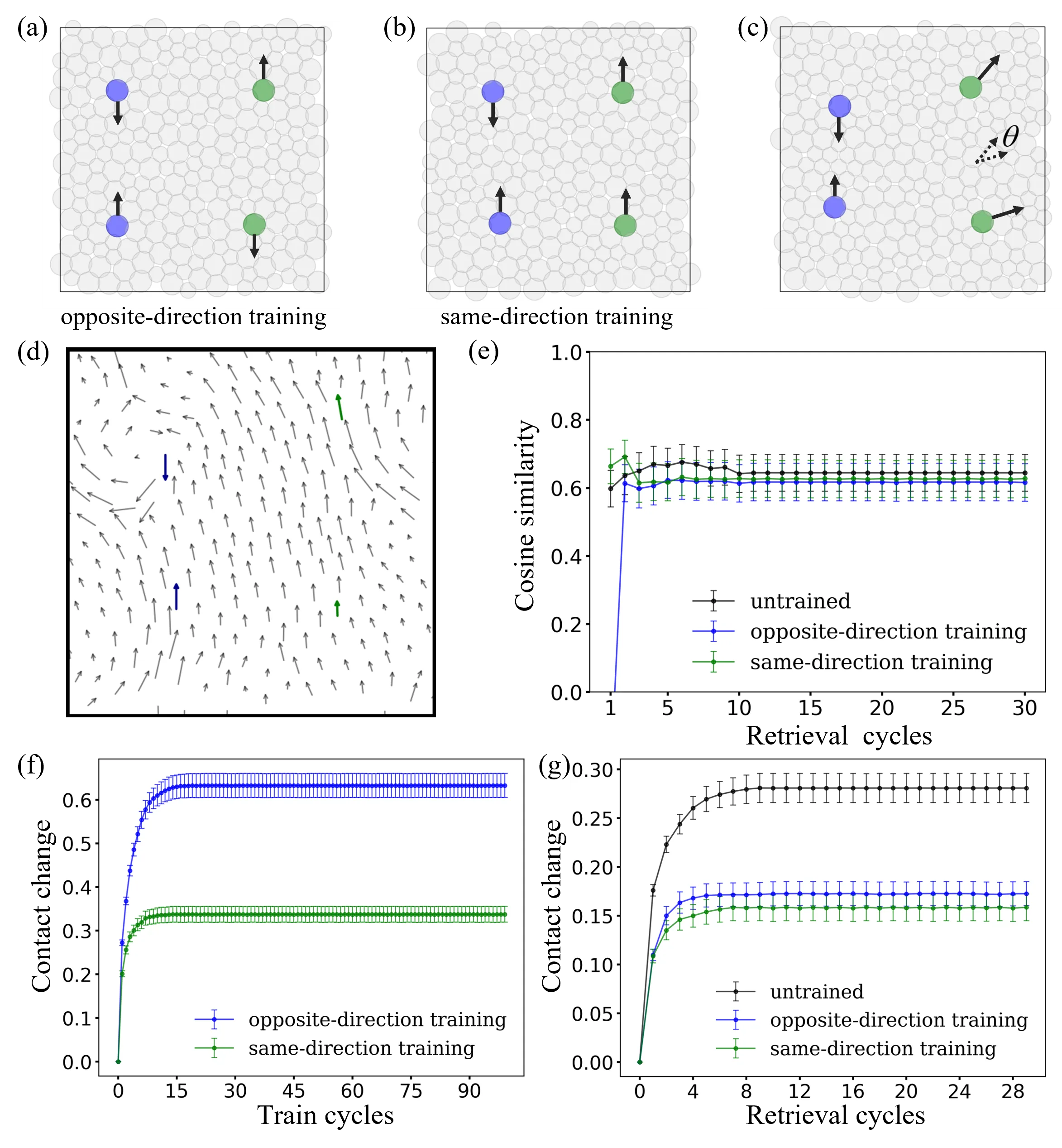
حفنة رمل على الطاولة — مجرد كومة. لكن إذا هززت حبيبات الرمل بشكل صحيح، تبدأ الكومة في التصرف مثل ذاكرة: تتذكر أي حركة تتبع أي حركة. في التجربة الجديدة، حرّكوا الجسيمات بشكل دوري، وبعد التدريب أعادت إنتاج النمط المطلوب حتى بدون أمر كامل.
السر في التلامسات بين الجسيمات. عندما تتحرك حبيبات الرمل، تغير جيرانها وقوى التفاعل — هكذا تعيد الكومة ترتيب «الأسلاك» من تلقاء نفسها. هذا يشبه كيف يصبح المسار في الغابة أكثر وضوحًا إذا مشيت فيه كثيرًا: كل خطوة تغير التربة، ويُحفظ الطريق.
اختبر العلماء مهامًا بدرجات صعوبة مختلفة. المهمة البسيطة حُلّت فورًا — كانت الجسيمات تتحرك بالفعل في الاتجاه الصحيح. في المهمة الصعبة، لم يساعد التعلم كثيرًا حتى أضافوا فترات توقف: أتيحت للجسيمات فرصة «للاستقرار» وتذكرت بشكل أفضل. وفي مهمة متوسطة الصعوبة، ساعد مجرد تغيير مواقع المدخلات والمخرجات.
تظهر التجربة أن الذاكرة الترابطية لا تحتاج إلى دوائر معقدة — يكفي وسط حبيبي وإيقاع صحيح. ربما في المستقبل ستظهر مواد تتعلم أثناء الحركة، مثل هذا الرمل.
الملخص الأصلي
كما كتبه المؤلفون، بالإنجليزية arXiv:2603.14534
We investigate associative-memory behavior in a reconfigurable particle packing programmed by purely local cyclic driving. The system is a two-dimensional bidisperse Lennard--Jones particle assembly with periodic boundaries evolved under athermal quasistatic relaxation. During training, a fixed set of input particles is driven cyclically while output particles are selected on-the-fly by a region-driving rule and driven according to a prescribed flow pattern; during retrieval, only the inputs are driven. Associative-memory performance is quantified by the cosine similarity between realized and target output displacement directions. Unlike physical learning systems with fixed architecture, learning here arises through emergent weight updates: localized rearrangements modify the contact network and reshape the effective mechanical couplings between inputs and outputs. Across task difficulty we identify three regimes. In an easy setting, the intrinsic mechanical response already produces coherent motion in the right-hand region under input-only driving, yielding high performance without training. In a hard setting, the desired mapping conflicts with the dominant collective drift, resulting in low baseline performance and only modest training gains; introducing intermittent relaxation cycles reduces train--retrieval mismatch and improves performance. In an intermediate quadrupolar task, repositioning the input--output geometry stabilizes the desired response and converts initially stochastic trajectories into reproducible learned motions. Together these results identify minimal physical ingredients for association-based functionality in athermally driven particulate media and motivate an association learning phase diagram for reconfigurable matter.
في التجربة، تحركت الجسيمات دون تسخين — فقط بفعل التأثير الميكانيكي، كما لو كنت تهز صندوقًا مليئًا بالكرات.