نبات يطفئ الضوء داخل نفسه خلال 60 بيكو ثانية سريع
ضوء الشمس مثل تيار متواصل من الكرات المتطايرة نحو الجدار. بروتينات الهوائي في البكتيريا الممثِّلة للتمثيل الضوئي تلتقط هذه "الكرات" (الفوتونات)، لكن أحيانًا تكون الضربة قوية جدًا، وفي "الجدار" — جزيء الكلوروفيل — ينشأ اهتزاز خطير، الحالة الثلاثية. إذا لم تُخمد، فقد تولد أكسجينًا مفردًا عدوانيًا يحرق البنية كلها. هنا تقوم جزيئات الكاروتينويد بدور طفاية الحريق: فهي تستقبل الطاقة الخطيرة وتشتتها كحرارة.
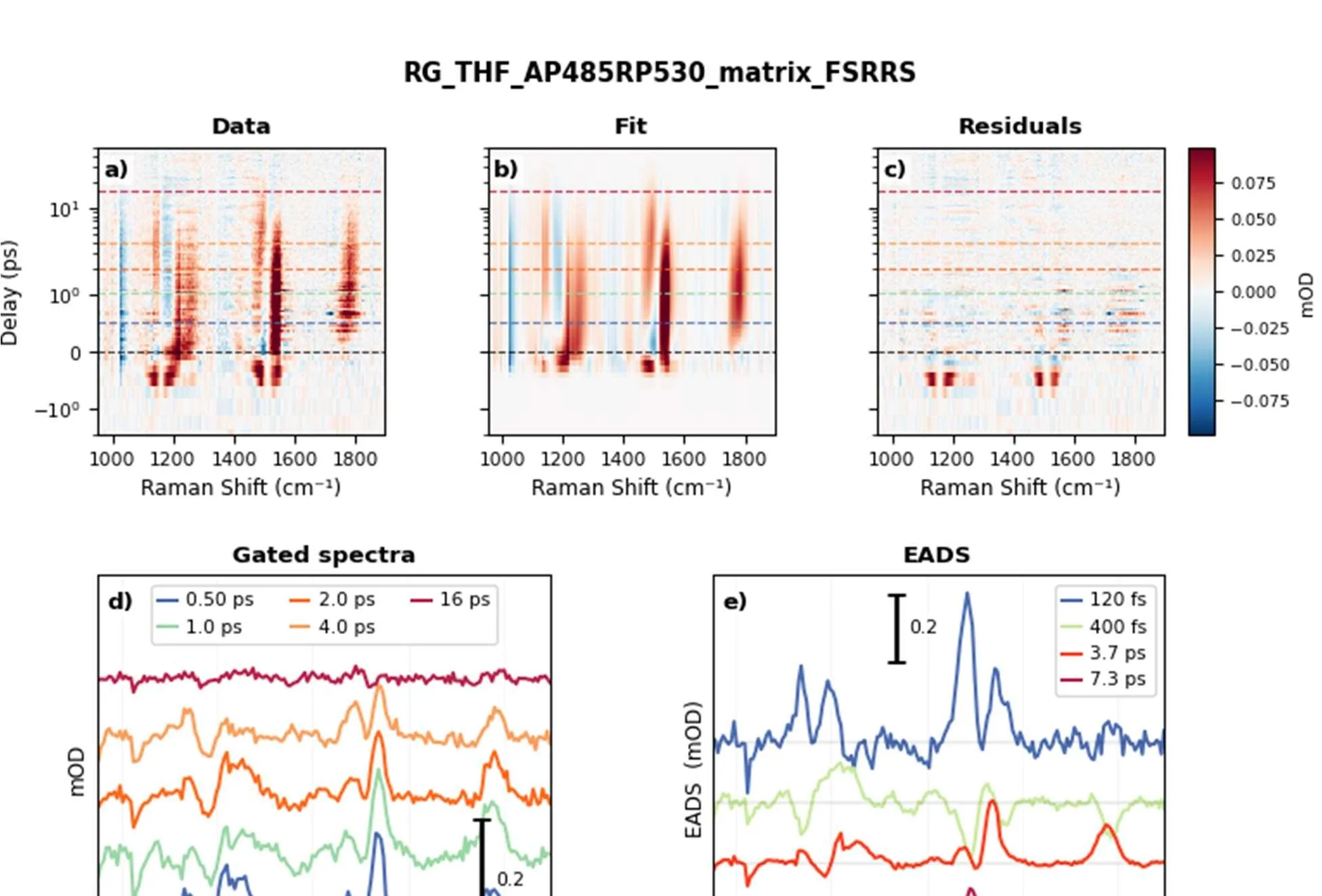
حتى الآن لم يكن واضحًا كيف يحصل الكاروتينويد على هذه الطاقة بالضبط. هل مباشرة من الكلوروفيل، أم أنه يولّد الثلاثيات بنفسه عبر عملية تشبه تقسيم نبضة قوية واحدة إلى نبضتين ضعيفتين (الانشطار المفرد). كان يعيق فهم ذلك الضجيج الطيفي — إذ تتداخل إشارات العمليات المختلفة مثل أصوات في غرفة مزدحمة. طبق مؤلفو العمل طريقة يمكن تشبيهها بضبط جهاز راديو على ترددات مختلفة. باستخدام مطيافية رامان المحفزة فائقة السرعة في ظروف رنين مختلفة، فصلوا الإشارات المتداخلة. اتضح أنه في بروتين LH2 لبكتيريا Rhodoblastus acidophilus، يُولَّد ثلاثي الكاروتينويد بشكل شبه حصري عن طريق نقل الطاقة من البكتيريوكلوروفيل، وليس عبر الانشطار المفرد.
المثير للاهتمام أن البروتين أظهر زوجًا متشابكًا من الثلاثيات عاش أطول بثماني مرات من نظيره في المحلول السائل. لكن هذا التأخير لم يؤدِ إلى انقسام إلى ثلاثيين مستقلين ولم يُطلق تفاعلًا ضارًا مع الكلوروفيل. لقد خلقت الطبيعة صمام أمان موثوقًا: تذهب الطاقة عبر مسار آمن وحيد، مثل الماء في مصرف الطوارئ للسد، دون إتلاف المحطة.
الملخص الأصلي
كما كتبه المؤلفون، بالإنجليزية arXiv:2608.07390v1
Photosynthetic antenna proteins harvest light energy while at the same time protecting the organism against photodamage. Carotenoid molecules are essential in the latter process, efficiently quenching unwanted (bacterio)chlorophyll excited states created after photon absorption. (Bacterio)chlorophyll triplets, formed by inter-system crossing, are particularly significant, since in the absence of carotenoid quenching, they sensitise the highly oxidative singlet oxygen. In light-harvesting complex 2 (LH2) from Rhodoblastus acidophilus, the pathways that populate carotenoid dark and triplet states remain controversial, involving bacteriochlorophyll-to-carotenoid triplet-triplet transfer and/or generation of triplets by the carotenoid molecules themselves through singlet fission. Transient absorption has been central to understanding photoprotection in these organisms, but spectral congestion limits the separation of the overlapping species needed to discriminate between these pathways. By applying femtosecond stimulated resonance Raman spectroscopy (FSRRS) in different resonance conditions to this protein, in combination with an extension of global analysis to four dimensions (wavenumber, time, intensity and resonance condition), we separate each component of the carotenoid dark-state manifold together with its kinetics. An entangled triplet pair S*/1(TT) is observed, which lives about 60 ps, some eight times longer than in solution. However, this stabilisation does not open a pathway to separated triplets or to carotenoid-BChl a heterofission. Triplet-triplet transfer from bacteriochlorophyll a to carotenoid is also resolved under BChl a excitation, and fits cleanly as a single 2100 ps component. The carotenoid triplet in LH2 is thus produced by photoprotective triplet-triplet transfer from BChl a, and not by singlet fission.
الكاروتينويدات ليست فقط حماة في التمثيل الضوئي. إنها أيضًا تمنح الجزر لونه البرتقالي وتساعد رؤيتنا، إذ تتحول إلى فيتامين A.