The Skyrmion Dance: How a Magnetic Vortex Conducts the Quantum Orchestra ✦
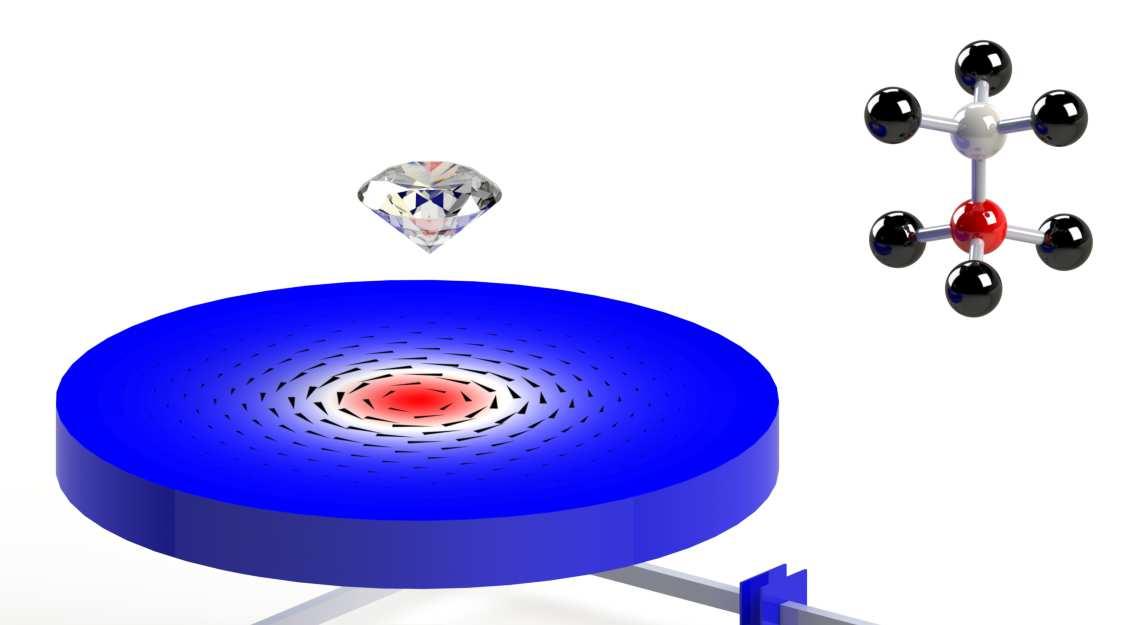
A magnetic skyrmion is a topological knot that cannot be untied without tearing the fabric of the material. Scientists have made it vibrate, turning it into a quantum tuning fork that transfers states between memory qubits and processor qubits. The system works like an orchestra without a conductor: each instrument hears the common wave and comes in on time. The prospect: chips where information is stored in vortices and processed in superconducting circuits, with not a single bit lost between them.
🎯 The skyrmion is named after British physicist Tony Skyrme, who predicted particle-like solutions in nuclear physics in the 1960s. Today, magnetic skyrmions are seen as 'racetracks' for ultra-dense memory: one bit—one skyrmion, just tens of atoms across.
🎬 The concept of a quantum interface using topological patterns resonates with the idea of 'world lines' and stable vortices in Greg Egan's novel 'Diaspora,' where computation is performed on topological defects of multidimensional matter.