Danish theoretical physicist, creator of the quantum atomic model that explained the spectral lines of hydrogen (Bohr model). He made a decisive contribution to the development of quantum mechanics and its interpretation (Copenhagen interpretation). Debated with Einstein on the completeness of quantum theory.
Biography
He studied at the University of Copenhagen, then worked at the Manchester laboratory under Rutherford. Founded the Institute for Theoretical Physics in Copenhagen. Nobel laureate in physics (1922).
Key discoveries
Planetary model of the atom with quantized orbits (1913)
Correspondence principle
Copenhagen interpretation of quantum mechanics
💡 During World War II, Bohr was secretly taken out of occupied Denmark on an American bomber, where he had to sit in the bomb bay.
Quote: "The opposite of a correct statement is a false statement. But the opposite of a profound truth may be another profound truth."
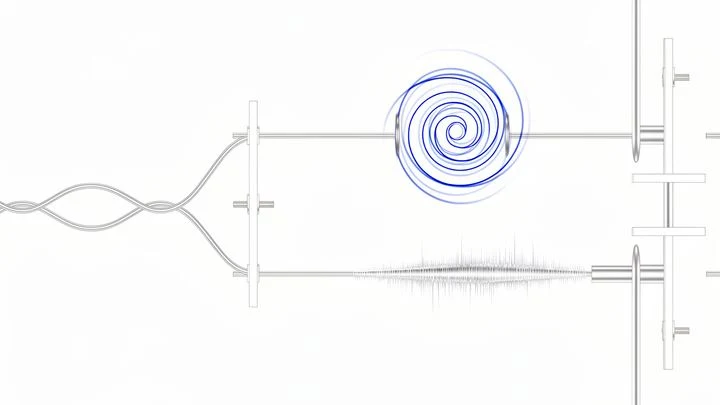
For the first time, physicists operationally measured how a single photon physically distributes between two paths of an interferometer. It turned out that in the port with destructive interference, 'superlocalization' occurs: the probability of presence in one arm exceeds unity, while in the other
Physicists shifted light from visible red to infrared—the color that glides through glass cables—using a cloud of cold rubidium atoms. Achieving 80% efficiency, the method marks a leap toward a quantum internet where signals travel without fading.
Muon pairs are born with strictly linked properties. It turns out the link holds even if one particle disintegrates before the other is measured. Our observations aren't a snapshot of reality, just a handy tool.
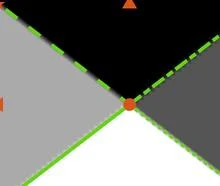
Simulations show that a cloud of dark matter around two stars takes the shape of a molecule. The elongated orbits of the stars knock particles out of the cloud, causing their trajectories to round out. This process could leave a noticeable imprint in the gravitational-wave background, helping to rev
Scientists constructed a logical chain of seven self-evident statements and showed that in the quantum world they are incompatible: any six work, but all seven together never do. Rejecting a particular statement determines which interpretation of quantum mechanics one adopts, and it provides a simpl
A neo-Bohrian interpretation dissolves the measurement problem: the infinite complexity of instruments makes classical concepts not a convenient convention but a mathematical inevitability. A particle, like a spinning coin, is forced to reveal a definite result upon contact with the macroscopic worl
An old idea gets a fresh breath: atoms can be described without mysterious quanta if we consider that even absolute emptiness is threaded with an electromagnetic hum. This hum, like an invisible surf, constantly nudges the electron and keeps it from crashing into the nucleus. Scientists added near-l
Some believe unrealized quantum possibilities vanish instantly. Others think reality branches. A new experiment with three consecutive photon measurements has shown traces of persistent alternatives for the first time, supporting the many-worlds picture.
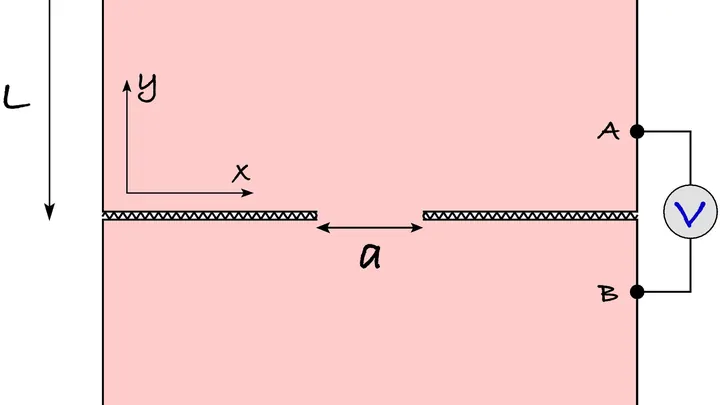
In the famous thought experiment between Einstein and Bohr, the atomic slit always trembles due to quantum noise. This noise, like an unceasing whisper, smears the wave pattern. Now, physicists have learned to squeeze this whisper: to hush the part that gives away the particle's path. Fringe contras
Scientists have reformulated the Schrödinger equation, representing particles as a flowing medium. Points where the probability of finding a particle is zero become vortices. Their integer count naturally yields precise energy levels, explains the eternal jitter even of a particle at rest, and links
Scientists turned a thorium atom into a quantum battery: the electron shell and nucleus swap energy like two pendulums on a shared string. A laser charges the shell, and the energy slips into the nucleus on its own. No wires—just light and the atom.