The Grand Piano Chip: How Light and Sound Learned to Work Together Without Noise ⚡ экспресс
Original: "Optomechanical crystal in light-resilient quantum ground state"
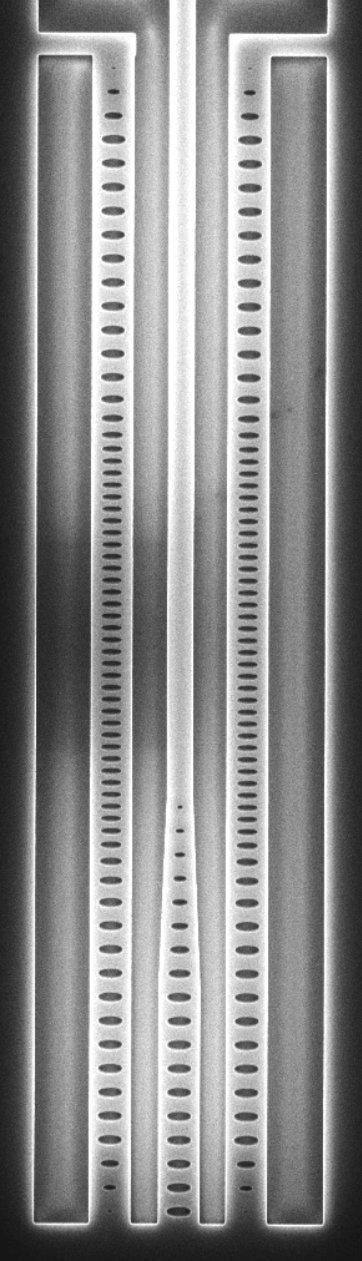
A rigidly fixed design dissipates heat 60 times better, allowing light and sound to interact cleanly.
Links in the knowledge graph 1
Light and sound don’t get along on microchips: the slightest laser heating generates noise. Engineers built a chip that wicks away heat 60 times better, slashing distortion. Now you can pump in powerful light without disturbing quantum sound waves. This is a step toward flawless microwave-to-light converters—the bedrock of the quantum internet.
🎯 At temperatures near absolute zero, phonons become ideal qubits—quantum computations can already be run on them without thermal noise.
🎬 These chips convert light into sound and back, like bridges between worlds from science fiction, where information glides without loss.