The Grand Piano Chip: How Light and Sound Learned to Work Together Without Noise express
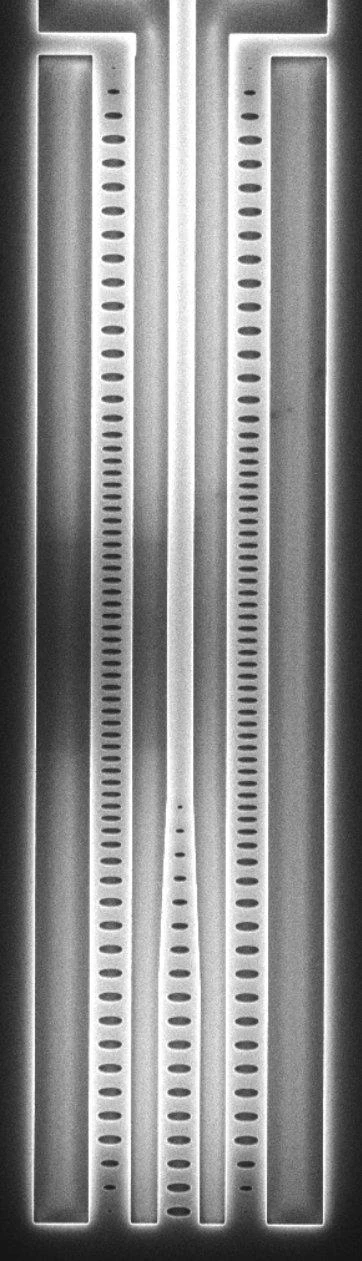
In microchips, light inevitably heats up the material, causing thermal fluctuations — chaotic jolts that throw off precision. Ordinary devices are like a string stretched on a flimsy frame: the slightest warmth makes it go out of tune. Engineers have created a chip where all elements are firmly anchored, like strings on a massive grand piano soundboard. Heat dissipates 60 times more efficiently (the difference between a whisper and a loud conversation). Using precise light measurements and spectral analysis, scientists saw that the noise dropped so much that a much more powerful laser beam can be applied while sound quanta, phonons, stay pure. This optomechanical bridge links microwaves and light, bringing the quantum internet nearer. In an unexpected twist, at liquid helium temperatures, phonons turn into perfect carriers of quantum information — qubits that operate flawlessly.
At temperatures near absolute zero, phonons become ideal qubits — quantum computations can already be run on them without thermal noise.
These chips convert light into sound and back, like bridges between worlds from science fiction, where information glides without loss.