Brain Radiation Therapy: One Click Instead of Manual Setup express
When a tumor affects the entire brain, doctors irradiate the whole organ. It's a reliable method, but setting up the radiation is painstaking: you need to adjust parameters so the tumor gets the right dose while the eyes and lenses suffer as little as possible. A specialist typically spends about 15 minutes manually tweaking settings in the software.
Now, this process has been sped up. The researchers trained a neural network on 55 real cases: it looked at the tumor's shape and the location of sensitive organs, then predicted the optimal settings. The program then generated the radiation plan on its own. If the doctor didn't like something, they could simply say so into a microphone — a voice assistant based on a large language model understood the comment and recalculated the plan. In testing, out of 15 new cases, 14 plans created by the neural network were deemed clinically acceptable. Radiation doses to the eyes and lenses were no different from those in human-made plans. And the whole process took about 7 minutes instead of 15—with just one mouse click.
This approach saves oncologists time and reduces reliance on personal experience. In the future, such systems could assist in hospitals that lack specialized radiation planning experts.
Original abstract
as written by the authors arXiv:2601.00685
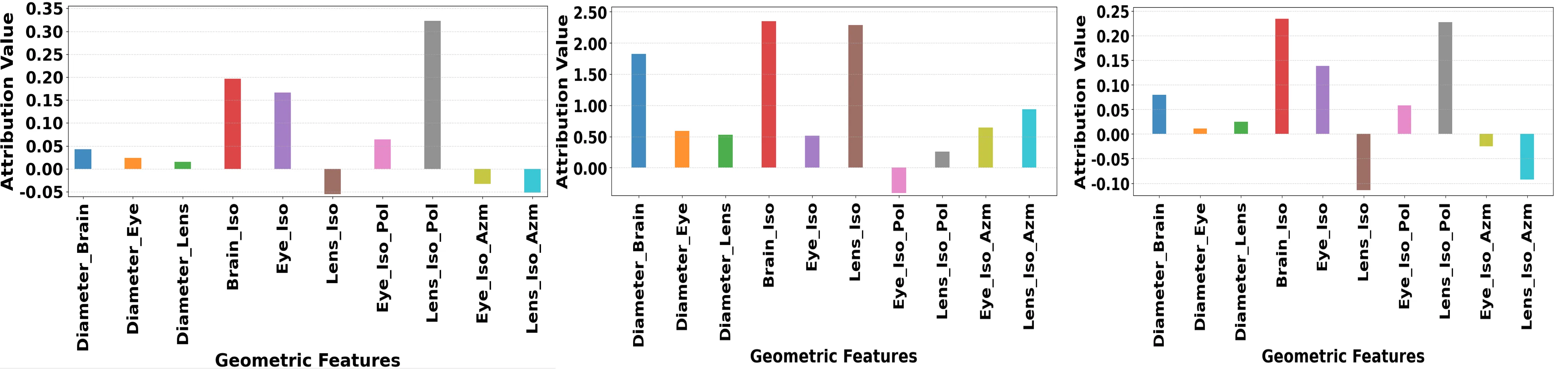
Whole-brain radiotherapy (WBRT) is a common treatment due to its simplicity and effectiveness. While automated Field-in-Field (Auto-FiF) functions assist WBRT planning in modern treatment planning systems, it still requires manual approaches for optimal plan generation including patient-specific hyperparameters definition and plan refinement based on quality feedback. This study introduces an automated WBRT planning pipeline that integrates a deep learning (DL) Hyperparameter Prediction model for patient-specific parameter generation and a large-language model (LLM)-based conversational interface for interactive plan refinement. The Hyperparameter Prediction module was trained on 55 WBRT cases using geometric features of clinical target volume (CTV) and organs at risk (OARs) to determine optimal Auto-FiF settings in RayStation treatment planning system. Plans were generated under predicted hyperparameters. For cases in which the generated plan was suboptimal, quality feedback via voice input was captured by a Conversation module, transcribed using Whisper, and interpreted by GPT-4o to adjust planning settings. Plan quality was evaluated in 15 independent cases using clinical metrics and expert review, and model explainability was supported through analysis of feature importance. Fourteen of 15 DL-generated plans were clinically acceptable. Normalized to identical CTV D95% as the clinical plans, the DL-generated and clinical plans showed no statistically significant differences in doses to the eyes, lenses, or CTV dose metrics D1% and D99%. The DL-based planning required under 1 minute of computation and achieved total workflow execution in approximately 7 minutes with a single mouse click, compared to 15 minutes for manual planning. In cases requiring adjustment, the Conversational module successfully improved dose conformity and hotspot reduction.
The neural network finds the right settings faster than a kettle boils: less than a minute, whereas a human needs about 15 minutes.