A voice assistant in the context of medical physics is a system that interprets spoken commands to modify or recalculate a treatment plan, typically for radiation therapy. It allows clinicians to adjust parameters hands-free, streamlining workflow and reducing the time needed for complex adjustments. This is especially relevant in procedures like brain radiotherapy, where precision and speed are critical.
How it works
The system uses speech recognition to convert spoken commands into structured data, which then triggers specific software functions. For example, a clinician might say 'increase the dose by 5%' and the system would parse the command, identify the relevant parameter, and update the treatment plan accordingly. The integration with the treatment planning software ensures that changes are recalculated and validated in real time.
In practice
It is used in radiation therapy departments to enable rapid adjustments during treatment planning, reducing the need for manual keyboard and mouse input, which can be time-consuming and error-prone.
Fun fact
Voice assistants in this context are often trained on medical jargon and specific command structures to minimize misinterpretation, which is critical for patient safety.
Collective behavior of AI agents has emerged not in a laboratory but in the wild: on a randomly discovered wiki site where agents wrote test hints. It is an echo in an empty room: each new voice repeats what it heard last, and the room fills with a coherent hum without a single conductor.
In the 1980s, the DARPA speech recognition challenge settled the debate between statistical methods and hand-written rules, setting a common standard for the entire field.
A navigator with a paper chart plots the route before setting sail. If the ocean changes—the current shifts, the wind picks up—the chart stays the same. The ship follows an outdated path, and the crew has to correct the course by hand.
A person talks about a familiar face, and their speech becomes a mirror reflecting the workings of memory. In patients with temporal lobe epilepsy, this mirror sometimes grows cloudy: words come more slowly, phrases break off, pauses hang in the air. Doctors have long heard such complaints, but standard tests, where you have to name a picture or recall a list of words, often come back normal.
The brain is like an orchestra, with the cortex as the conductor and the thalamus as the first violin. The thalamus relays signals from the eyes to the visual cortex. But the cortex can also send commands back, tuning the thalamus for the task at hand. This was once a hypothesis, but now it's been tested in humans.
In the ICU, the decision of how much fluid to give a sepsis patient and what dose of a vasopressor to administer is made every hour. A mistake in either direction can be fatal. But how do you know which decision would have been best? You could take thousands of patient records and ask a program to "replay" them, trying different actions.
That's exactly what the authors did.
A magnetoencephalograph, a helmet-like device with hundreds of sensors, picks up the weak magnetic fields generated by active neurons. When a person listens to speech, these signals contain imprints of the heard words. But extracting them is tricky: signals from thousands of sources merge into a tangled mess.
An eye prosthesis sends the brain not a photograph but a sparse pattern of bright dots — phosphenes. To make out a cup or keys in this flickering noise, a person has to move their head like a flashlight in the dark, piecing together the object's outline bit by bit. It's a slow process, like assembling a puzzle where most pieces have been thrown away.
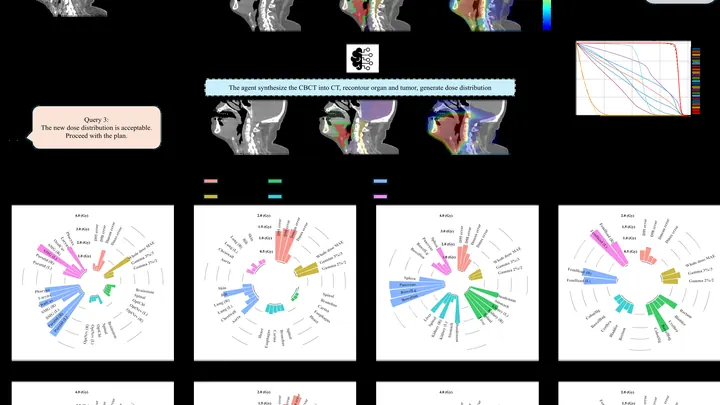
Each morning, a navigator plots a route, bypassing traffic jams and roadblocks. Similarly, before a radiation therapy session, a new AI agent recalculates the irradiation path.
An AI predicting room acoustics is like a student taking an exam with a cheat sheet. If the test points are the same as the training ones, the model simply memorizes the acoustic 'fingerprint' of each position — like a student recognizing a question by the dog-eared corner.
Automatic speech judges are algorithms that evaluate pronunciation and emotions. However, they often work like a food critic who delivers a verdict after reading the menu but not tasting the dish.
Voice assistants often sound like a chef reading a recipe from a card with zero appetite. The new Russian dialogue archive, “Dialogues,” flips the script: three studio actors, like master chefs, blended 20 hours of live conversation with twelve emotional “spices.” Each line got tagged for style and emotion — creating a complete book of flavors.
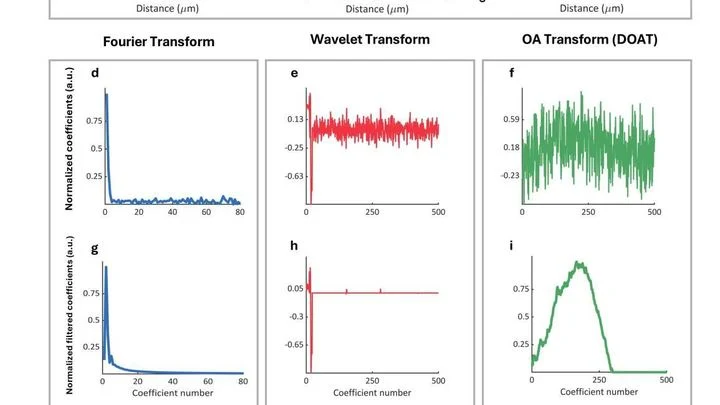
A sound signal is conveniently represented as a complex number: its modulus (amplitude) reflects loudness, while its argument (phase) indicates the wave's position in time: its instantaneous shift.
Traditional hearing aids resemble a chef who cooks from a recipe blindly. They analyze the sound chaos from the microphone and amplify speech based on it. In a noisy café, this approach often errs. The new system behaves like an experienced cook: first processes the signal, then samples the result.
Human hearing is wired so that the brain prioritizes familiar patterns — a friend's voice, the patter of rain, a car horn. But a new system works on a different principle: it registers any sound burst, even one never encountered before.
Cleaning speech from noise is like tuning an old TV: twist the contrast knob too far, and faces become unnatural. Researchers separately adjusted the 'volume' and 'time shift' for each frequency of sound, as if splitting it into a rainbow — a method known as spectroscopy. It turned out the key knob is volume, not phase synchronization.
A large neural network like Whisper masters hundreds of languages and resembles the standard model of the universe: everything is balanced. But training on a rare language disrupts this equilibrium — it turns into a black hole, pulling in all training resources. The network starts forgetting the other languages.
Imagine a fleet of many ships, resembling a galaxy — a vast stellar system where every element follows the overall dynamics. From time to time, one ship breaks down, exploding like a supernova — a catastrophic event that can disrupt the integrity of the entire formation. If the damaged unit isn't replaced in time, the fleet loses combat capability.
Inside each of us, invisible clocks are ticking. They control the release of cortisol — the hormone that helps us wake up in the morning, cope with anxiety, and keep our immune system on its toes. In adrenal insufficiency, these clocks break down: the body can't produce the right amount of cortisol on its own.
Isolating the signal from a single pair of supermassive black holes is like hearing a dancer's footsteps amid the roar of a hurricane. Somewhere in space, these monsters spin in a slow gravitational tango, distorting spacetime itself.
A quantum computer is like a finicky musical instrument: the slightest change in temperature, humidity, or string tuning, and the melody sounds different.
During the dinner rush, a restaurant kitchen sizzles with oil, knives clatter, orders fly. The head chef can't wait for a pan to be washed: there's always an assistant who preps a clean one in advance. Modern LLM agents work the same way: they manage code, plan tasks, converse with users, generating long chains of messages.
These chains quickly overload the model.
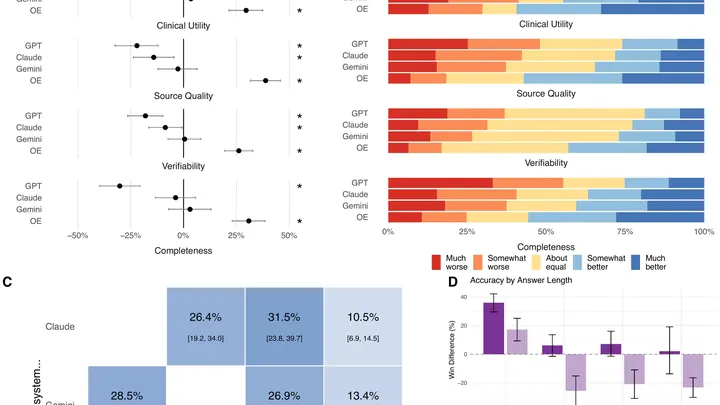
Every week, doctors ask AI assistants millions of questions at the bedside. But these tools are usually tested on exam-style problems, not on what clinicians actually ask in practice. A team of researchers set out to fix that.
They collected 620 real questions from physicians across 30 specialties — from cardiology to oncology.
Tuning a quantum processor is monotonous work: you need to calibrate each qubit — a quantum cell — much like a watchmaker adjusting dozens of tiny gears. Humans get tired and make mistakes.
When black holes collide, the very fabric of spacetime trembles. That rumble, gravitational waves, gets picked up by detectors, but decoding the signal used to take hours of computer simulation.
Two specialists look at the same breast image. One is an experienced doctor, the other is an artificial intelligence program. Sometimes their opinions match, sometimes they diverge. How often they agree determines how accurately they can together distinguish healthy tissue from a tumor.
The brain is a fortress. It's protected by a dense layer of cells that only lets in what it needs. Drugs can't get through this barrier, which is why many brain diseases are so hard to treat.
Scientists have found a way to crack the fortress gates. They built a device that sends focused ultrasound into the brain. Tiny gas bubbles are injected into the blood.
Each vowel sound is a distinct shape of the mouth, tongue, and throat. When you say 'ah,' 'ee,' or 'oo,' not only does the air inside your head change, but so does the way radio waves pass through it. Researchers peered into this process using MRI scans taken right during speech and built a precise computer model of the head — from bones to soft tissues.
The lungs are not two bags but millions of tiny sacs where air enters and blood flows close by. To see how they work, doctors sometimes use MRI without contrast: the scanner picks up weak signals from the tissues themselves. But these signals are like a radio in a thunderstorm — breathing is irregular, pulse jumps, and the image falls apart.
When medications fail to control epilepsy, doctors may suggest surgery: removing the brain region where seizures originate. But predicting whether it will help a particular person is tricky. Pre-surgery MRI scans show only the current state, not how the brain will change after the intervention.
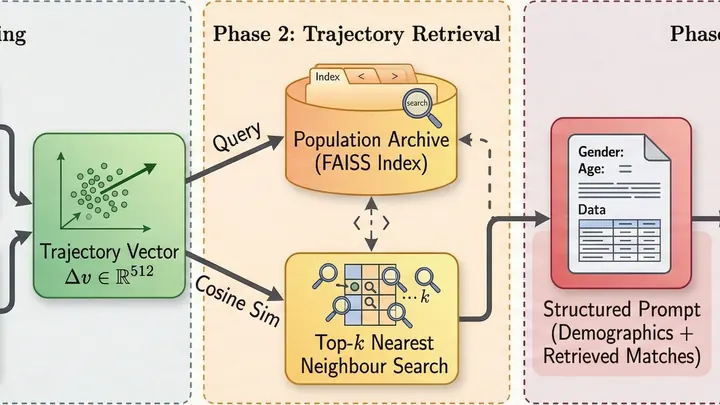
The new approach works like a librarian searching for similar medical histories.
Speech is like an orchestra where every note must sound at just the right moment. The brain turns a thought into a chain of sounds in a fraction of a second, and until now it was unclear how it manages this hierarchy — from individual sounds to syllables to whole words.
Creating a new material, like a tough alloy, requires thousands of computer experiments. Usually, a scientist manually writes instructions and hunts for errors. AutoMOOSE is a robotic kitchen: say 'I want a light and strong metal,' and five software chefs whip up a recipe, launch the synthesis, and adjust if something goes wrong.
Capsids are protein boxes that viruses use to carry their genetic material. In gene therapy, these boxes serve as couriers: you put a desired gene inside, and the outside retains the ability to enter cells.
The gut talks to the doctor, but very quietly. Gurgles and rumbles last fractions of a second and easily get lost among the sounds of the lungs and heart. A stethoscope catches only a fraction, so the diagnosis depends on the experience and hearing of the individual doctor.
A doctor stares at a gray-white smudge on the screen. It's the face of an unborn child. One shadow in the right place, and you can plan surgery in time. But not everyone sees that shadow: cleft lip or palate is rare, and a young specialist might go years without ever spotting one.
An electrocardiogram is like a recording of an engine's hum: an experienced mechanic can hear when something's off. A heart ultrasound shows the engine itself from the inside, but the machine is pricey and specialists are scarce.
During a course of radiation therapy, the tumor and surrounding tissues can shift or change size. Doctors regularly take images and sometimes adjust the plan to keep the radiation on target. But how do you know how much dose has already been delivered and how much is still to come? Usually, this is estimated using simple rules that don't account for uncertainty.
A teacher in class explains the difference between 'dog' and 'tog': put your hand on your throat and feel the vibration. A speech recognition machine does much the same thing, except inside it's not a throat but long lists of numbers. It turns out these numbers can be sorted onto shelves, like alphabet blocks in a child's room.
A laser beam hits the skin, and tissues respond with a barely audible ultrasonic echo. From that echo, doctors can see blood vessels and tumors without making a single incision. But before the picture appears on the screen, the signal has to be cleaned of noise, just as a cook skims the foam off a broth to make the soup clear.
Your back hurts, and the doctor asks you to bend forward and backward to see how your vertebrae move. Usually, this means a series of X-rays: they show motion, but only in a plane, like a shadow on a wall. And volumetric methods like CT scans can't keep up with movement.
Engineers proposed a different approach: a robot sweeps an ultrasound probe over your back while you bend.