Sound in a Crystal Cage express
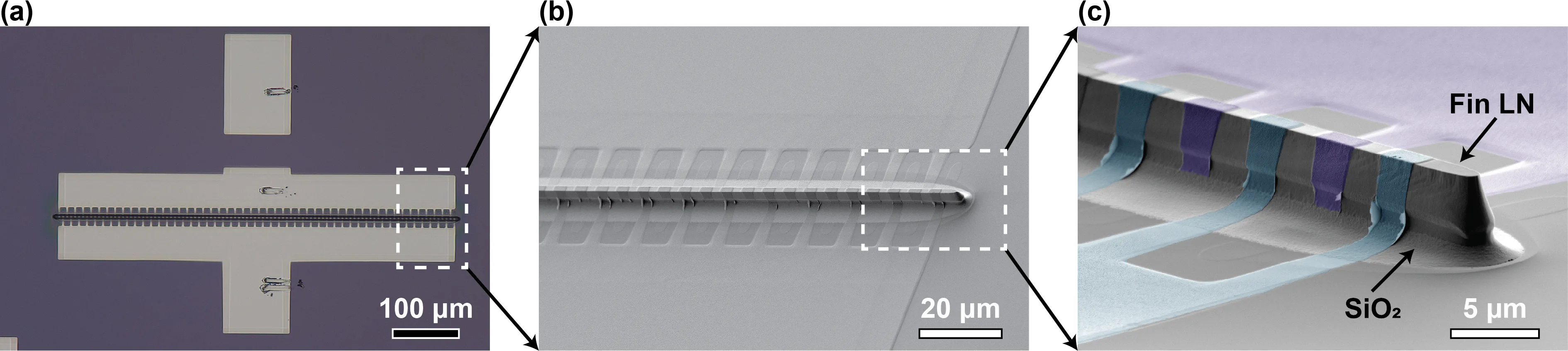
A tiny lithium niobate comb vibrates at a frequency of 300 million times per second. Each tooth is carved from a crystal plate as thin as a human hair, with metal electrodes deposited on its sidewalls. The sound wave bounces inside the tooth like an echo in a narrow stone canyon, unable to escape.
Previously, such resonators were made flat: sound traveled along the surface, and some energy leaked into the material below. The new geometry confines the vibrations from all sides. The electrical response increased by a factor of 1.8 compared to a flat resonator, while losses remained low. The device, smaller than a millimeter, already operates at frequencies needed for mobile communications.
Tests confirmed the calculations: the resonator captured 6.2% of the electrical energy into mechanical vibration, and its quality factor, a measure of how cleanly it rings, reached 430. For comparison, a guitar string has a quality factor of around a thousand, but a string can't talk directly to a radio circuit.
Such combs could become the basis for new filters that weed out unwanted frequencies in antennas, and for sensitive sensors that detect the slightest vibrations. A three-dimensional crystal cage holds sound more tightly than any flat surface.
The 300 MHz frequency is in the range used by old analog televisions and some wireless microphones.