A Silicon Atom in the Dark: A Trap That Doesn't Glow
The laser beam in an optical tweezer is not just a spot of light but a force bag. A particle caught in it usually rolls toward the brightest point, like a ball into a dimple.
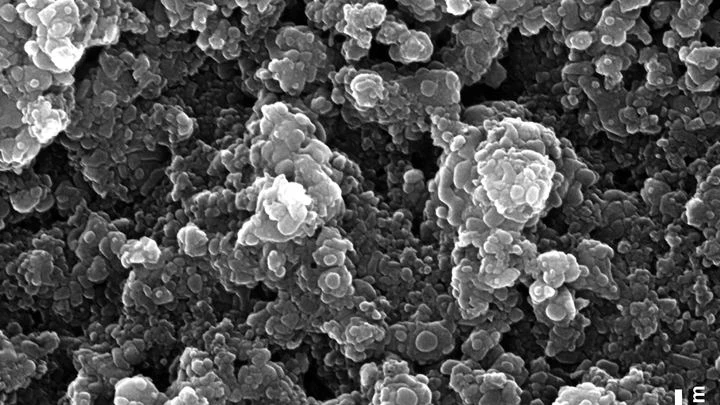
A chemical compound used to fabricate microscopic photonic structures like combs.Silicon nitride (Si3N4) is a chemical compound of silicon and nitrogen, known for its exceptional hardness, thermal stability, and optical transparency in the infrared and visible ranges. In modern photonics, it is a key material for fabricating microscopic structures such as optical microresonators and frequency combs. Its low optical loss and high refractive index contrast with silica make it ideal for on-chip light manipulation, enabling compact devices that generate precise optical frequencies.
Silicon nitride was developed in the 1950s for high-temperature ceramics and became a photonic material in the 2000s, with pioneering work on microresonators by groups like those at Caltech and EPFL.
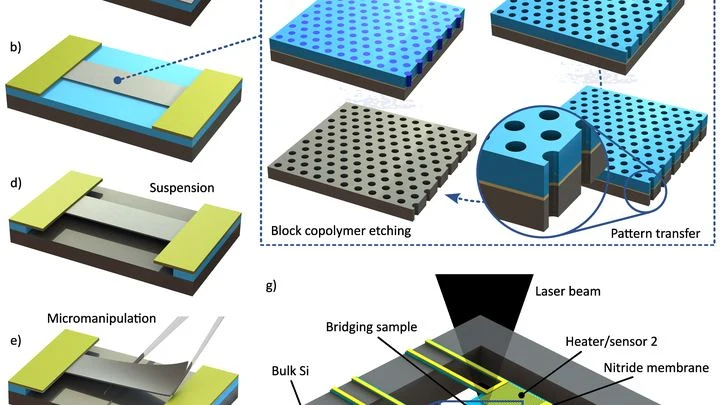
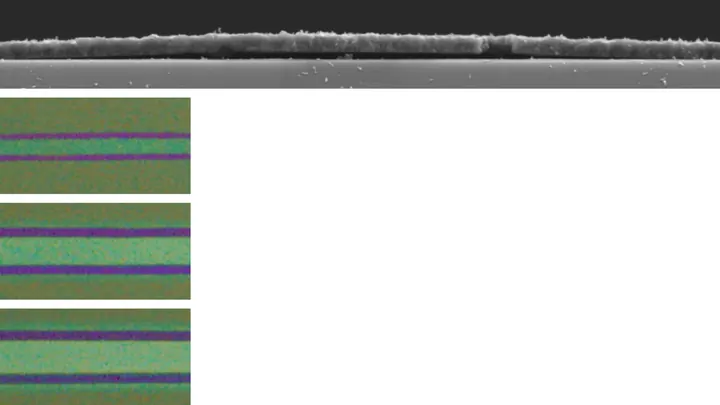
Silicon nitride is deposited as thin films using chemical vapor deposition, then patterned via lithography and etching to create waveguides and resonators. Its crystalline or amorphous structure provides mechanical robustness and low absorption. In microresonators, light circulates and builds up intensity, enabling nonlinear effects like four-wave mixing, which generates new frequencies and forms combs. The material's properties allow tight light confinement and efficient interaction with other materials on the chip.
It is used in integrated photonic circuits for telecommunications, sensing, and quantum optics, including compact frequency combs for precision timekeeping and spectroscopy.
Silicon nitride is so hard that it is used in ball bearings and cutting tools, yet it can be engineered into waveguides that guide light with losses below 1 dB per meter.