How an Epidemic Flows Through a City express
An epidemic is like a forest fire: the flames race toward where there are more dry branches. Similarly, a virus spreads faster where people live in closer quarters. But old mathematical models described infection as an ink blot spreading evenly across paper. That's convenient for calculations, but it doesn't look much like reality.
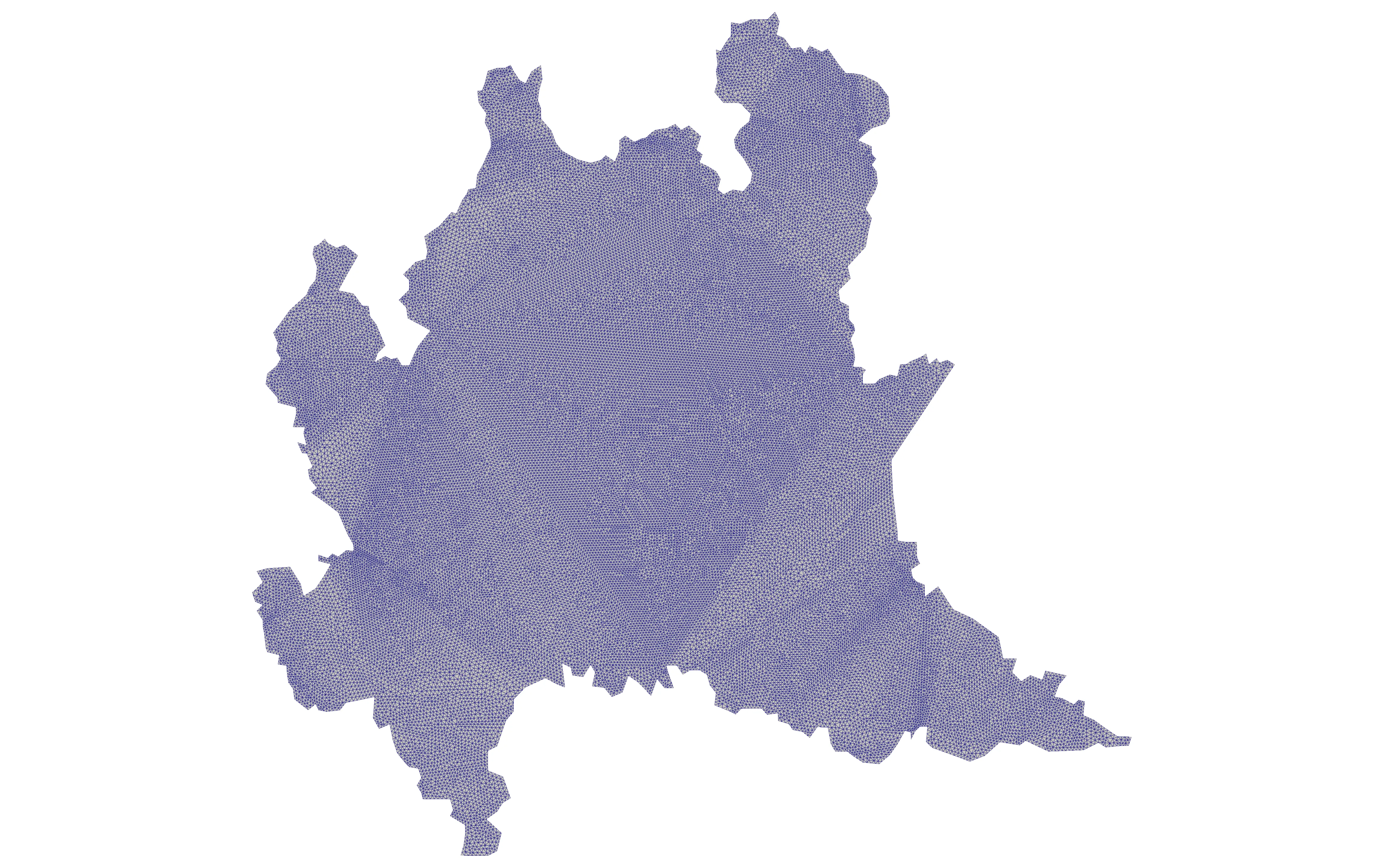
In the new study, scientists added a simple rule to the model: the infection moves from areas with few people to areas with many. Like water flowing downhill. Such behavior has long been known in bacteria, which swim toward nutrients — now it's been applied to humans. The model was tested on data from Lombardy during the first wave of COVID and from the U.S. state of Georgia. It turned out to predict where new hotspots would appear better than previous uniform models.
For authorities, this isn't just pretty math. If you know that the disease is drawn to densely populated areas, you can beef up hospitals there in advance, restrict entry to crowded places, or set up mobile vaccination units. The model calculates the basic reproduction number while accounting for how unevenly people are spread across the landscape, and that's a key metric for deciding how strict measures need to be.
This approach doesn't discard old models, but it makes them see. Instead of an abstract blot on a map, there's a flow that winds through streets, skirts parks, and pours into shopping malls. And that's not just a calculation anymore: it's a working tool for decision-makers in the middle of an epidemic.
Original abstract
as written by the authors arXiv:2601.18703
Partial differential equation (PDE) models for infectious diseases, while less common than their ordinary differential equation (ODE) counterparts, have found successful applications for many years. Such models are typically of reaction-diffusion type, and model spatial propagation as a diffusive process. However, given the complex nature of human mobility, such models are limited in their ability to describe airborne infectious diseases in human populations. Recent work has advocated for the inclusion of an additional chemotaxis-type term as an alternative; spatial propagation of infection fronts is assumed additionally to flow from low-to-high concentrations of susceptible populations. The present work extends the study of such models by providing an epidemiologically interpretable analysis, directly connecting model behavior to information readily available to policymakers. In particular, we derive a spatially-aware basic reproduction number, which accounts for spatial heterogeneity in population density. Furthermore, we discuss several important aspects concerning the numerical solution of the model, including the introduction of a stabilization scheme. Finally, we perform a series of simulation studies in the Italian region of Lombardy (severely affected by the COVID-19 outbreak in 2020) and in the US state of Georgia, in which we demonstrate the model's potential to better capture important spatiotemporal dynamics observed in real-world data compared to pure reaction-diffusion models.
Bacteria use the same movement principle as the new epidemic model: they swim toward where there's more food. Scientists simply transferred this rule from microbes to human crowds.