The Neuron City: Why Some Brains Think Fast and Others Slow express
A mouse brain contains about 70 million neurons, and the connections between them are far from evenly distributed: some cells have only a couple of dozen contacts, while others have thousands. It's like a city with quiet alleys and bustling squares. But until now, it was unclear how this unevenness affects the brain's actual function.
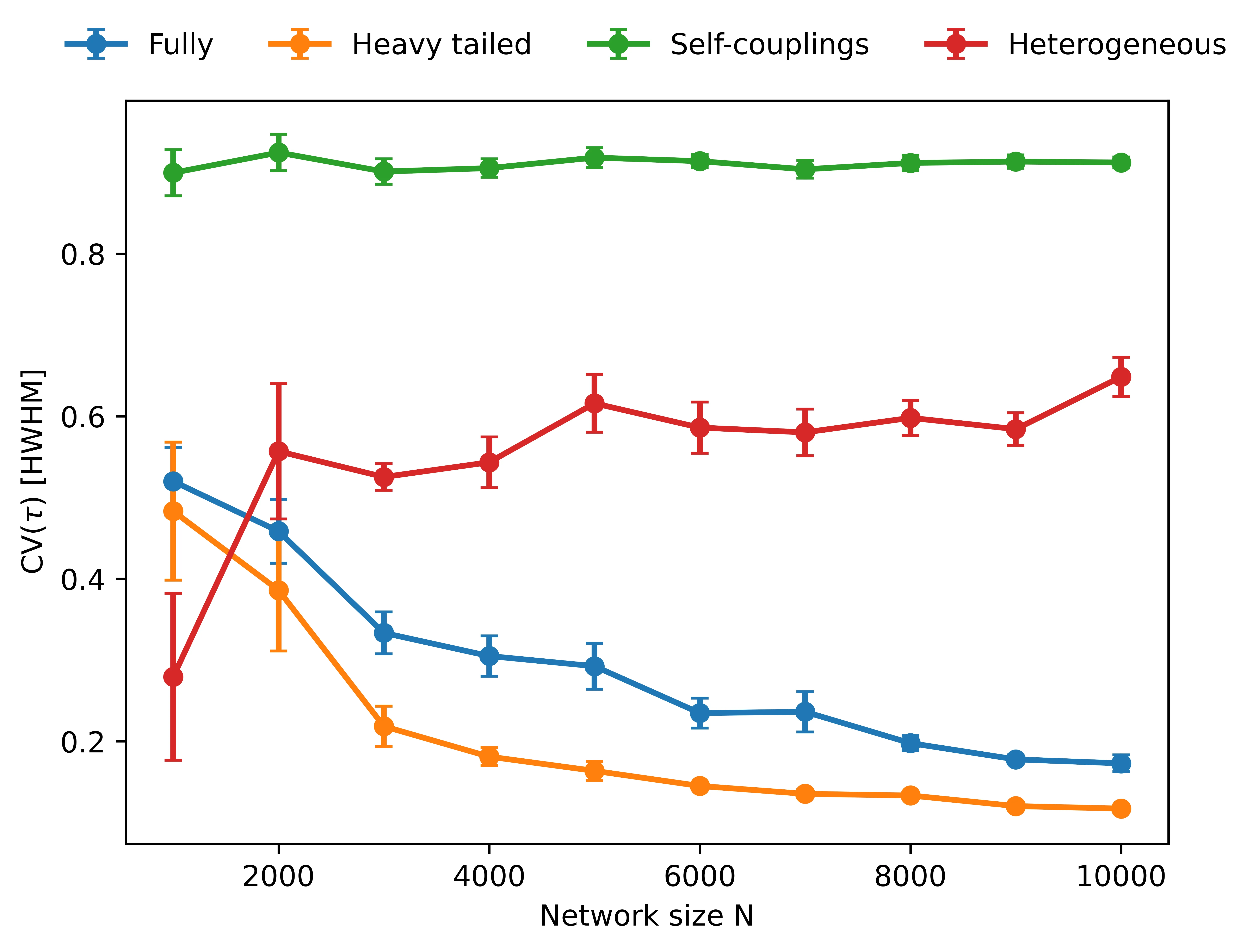
Researchers built a computer model where connections between cells could be made more or less uneven. They found that cells with many connections, hubs, start to work slower: they seem to accumulate incoming signals before responding. Cells with few connections, on the other hand, react quickly. So within a single network, both 'fast' and 'slow' neurons emerge, even though the rules are the same for all.
Testing against real data confirmed the theory: in a tiny piece of mouse brain mapped at a resolution of one thousandth of a millimeter, neurons with more incoming connections indeed had slower response times. This means that uneven connectivity is not random noise but an important mechanism that allows the brain to process both fast signals (like movement) and slow ones (like mood) simultaneously.
This principle could also be applied to artificial neural networks: if connections are made uneven, the network could process data at different speeds, just like the brain does.
Original abstract
as written by the authors arXiv:2603.04149
Structural and functional heterogeneity are hallmarks of cortical circuits, from broad degree distributions in the mouse connectome to diverse intrinsic neuronal timescales. Yet a mechanistic link between connectivity heterogeneity and functional diversity is lacking. To bridge this gap, we introduce a random recurrent network in which connectivity is generated by a configuration model with tunable degree heterogeneity and synaptic weights exhibiting varying levels of correlation. Using generating-functional methods, we derive a heterogeneous dynamical mean-field theory (hDMFT) with degree-conditioned stochastic dynamics. The theory shows that the interaction of partial symmetry in the weights and degree heterogeneity induces a non-Markovian memory term in the form of an emergent self-coupling whose strength scales with degree and produces a broad distribution of activity timescales. We obtain analytic stability criteria demonstrating that degree heterogeneity lowers the critical gain and localizes unstable modes onto hubs. The resulting rich dynamical landscape includes silent, chaotic, and multistable regimes, which we uncover via spectral, replica, and Lyapunov exponent analyses. We highlight the computational benefits of the observed timescale heterogeneity by revealing that, under an external input drive featuring a broadband spectrum, slow hub neurons act as integrators, demixing slow input components. Finally, instantiating the model with the empirically measured topology from the MICrONS cubic-millimeter mouse connectome explains the broad range of single-neuron timescales and their positive correlation with in-degree observed in resting-state recordings. Our results provide a mechanistic link between connectome topology, neural dynamics, and computation, identifying hubs in partially symmetric networks as a natural substrate for multiplexed processing across timescales.
A cubic millimeter of mouse brain contains about 100,000 neurons and nearly a billion synapses — more than the number of stars in our galaxy within the same volume.