The Neuron City: Why Some Brains Think Fast and Others Slow express
A mouse brain contains about 70 million neurons, and the connections between them are far from evenly distributed: some cells have only a couple of dozen contacts, while others have thousands. It's like a city with quiet alleys and bustling squares. But until now, it was unclear how this unevenness affects the brain's actual function.
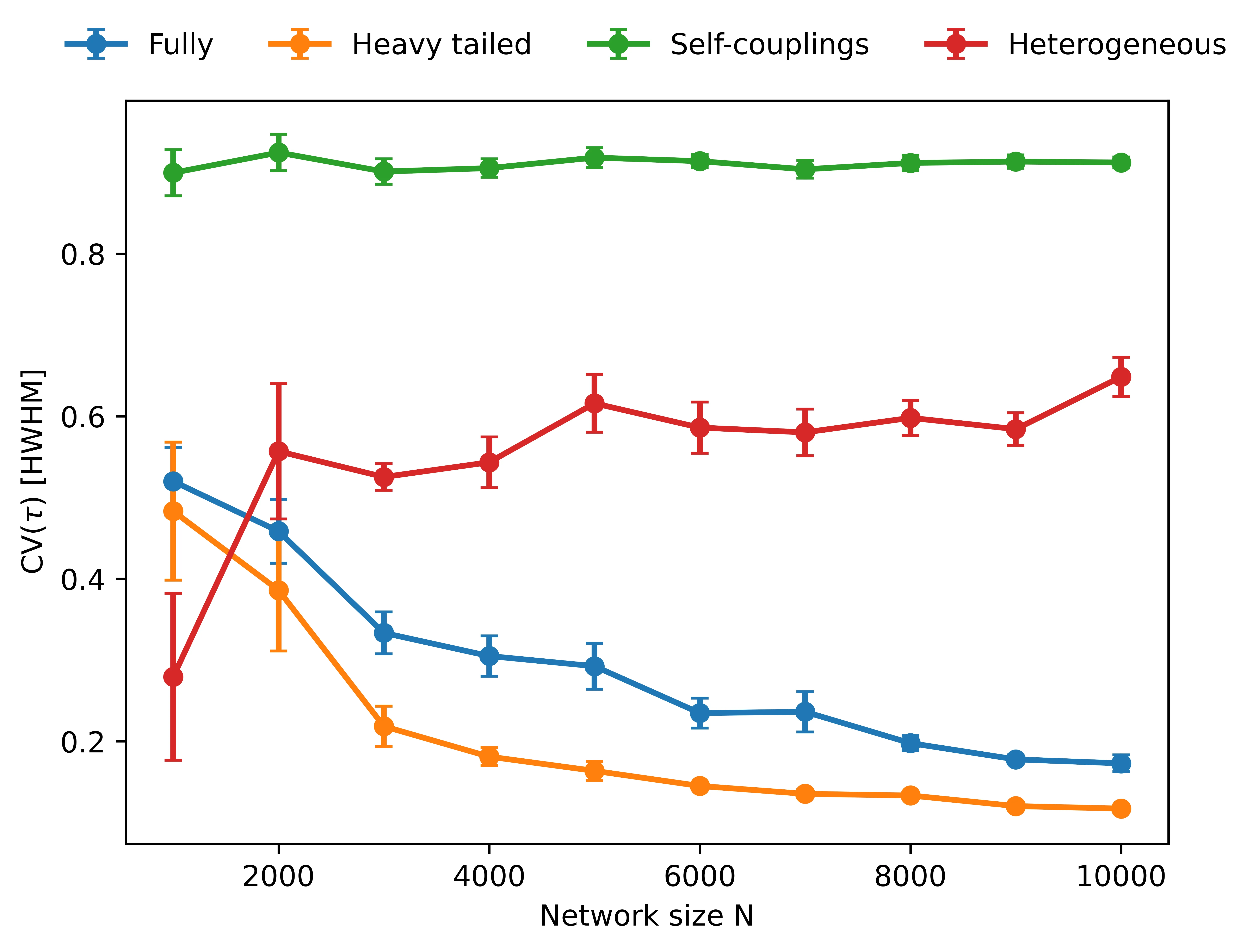
Researchers built a computer model where connections between cells could be made more or less uneven. They found that cells with many connections, hubs, start to work slower: they seem to accumulate incoming signals before responding. Cells with few connections, on the other hand, react quickly. So within a single network, both 'fast' and 'slow' neurons emerge, even though the rules are the same for all.
Testing against real data confirmed the theory: in a tiny piece of mouse brain mapped at a resolution of one thousandth of a millimeter, neurons with more incoming connections indeed had slower response times. This means that uneven connectivity is not random noise but an important mechanism that allows the brain to process both fast signals (like movement) and slow ones (like mood) simultaneously.
This principle could also be applied to artificial neural networks: if connections are made uneven, the network could process data at different speeds, just like the brain does.
A cubic millimeter of mouse brain contains about 100,000 neurons and nearly a billion synapses — more than the number of stars in our galaxy within the same volume.