Neural network oscillations are periodic bursts of total electrical activity of large populations of neurons. They arise due to mutual excitation and inhibition between cells. Rhythms are distinguished by frequency: delta (0.5–4 Hz) — deep sleep, theta (4–8 Hz) — drowsy state, alpha (8–13 Hz) — relaxed wakefulness with eyes closed, beta (13–30 Hz) — active attention, gamma (30–100 Hz) — information processing. These oscillations are not just noise, but a functional tool: they synchronize remote areas for data exchange (the binding problem), as if two computers tuned to a common carrier frequency.
History
History began with the invention of electroencephalography. Hans Berger performed the first human EEG recording in 1924, but recognition came only after 1934 when Edgar Adrian repeated the experiments. Berger described alpha and beta rhythms. In the 1930s–50s, William Grey Walter and others studied the delta rhythm in brain tumors. In the 1960s, computer analysis of EEG allowed the extraction of evoked potentials. A breakthrough was the discovery of local field potentials (LFP) and the link between oscillations and cognitive processes: in the 1980s, Wolf Singer proposed the synchronization hypothesis for feature binding. Today, optogenetics and modern imaging methods allow targeted manipulation of oscillations.
How it works
Oscillations are maintained by a balance of excitation (via glutamatergic neurons) and inhibition (via GABAergic interneurons). The key mechanism is reverberating circuits: excitation from one group of neurons activates inhibitory cells, which after a short delay suppress the first group, after which the cycle repeats. The frequency of oscillations is determined by the time constants of synapses and the length of chains. For a global rhythm to arise, synchronization through gap junctions (electrical synapses) and a common synchronizing projection from subcortical structures, such as the thalamus, is necessary. Gamma rhythm (30–80 Hz) is locally generated by pyramidal neurons and fast-spiking interneurons, which create a temporal window for precise spike synchronization. Theta rhythm coordinates the interaction between the hippocampus and cortex, organizing temporal compression of sequences. From the perspective of nonlinear dynamics, the transition to a synchronized state is a phase transition described by order parameters.
In practice
Reading brain rhythms (EEG) helps diagnose epilepsy, control prostheses through brain-computer interfaces, and develop therapies for attention disorders.
Fun fact
In newborns, the alpha rhythm is almost absent and only develops by the age of three, while slow waves of deep sleep help 'wash out' toxic proteins accumulated during the day from the brain.
Imagine a large orchestra without a conductor. Each musician hears everyone else and adjusts to the collective hum. If every instrument amplifies its neighbors, the sound builds to a screech; if some occasionally dampen it, the orchestra may fall into silence or break into cacophony.
The orchestra starts playing, but each musician has their own tempo. If everyone plays at roughly the same speed, the music flows in a continuous stream. But if one group of instruments plays noticeably slower than the rest, the sound gathers into a dense clump that slowly moves forward.
An electrocardiogram is like a recording of a conversation where the heart whispers and a construction site roars in the background. Atrial fibrillation, where the atria quiver instead of contracting, changes that whisper almost imperceptibly.
Getting lost in a hall of mirrors is easy: every wall reflects another, and you feel like you've been here before. The brain gets similarly confused when surrounded by many similar places. Neurons responsible for the spatial map can fire the same signal for two different corners of a room. This is called spatial ambiguity.
A bowl of jelly trembles but holds its shape when given a gentle shake. Thick syrup, in response to the same motion, sloshes and spreads. A healthy liver is like jelly, but an inflamed one at low frequencies becomes more like syrup.
Researchers built a device that shakes the liver at twelve different frequencies — from five to eighty oscillations per second.
The eye's vascular network is not just a peripheral part of the circulatory system; it is a 'mirror' of the brain's hemodynamics, anatomically and functionally connected to it.
Epithelium lines our organs like tiles on a floor. At rest, cells cling to each other, and the tissue is elastic. But during embryonic development, wound healing, or tumor growth, this layer begins to flow like thick honey. What exactly triggers such softening?
After a supernova explosion, a dense ball the size of a city remains at the center — a newborn neutron star. It is hot, compressed, and rings like a bell after being struck. These tremors, the star's oscillations, emit gravitational ripples that sensitive detectors on Earth can catch.
Sound enters the ear and hits a thin membrane inside the cochlea, the spiral organ in the inner ear. This membrane doesn't just vibrate like a string; it actively pushes the vibrations when they are weak and stops when they are strong. That's how the ear hears both a whisper and a loud conversation.
Scientists built a model where each piece of the membrane is a tiny pendulum with a spring.
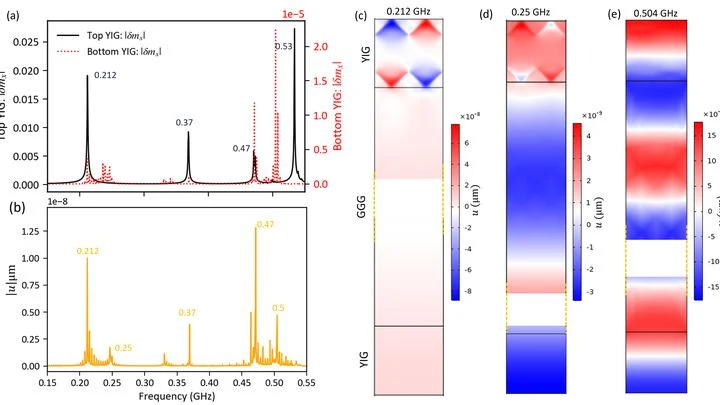
A magnetic film just three thousandths of a millimeter thick sits on a crystalline substrate. When excited, waves of magnetization run across it, like ripples on water. At the same time, elastic vibrations can arise in the substrate, similar to the trembling of a plucked string.
A bell hidden in a thick box can be made to ring without opening the lid. Just send a sound wave through the walls, and the clapper will tremble. That's roughly how transcranial ultrasound works: sound passes through the skull bones and makes neurons deep in the brain 'ring'—generating electrical impulses.
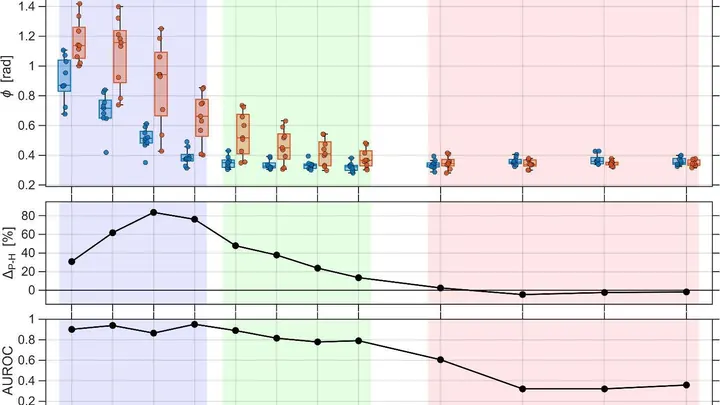
Every night, the brain cycles through several sleep stages — from drowsiness to deep sleep and back. Some transitions happen abruptly, like a light switch flipping, while others are smooth, like a slow slide down a slope.
At the end of a massive star's life, its core collapses in a fraction of a second, giving birth to a supernova flash. This cataclysm shakes spacetime itself, emitting gravitational waves — ripples that race across the Universe.
Holding in mind the exact position of a pen as it's slowly moved is a routine task for the brain. For artificial neural networks, it's nearly impossible. Standard recurrent networks like GRU and LSTM tend to break continuous motion into rigid steps: the pen doesn't glide smoothly but jumps from point to point.
A magnetoencephalograph, a helmet-like device with hundreds of sensors, picks up the weak magnetic fields generated by active neurons. When a person listens to speech, these signals contain imprints of the heard words. But extracting them is tricky: signals from thousands of sources merge into a tangled mess.
The very first moment of the universe's existence is like a taut string suddenly struck. It vibrated, and those oscillations froze into galaxies and voids. But physicists suspect there were other vibrations — fast, local, almost like a drumroll against a slow melody.
A stadium packed with fans hears the announcer’s voice for the first time, and instantly the whole place erupts. The message sounds again and again. Only a handful of people in nearby rows respond. That’s roughly how neural networks behave in brain organoids — tiny lab-grown replicas of the brain.
One hundred milliseconds. In that time, after a lightning strike or a short circuit, the power system either returns to normal operation or loses stability. A new-generation Neural Network Oscillations learns to sense this moment, like an experienced tightrope walker anticipating a gust of wind.
A stadium packed with fans hears the announcer’s voice for the first time, and instantly the whole place erupts. The message sounds again and again. Only a handful of people in nearby rows respond. That’s roughly how neural networks behave in brain organoids — tiny lab-grown replicas of the brain.
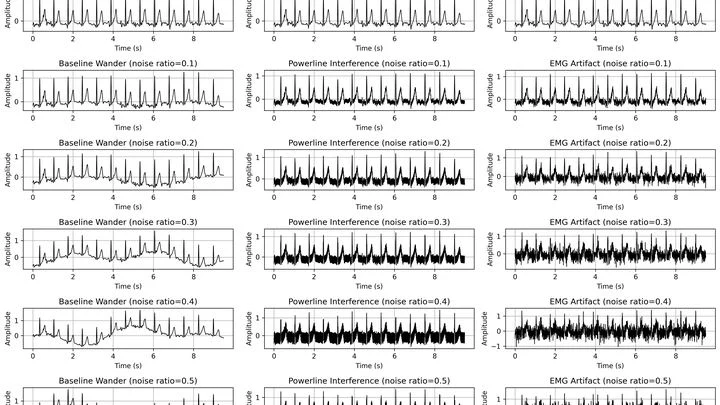
An electroencephalogram (EEG) is like having a bunch of microphones placed all over your head. Each of these “microphones”—a sensor — listens in on the electrical chatter of neurons. But sometimes one of them peels off, gets noisy, or records interference instead of a signal.
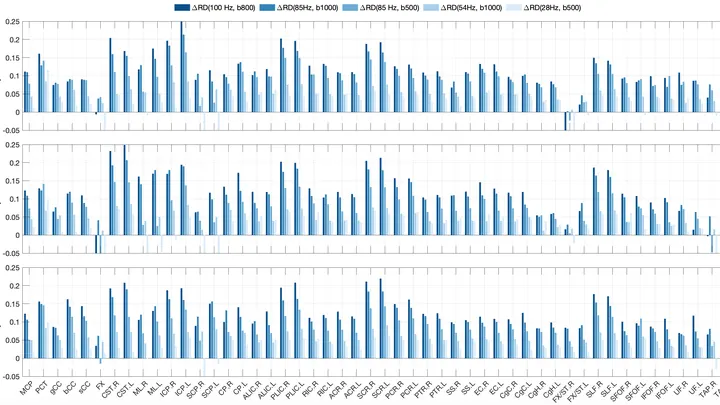
Water inside nerve fibers doesn't move like it does in a glass: it constantly bumps into the walls of axons (the long projections of nerve cells). If you make the pause between MRI radio pulses very short, water doesn't have time to travel far, and its movement reflects the tightness of the surrounding space.
The brain is an orchestra where each group of instruments must come in on time. In Alzheimer's disease, the musicians lose their notes: connections between brain regions get tangled, and the harmonious performance turns into cacophony. Scientists have long seen these disruptions on scans, but they didn't know if the situation could be fixed by touching just one string.
At night, when we sink into deep, dreamless sleep, a tide begins in the depths of the brain. Each heartbeat and each breath sends gentle pulses through the fluid-filled cavities (the ventricles). During the day, these pulses are timid and monotonous — the fluid sloshes back and forth almost in place.
But with the onset of slow-wave sleep, the rhythm changes.
In September 2015, two four-kilometer laser beams compressed by a thousandth of a proton — the LIGO interferometry detectors caught a gravitational waves for the first time. Its source turned out to be the merger of two black holes 1,3 billion light-years away.
A neuron receives thousands of signals on its branching processes — the dendrites. Some signals push the cell toward firing (excitation), others hold it back (inhibition). For a long time, it was thought that the neuron simply adds up all the 'fors' and 'againsts.' But in real dendrites, inhibition works differently: it can not subtract but divide the excitatory signal.
A subway train races through a tunnel, yet passengers in the last car barely sway. Blood flow in the lungs works much the same way: the heart pumps blood in powerful spurts, but by the time it reaches the veins, the pulsation has almost vanished.
Every atom in a magnet is like a tiny compass needle. These needles can point in different directions, and their collective dance determines the material's properties. But calculating this dance directly, atom by atom, is a task too heavy even for supercomputers.
The new model, named STEP, takes on the role of a conductor.
Every time a child with cerebral palsy is about to move their leg, a distinctive electrical blip appears in the brain — a slow voltage shift. Scientists call it a movement-related potential. A brain-computer interface (a system that reads intentions from brain signals) can pick up this blip and turn it into a command for a training device.
A cloud of atoms cooled to near absolute zero suddenly starts behaving like a brain. One excited atom triggers a chain reaction — neighbors light up in turn, and an avalanche of activity sweeps through the gas. Physicists call this Rydberg facilitation: atoms are easier to excite when an excited one is nearby.
A city at night: lights on in some windows, dark in others. If you connect with lines the windows that light up simultaneously, you get a web of connections. Researchers studied such a web in tiny brain organoids — living clusters of nerve cells grown in the lab.
The meditating brain is an orchestra, and attention is the conductor. When you're focused on your breath, all instruments play in harmony. But suddenly, a thought-cello plays a false note: that's mind wandering. An experienced conductor doesn't panic: they instantly catch the dissonance and gently guide the orchestra back to the main melody — the breath.
Electricity from the wall socket isn’t steady noise; it’s a wave pulsing 50 times a second. Every gadget at home has to sync with this rhythm, or chaos would break loose. To keep the beat, power grids use a phase detector — a “smart ear” that listens to the voltage like a musician tuning into a note.
After a stone is thrown, the circles on water vanish, but the liquid retains microscopic oscillations. The slightest gust, and ripples appear again. Neural networks behave similarly. When electrical signals quiet down, the memory of them remains in the contact points — synapses.
The brain communicates in short electrical clicks. Previously, to learn this language, thousands of examples with translations from the experimenter were needed. MOJO takes a different path: like learning a language through immersion, it first listens to the 'stream of consciousness' without any hints and finds recurring patterns on its own.
To find an epileptic seizure in brain activity recordings, scientists used an approach akin to picking out sharp sounds in a noisy room: instead of deciphering the entire chorus of brainwaves (EEG), they isolated only the strongest spikes.
The railway's electrical network is like an orchestra: trains are musicians whose systems respond differently to current. When their 'electric voices' fall out of tune, disorder arises — a cacophony that can escalate into dangerous voltage rocking.
The railway overhead contact line resembles a galaxy: energy flows through it like gravity, with trains becoming planets. The more trains draw current simultaneously, the stronger the voltage fluctuations — gravitational waves ripple through the system, threatening blackouts.
Building a light chip is like a game where you have to guide a beam through a maze of tiny mirrors and beam splitters. Each element acts like a railroad switch: it either lets light pass straight through or directs it to an adjacent track. The goal is to produce a specific light pattern at the output while using as few 'switches' as possible.
Usually, engineers spend years finding the shortest route for each task.
In embryonic development, a cell resembles a musician in a vast orchestra: it must play its part, following a conductor — the gradient of signaling molecules. But the conductor is unreliable: morphogen concentrations constantly fluctuate. How then does a cellist not veer into a violin melody?