A Salt Electrolyte That Behaves Like Water express
Next-generation batteries don't just use a liquid electrolyte; they use water with a huge amount of salt dissolved in it — lithium ions and bulky organic molecules. There are so many ions that they constantly collide, like a crowd in a narrow corridor. Tracking every ion in such a crowd is no easy task.
The usual approach is to solve quantum mechanics equations for every step of motion. It's like trying to describe every step of every person in a crowd: the accuracy is immense, but the calculation takes forever. So the researchers took a different route. They used a computer model that learns from examples: first, they showed it a few short, accurate simulations, and then it learned on its own to predict where ions would move, without complex equations.
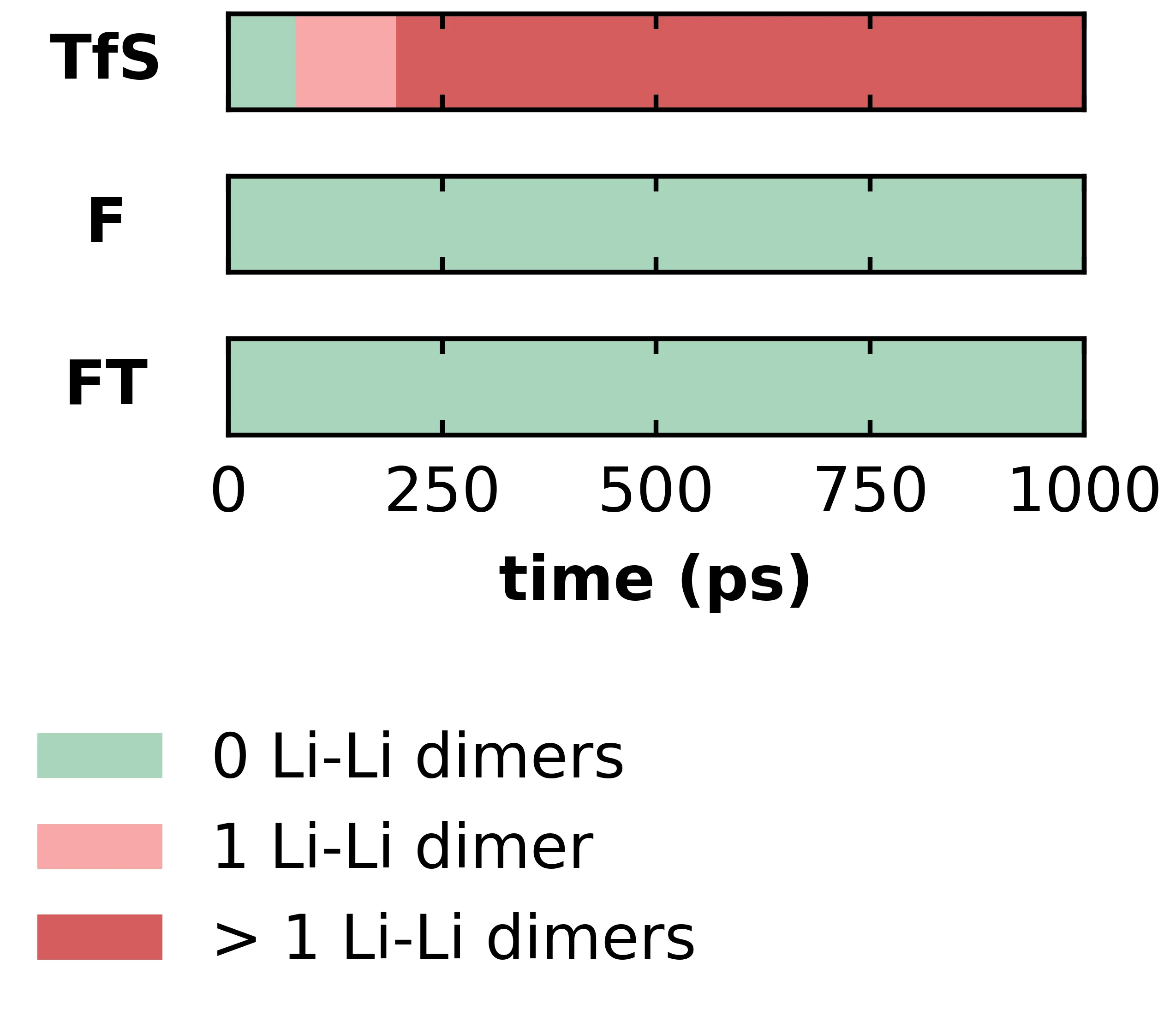
The authors tested the model on a solution of lithium salt in water. The model accurately reproduced experimental data — for instance, how X-rays scatter off the solution. This means it correctly describes the arrangement of ions. Moreover, the model allowed them to peek into situations that are hard to capture in experiments: when two lithium ions end up very close to each other.
It turned out that a model first trained on general data and then fine-tuned on the specific solution performed better than one trained from scratch. It's like a chef who knows many cuisines picking up a new dish faster than a novice.
Now researchers have a tool to study superconcentrated electrolytes over long timescales — from picoseconds to nanoseconds and beyond. This is important for developing safer, higher-capacity batteries.
In a superconcentrated lithium salt solution, each lithium ion has only about two water molecules around it, like dissolving half a glass of salt into a glass of water.